







Shadows Over Baysarieh: A Morning of Steel and Smoke in Southern Lebanon
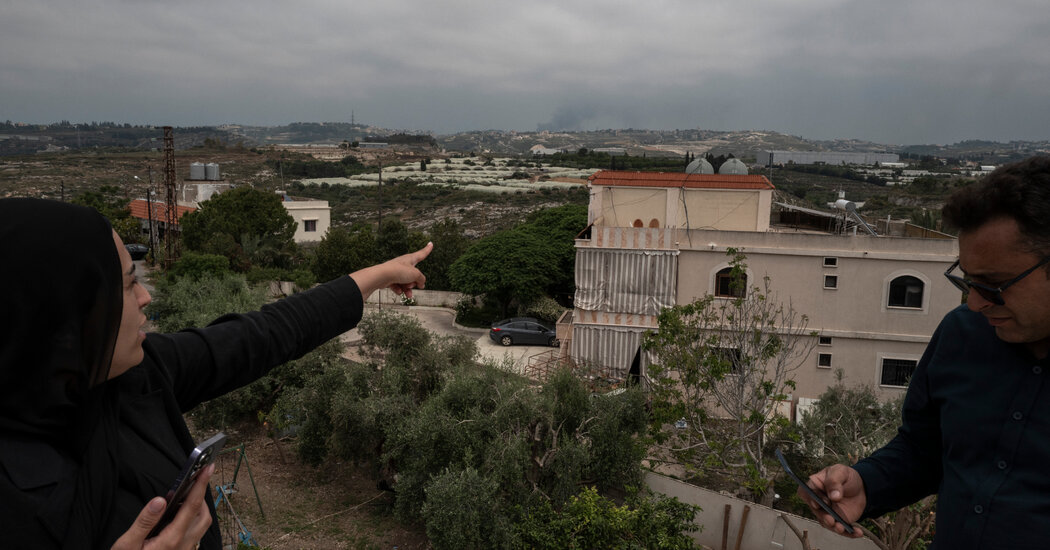
On the flat concrete rooftops of Baysarieh, a quiet hilltop town nestled in the rugged terrain of southern Lebanon, residents stood with their eyes fixed on the horizon, watching the grim geometry of modern warfare unfold in real-time. Just twelve miles to the north, the ancient urban center of Nabatieh—long the economic and cultural heartbeat of the region—was swallowed by towering columns of charcoal-gray smoke, the visible residue of relentless Israeli airstrikes that had pounded the area through the night and into the humid Wednesday morning. For the families of Baysarieh, the conflict was no longer a distant rumble or a headline on a television screen; it had become an intimate, sleepless reality characterized by the low-frequency, teeth-rattling drone of fighter jets circling overhead in predatory patterns. As the morning sun climbed higher, warming the limestone facades of the town, the air remained thick with the scent of burning brushwood and cordite, punctuated by sudden, concussive blasts that rattled windowpanes and sent flocks of white pigeons scattering into the hazy sky. Hanan Khalil, a lifelong resident of the town whose tired eyes betrayed a night spent clutching her grandchildren in a hallway, gestured toward the rising plumes of smoke with a trembling hand, her voice carrying the heavy resignation of those trapped in the path of an advancing military campaign. “They are getting closer and closer every day,” she whispered, her words capturing the collective dread of a community watching the battlefront slowly but relentlessly creep toward their front doors, erasing the fragile boundaries between safe havens and active combat zones.
The Soundscape of Modern War: High-Tech Surveillance and Heavy Artillery
              TYPICAL SOUTHERN LEBANON FLIGHT PATHS

[ Mediterranean Sea ]                     ▲ [ Beirut ]
         │                                │
         └───► [ Baysarieh ] ◄────────────┤  (Zahrani River Boundary)
                     │                    │
                     ▼                    │
              [ Nabatieh ] ◄──────────────┘
                     │
         [ Israeli Border / IDF Positions ]
To cross into southern Lebanon on Wednesday morning alongside a team of journalists from The New York Times was to enter a landscape defined by an overwhelming, mechanized soundscape where the line between peace and total devastation was measured in mere seconds. The journey along the coastal highway and up into the steep valleys was accompanied by a symphony of violence: the high-pitched, metallic buzz of Israeli reconnaissance drones—known locally by the Arabic moniker ‘um kamil’ for their constant, all-seeing presence—vibrated through the atmosphere, serving as a persistent reminder of the surveillance grid hovering just beneath the clouds. This mechanical hum was abruptly shattered at regular intervals by the deep, chest-vibrating thud of heavy artillery shelling, interspersed with the deafening, supersonic booms of warplanes breaking the sound barrier before unleashing precision-guided munitions on targets in the adjacent valleys. Walking through the streets of Baysarieh, the physical toll of this acoustic warfare on the human psyche was palpable; every sudden noise, from a roaring motorcycle engine to the slamming of a metal shop door, caused passersby to flinch, their bodies permanently wired for survival in a region where the sky had been transformed from a source of life into a vector of sudden death.
A Campaign Intensified: Tactical Objectives and the Human Toll of the New Offensive
The escalating violence in the south represents a calculated, highly aggressive expansion of Israel’s military operations against Hezbollah, the heavily armed, Iran-backed movement that has long held sway over the country’s southern borderlands. According to statements released by the Israel Defense Forces (IDF) on Wednesday morning, their air wings had struck more than 150 distinct Hezbollah installations overnight, targeting what military planners described as subterranean weapons storage facilities, tactical command centers, and sophisticated rocket-launching positions scattered across the rugged terrain of southern and eastern Lebanon. This fresh wave of air operations occurred under direct executive orders from Israeli Prime Minister Benjamin Netanyahu, who announced that he had instructed the military to “increase the blows” against the militant group, signaling a rejection of immediate diplomatic off-ramps in favor of a decisive tactical degradation of Hezbollah’s capabilities. Yet, the human cost of this military calculus continues to mount at an alarming rate, with the Lebanese Ministry of Public Health reporting that at least 31 people were killed in Tuesday’s bombardments alone, a figure that does not account for the scores of wounded or those still buried beneath the pulverized remains of concrete apartment buildings. The stakes were raised even further on Wednesday when the Israeli military issued an urgent, sweeping evacuation order for Nabatieh, instructing the remaining civilian population to immediately abandon their homes and flee north of the Zahrani River—a strategic hydrological boundary that many fear could become the new, de facto front line of a protracted territorial conflict.
The Tripartite Crisis: How Regional Superpowers Shape the Lebanese Frontline
REGIONAL GEOPOLITICAL DYNAMICS┌────────────────┐ Strategic Support ┌────────────────┐
│ Iran ├──────────────────────────────►│ Hezbollah │
└───────┬────────┘ └───────┬────────┘
│ │
│ Indirect │ Border
│ Negotiations │ Engagements
▼ ▼
┌────────────────┐ U.S. Alliance ┌────────────────┐
│ United States ├──────────────────────────────►│ Israel │
└────────────────┘ └────────────────┘
The current conflagration devouring southern Lebanon cannot be understood in isolation; rather, it is the direct, tragic byproduct of a broader, multi-layered regional war that erupted in March following a devastating U.S.-Israeli military offensive against strategic targets inside Iran. In a show of ideological solidarity and operational coordination with its patrons in Tehran, Hezbollah began launching cross-border rocket salvos and anti-tank guided missiles into northern Israel, effectively opening a second, highly volatile front that quickly spiraled out of control despite intense international diplomatic intervention. Although a fragile, U.S.-brokered cease-fire managed to temporarily halt large-scale hostilities in April, the truce existed in name only, quickly deteriorating into a grinding, low-intensity war of attrition marked by daily tit-for-tat strikes, targeted assassinations, and mutual accusations of systemic violations. This cycle of violence has claimed the lives of more than 3,200 people in Lebanon since the onset of the conflict, according to official figures from the country’s health ministry, turning the border region into an uninhabitable buffer zone of scorched earth and hollowed-out villages. Paradoxically, this latest, highly destructive surge in Israeli military activity comes at a moment of intense diplomatic maneuvering, occurring just as President Donald J. Trump and senior Iranian officials have publicly signaled marginal but historic progress toward a potential grand bargain aimed at terminating the direct U.S.-Israeli war with Iran—a diplomatic opening that threatens to be completely derailed if the Lebanese theater descends into an uncontrolled, full-scale regional invasion.
Eid al-Adha in the Shadow of Howitzers: A Holiday Without Festivity
The tragic collision of geopolitical violence and civilian life was felt with particular sharpness in Baysarieh on Wednesday, which marked the arrival of Eid al-Adha, the Feast of Sacrifice, one of the most sacred dates on the Islamic calendar. Traditionally a time of joyous family reunions, bustling open-air markets, the sharing of roasted meat with the less fortunate, and children showing off their finest new clothes in the streets, the holiday was instead marked by an eerie, suffocating silence that hung over the town’s empty thoroughfares. A few brave children, refusing to let the war completely steal their childhood, occasionally ventured out to ride their bicycles or chase each other through the narrow alleyways, their high-pitched laughter presenting a surreal contrast to the heavy, concussive thuds of artillery echoing from the nearby hills. Most local businesses remained shuttered, their steel garage doors pulled down and padlocked, while the natural sound of birdsong filtering through the olive groves was constantly interrupted by the roar of fighter jets, serving as a grim reminder that in modern warfare, even the most sacred cultural traditions must yield to the realities of displacement and fear. Inside their homes, families gathered around television screens, their festive meals replaced by simple, anxious gatherings as they watched rolling news broadcasts for the latest Israeli evacuation warnings, trying to decipher whether the next map displayed on the screen would include their own neighborhood in the designated strike zones.
The Cycle of Flight and Return: The Uncertain Future of Southern Lebanon’s Civilians
                  THE PARADOX OF DISPLACEMENT

┌──────────────┐      Israeli Evacuation Order      ┌──────────────┐
│  Lebanese    ├───────────────────────────────────►│  Temporary   │
│  Homeowners  │◄───────────────────────────────────┤   Shelters   │
└──────────────┘         Economic Pressure          └──────────────┘
                   & Desire to Protect Property
The human geography of Baysarieh on this subdued holiday illustrated the agonizing dilemma faced by millions of civilians caught in the crossfire of the Israel-Hezbollah conflict, where the concept of voluntary evacuation is complicated by poverty, history, and a stubborn attachment to the land. When the Israeli military issued its first broad evacuation warnings more than a week ago, a significant portion of the town’s population fled northward toward Beirut or the Mount Lebanon region, packing their lives into the trunks of battered sedans and seeking refuge in overcrowded schools, expensive rental apartments, or public parks. However, as the days bled into weeks with no end in sight, and as their meager financial reserves evaporated under the weight of Lebanon’s ongoing economic collapse, many of these families made the perilous choice to return to their homes, preferring the familiar dangers of their own bedrooms to the slow, undignified decay of displacement. For these returnees, the traditional social visits that define Eid al-Adha were abandoned in favor of hunkering down indoors behind closed shutters, choosing to face the escalating bombardment in isolation rather than risk being caught in the open during an unexpected airstrike. “It’s a difficult Eid,” Hanan Khalil remarked quietly as the afternoon shadows began to lengthen across Baysarieh, her words serving as an epitaph for a holiday, a community, and a nation caught in the grinding gears of a regional conflict that shows no signs of relenting, leaving the civilians of southern Lebanon to navigate an uncertain future where survival is determined by the trajectory of a missile or the whim of a superpower’s drone.