




A Constitutional Line in the Sand: Israel’s High Court Reclaims the Rule of Law in Wartime Detention
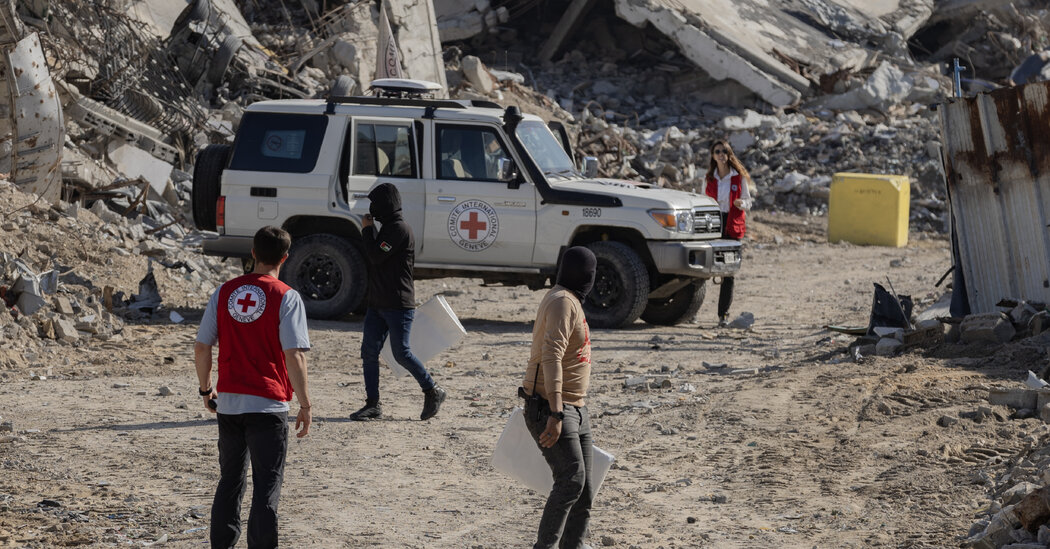
The Supreme Court of Israel delivered a landmark verdict on Wednesday that directly challenges the limits of state power during wartime, ruling that the government’s systematic ban on visits to Palestinian prisoners by the International Committee of the Red Cross (ICRC) represents a fundamental violation of both Israeli constitutional principles and established international law. This decisive judicial intervention dismantles a restrictive security policy enacted in the emotional and chaotic aftermath of the October 7, 2023, Hamas-led attacks, which had effectively walled off thousands of detainees from any independent international oversight. In a comprehensive and firm directive, the high court ordered the immediate reinstatement of confidential face-to-face meetings between Red Cross representatives and individuals classified as “security” prisoners, while simultaneously requiring Israeli authorities to resume sharing critical institutional information regarding detainees—a humanitarian practice that had been standard operating procedure prior to the outbreak of the war in Gaza. By striking down this wartime administrative ban, the court has set a significant legal precedent, asserting that national security crises, no matter how severe, do not grant the executive branch a blank check to suspend the baseline human rights of those in state custody.
The Security Lockout: Inside the Battle Over Palestinian Security Detainees
To understand the profound legal and political friction surrounding this case, one must examine the rapid expansion of the Gaza war detention infrastructure and the subsequent legal maneuvers employed by the government of Prime Minister Benjamin Netanyahu to shield it from external scrutiny. In the immediate wake of the October 7 tragedy, which claimed approximately 1,200 Israeli lives and saw hundreds taken hostage, the state implemented a sweeping, ironclad blockade on all Palestinian inmates designated as “security detainees”—a classification that isolates them from ordinary criminal prisoners and subjects them to highly militarized, deeply restrictive custodial regimes. As human rights groups challenged this total communication blackout in early 2024, the state repeatedly delayed proceedings, petitioning the court for more than twenty distinct extensions to buy time while refusing to address the core constitutional arguments at hand. Even when Prime Minister Netanyahu issued a highly publicized administrative directive in May that theoretically allowed the Red Cross to enter military detention centers, he explicitly barred representatives from actually speaking with or personally examining the prisoners. This half-measure was ultimately rejected by the justices, who criticized the government’s evasive litigation strategy and ruled that superficial access without private interviews failed to satisfy the state’s legal obligations under domestic and international humanitarian law.
Whispers of Abuse: The Looming Crisis of Accountability in Israeli Prison Conditions
The high court’s decision arrives at a moment of intensifying international scrutiny, as the state faces a wave of harrowing allegations concerning the deterioration of Israeli prison conditions and the systemic abuse of Palestinian detainees held in military camps. Throughout the duration of the visitation ban, human rights groups of both domestic and international origin had warned that the absence of independent observers created a dangerous vacuum of accountability where mistreatment could occur with complete impunity. These concerns were validated on the world stage when the United Nations published its annual report on sexual violence in conflict zones, taking the historic step of including Israel in its documentation due to verified accounts of severe physical and psychological degradation in facilities such as the Sde Teiman military camp. In response, Israel reacted with diplomatic defiance, threatening to sever ties with the United Nations leadership over what it deemed a biased and politically motivated report—a move that only underscored the deep disconnect between the state’s executive leadership and global humanitarian standards. By opening the prison doors to the Red Cross, the Supreme Court has re-established a vital mechanism for documenting complaints and monitoring the daily well-being of the roughly 9,000 security detainees currently in custody, providing their desperate families in the West Bank and Gaza with a desperately needed, verified pipeline of information.
The Shadow of the October 7 Hostage Crisis: Rejecting the Politics of Reciprocity
Throughout the protracted litigation, a painful moral and physical reality hung heavily over the courtroom: the ongoing, agonizing plight of approximately 250 Israeli hostages taken by Hamas, many of whom have been held in Gaza’s subterranean tunnels under brutal, lawless conditions without ever receiving a single visit or medical evaluation from the Red Cross. Attorneys representing the state frequently invoked this stark lack of reciprocity as a primary moral and security justification for maintaining the visitation ban on Palestinian prisoners, arguing that Israel should not extend humanitarian benefits to detainees associated with a group that systematically flouts the Geneva Conventions. However, the Supreme Court resolutely rejected this logic, establishing a critical ethical distinction by ruling that a democratic, law-abiding state cannot pin its adherence to human rights in Israel on the unlawful behavior of a militant organization. The justices emphasized that Israel’s moral authority and legal legitimacy do not derive from matching the lawlessness of its adversaries, but rather from its unwavering commitment to its own democratic laws and international treaty commitments. By decoupling the plight of the Israeli hostages from the treatment of Palestinian detainees, the court upheld the foundational premise of international humanitarian law, declaring that basic human rights are absolute and non-negotiable rather than transactional bargaining chips to be traded in times of war.
Defining Democratic Standards: Why External Prison Oversight is Not a “Luxury”
Writing the majority opinion for the court, Justice Daphne Barak-Erez delivered an eloquent defense of democratic self-correction, famously declaring that maintaining baseline humanitarian standards for prisoners in state custody is not an optional “luxury” but an absolute necessity for any civilized society. She robustly argued that allowing independent oversight from organizations like the Red Cross is actually a strategic benefit to the state, as it provides an objective, external perspective that prevents the prison system from degenerating into a lawless environment of unchecked authority. Her legal analysis highlights a vital truth of governance: when a country walls off its detention facilities from the outside world, it not only harms the vulnerable individuals within but also erodes its own institutional integrity and damages its standing on the global stage. The court’s ruling recognizes that criticism and detailed documentation provided by neutral third parties act as an essential safety valve, forcing military and correctional authorities to adhere to the rule of law and preventing the systemic abuses that thrive in darkness. By framing the return of the Red Cross as a triumph of democratic accountability rather than a concession to the enemy, the judiciary has directly challenged the prevailing political narrative that views human rights monitoring as a form of foreign interference, reminding the nation that a truly secure democracy must have the strength to withstand the scrutiny of its own values.
Resuming the Mission: The Uncertain Road to Implementation and Global Reverberations
As the legal dust settles, the international community is closely watching how the Netanyahu administration intends to execute this sweeping judicial mandate while navigating intense domestic opposition and ongoing military operations. The Red Cross immediately welcomed the High Court’s ruling as a vital affirmation of its global humanitarian mission, declaring its readiness to mobilize its staff and resume active oversight of the thousands of Palestinian detainees who have spent nearly three years in virtual isolation. Legal advocacy groups, including the Association for Civil Rights in Israel, celebrated the verdict as a historic victory for constitutional rights, noting that the return of independent monitors will finally allow for a comprehensive, objective assessment of the physical conditions within military camps. However, the path forward remains highly complex, as right-wing politicians and security hardliners within the governing coalition have already criticized the ruling as an overreach of judicial power that sympathizes with security threats at the expense of national defense. Ultimately, the successful implementation of this ruling will serve as a crucial test of Israel’s constitutional resilience, demonstrating whether its democratic institutions possess the strength to enforce the rule of law and defend human dignity in the face of perpetual conflict and unprecedented political pressure.