


The Echoes of Beaufort: Inside Israel’s High-Stakes Ground Campaign in Southern Lebanon
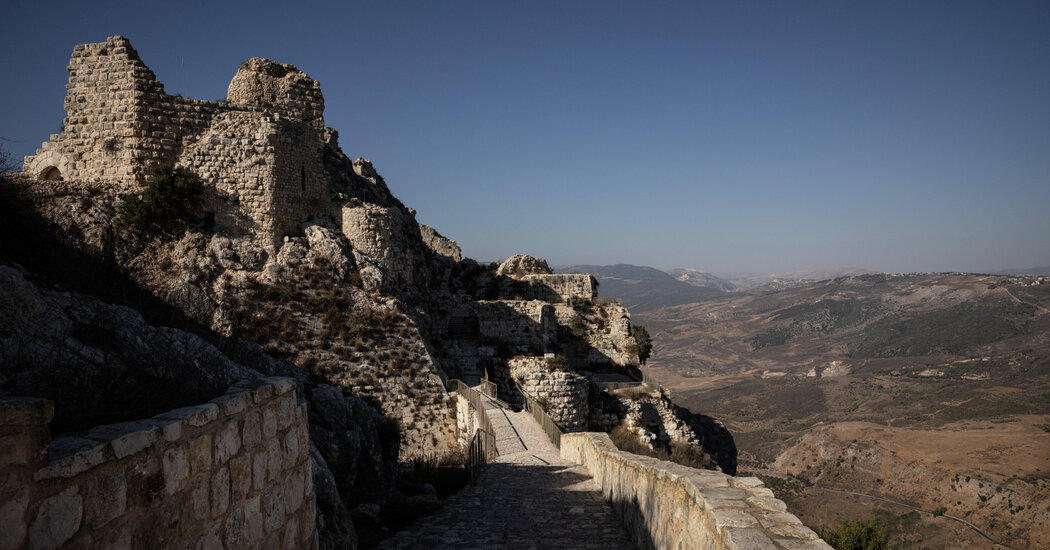
On a windswept ridge overlooking the shimmering waters of the Litani River, an old ghost has reawakened. The Israeli military’s announcement on Sunday that its ground forces had captured the strategic hilltop of Beaufort Castle—a towering Crusader fortress in southern Lebanon—marks a pivotal and highly symbolic development in what has rapidly become the most sweeping Israeli invasion of its northern neighbor in decades. For Israeli commanders, the raising of the blue-and-white national flag over the ancient stone battlements is a tactical triumph, an assertion of physical dominance over a landscape that has defined the nation’s military anxieties for forty years. Yet, to those who remember the grueling war of attrition that ended here at the turn of the millennium, the image of Israeli soldiers once again patrolling the heights of Beaufort is deeply unsettling. It serves as a stark reminder of historical cycles that seem impossible to break, dragging two nations back into an intimate, deadly embrace on the very soil where a previous generation fought and bled.
                ┌──────────────────────────────┐
                │       BEAUFORT CASTLE        │
                │   (Strategic Litani Ridge)   │
                └──────────────┬───────────────┘
                               │
          ┌────────────────────┴────────────────────┐
          ▼                                         ▼
[Historical Occupation] [Modern Convergence]
• 1982: Captured from PLO • Feb: US-Israel/Iran War
• 1982-2000: “Security Belt” • Apr: Trump-brokered Truce
• 2000: Bitter Israeli Retreat • Jun: Ceasefire Collapse
The capture of this iconic stronghold occurs in an atmosphere of tense silence from the other side of the border. As of Sunday evening, neither the leadership of Hezbollah nor the Lebanese caretaker government in Beirut had issued a formal response to the loss of the heights. The silence is telling, reflecting a grueling guerrilla war that is being fought not just for territory, but for the narrative of resistance itself. Across southern Lebanon, the landscape is once again alive with the sights and sounds of asymmetric warfare. More than a quarter-century after Israel first established what it termed a “security belt” to shield its northern towns from rocket fire, the geopolitical chessboard has reverted to its old, bloody configuration. Once again, Hezbollah fighters are utilizing the rugged, cave-riddled terrain of the south to wage a relentless hit-and-run campaign against invading armor. Once again, Israeli policymakers in Jerusalem are discussing the long-term occupation of a buffer zone. As the Israeli flag flutters in the Mediterranean breeze above the fortress walls, the haunting sense of déjà vu is inescapable, raising urgent questions about whether military victory in this rugged terrain is an illusion.
The Haunted Fortress: How a Crusader Relic Became the Symbol of Israel’s Longest War
To understand why the fall of Beaufort has sent such profound shockwaves through the collective consciousness of both Israel and Lebanon, one must look to the blood-stained history of the fortress itself. Originally constructed by Crusader knights in the twelfth century to guard the mountain passes leading to Damascus, Beaufort Castle is a natural military citadel. Chiseled directly into a sheer cliff face that drops nearly a thousand feet into the Litani valley, it offers unparalleled observation of northern Galilee and the southern Lebanese interior. In June 1982, during the opening hours of Israel’s invasion of Lebanon, the stronghold—then occupied by the Palestine Liberation Organization (PLO)—was assaulted by Israeli commandos in a fierce, hand-to-hand battle that became an instant legend of military bravery and political controversy. That night set the tone for the next eighteen years, as the fortress evolved from a temporary outpost into the crown jewel of Israel’s permanent occupation zone.
12th Century 1982 1982-2000 2000 Present┌───────────────────────┐ ┌───────────────┐ ┌──────────────────┐ ┌───────────────┐ ┌───────────────┐
│ Crusader Fortress ││ Captured from ││ “Security Belt” ││ Withdrawal ││ Rekindled War │
│ Strategic Foothold │ │ the PLO │ │ Outpost Garrison │ │ Under Fire │ │ Over Fortress│
└───────────────────────┘ └───────────────┘ └──────────────────┘ └───────────────┘ └───────────────┘
For nearly two decades, Beaufort was the most exposed and heavily targeted outpost in the “security belt.” Shielding the Israeli soldiers inside were thick concrete bunkers poured over medieval stone, yet even these reinforcements could not fully protect them from the relentless barrage of mortars, rocket-propelled grenades, and roadside bombs deployed by a young, rising militia called Hezbollah. The sustained casualties suffered at Beaufort and neighboring outposts slowly transformed the fort in the Israeli public imagination from a symbol of martial pride into a monument of futility. It sparked a powerful domestic anti-war movement led by the mothers of conscripts, culminating in the hasty, pre-dawn demolition and withdrawal from the site in May 2000 under the government of Ehud Barak. The psychological scars of that era were deep enough to inspire an award-winning novel and an Oscar-nominated film, both simply titled Beaufort. Today, the return of Israeli troops to these ruins brings those buried national traumas back to the surface, prompting many veterans to ask if the hard-learned lessons of the past have been forgotten.
The Illusion of High Ground: Why Military Analysts Doubt the Conquest’s Strategic Value
In the wake of Sunday’s announcement, Israeli Prime Minister Benjamin Netanyahu lost no time in celebrating the development, casting the capture of Beaufort Castle as a “dramatic step” forward in neutralizing threats along the country’s northern border. Speaking to his cabinet, Netanyahu vowed that the military offensive would continue to push deeper into Lebanese territory until the residents of Galilee could return to their homes in absolute safety. The domestic political utility of such an announcement is obvious: it provides a war-weary public with a tangible, photogenic victory. However, beneath the triumphalist rhetoric of the political leadership lies a more sober assessment from seasoned military analysts and defense experts, who warn that the capture of physical landmarks—no matter how historic—does little to alter the structural realities of modern, decentralized warfare.
      ┌─────────────────────────────────────────────────────────┐
      │               TACTICAL DEBATE: BEAUFORT                 │
      └────────────────────────────┬────────────────────────────┘
                                   │
        ┌──────────────────────────┴──────────────────────────┐
        ▼                                                     ▼
 [Government View]                                    [Military Reality]
• High-altitude dominant ground • Decentralized drone teams
• Direct line of sight to Litani • Underground rocket silos
• High-profile victory for morale • Exposure to light infantry
“Beaufort itself ultimately became a symbol for the entire Israeli presence in Lebanon,” notes Haim Har-Zahav, a prominent Israeli author and veteran who fought in the security zone during the bloody stalemates of the 1990s. Har-Zahav’s perspective is grounded in the hard-won experience of a soldier who watched friends die defending a hilltop that was ultimately abandoned. He warns that the current government may be barreling headlong into the same strategic disaster that defined his youth. Modern military analysts point out that Hezbollah’s current arsenal is vastly different from the crude katyushas of the 1980s. The group now relies on mobile, highly concealed drone launchers, precision-guided cruise missiles, and underground rocket silos buried deep within agrarian valleys—assets that do not require high-altitude fortresses to operate. By massing troops on highly visible features like the Beaufort ridge, the military risks offering Hezbollah’s light infantry and anti-tank teams target-rich environments, threatening to pull Israel into another long-term war of attrition that cannot be solved by conventional territorial conquests.
Regional Chessboard: How the Battle of Beaufort Threatens Trump’s Diplomatic Gambits
The escalating fighting in southern Lebanon does not occur in a vacuum; rather, it is the most volatile front in a broader regional war that erupted in late February, when Israel and the United States launched a coordinated campaign against Iranian interests. In response to those initial hostilities, Tehran’s regional allies, led by Hezbollah, mobilized to strike back. Seeking to project solidarity with its patron, Hezbollah began launching high-volume rocket barrages into northern Israel in early March, initiating a cycle of violence that has steadily intensified despite intense international efforts to restrain it. The threat of an all-out regional conflagration prompted U.S. President Donald Trump to intervene directly, brokering a nominal ceasefire in April that was intended to freeze the frontlines and lay the groundwork for a broader diplomatic grand bargain with Iran.
               WASHINGTON (Trump Administration)
                   ▲                     ▲
                   │ Diplomatic          │ Structural
                   │ Pressure            │ Alignment
                   ▼                     ▼
           JERUSALEM  ◄───────────────►  BEIRUT / TEHRAN
           (Netanyahu)    Ground War     (Hezbollah / IRGC)
Now, barely two months after that diplomatic breakthrough, the Trump-brokered truce exists only on paper. The capture of Beaufort represents the symbolic nail in the coffin of that diplomatic effort, demonstrating that neither side is currently willing to abide by the parameters of the April agreement. The breakdown of the ceasefire has placed Prime Minister Netanyahu in a delicate domestic and international position. While he faces immense pressure from coalition partners and the displaced populations of northern Israel to crush Hezbollah’s military capacity entirely, he must also avoid alienating his chief benefactor in Washington. President Trump has repeatedly signaled that his administration’s priority is a negotiated settlement to end the wider war with Iran, viewing prolonged ground conflicts in the Levant as a distraction from his broader foreign policy goals. By escalating the ground offensive in southern Lebanon, the Israeli government is testing the limits of Washington’s patience, betting that the tactical advantages gained on the ground will outweigh the potential diplomatic fallout with its closest ally.
A Broken Truce and a Million Displaced: The Severe Humanitarian Toll of the Resurgent Conflict
While military commanders analyze satellite imagery and politicians debate strategy in air-conditioned war rooms, the human cost of this renewed war is being borne by the civilian populations on both sides of the Blue Line. According to latest estimates from United Nations agencies operating in the region, the humanitarian situation in southern Lebanon has reached crisis proportions, with more than one million Lebanese citizens now displaced from their homes. Entire villages within the Litani River basin have been emptied of their inhabitants, who fled northward in panic following sweeping evacuation orders issued by the Israeli military. Those who remain are often the elderly, the sick, or the impoverished, trapped in a zone of active hostility where basic services, clean water, and medical supplies are increasingly scarce.
| Metric | Impact / Statistics | Affected Group / Region |
|---|---|---|
| Displaced Civilians | Over 1,000,000 people displaced | Southern Lebanon populations |
| Casualty Toll | 3,000+ fatalities since March | Lebanese civilians & combatants |
| Israeli Ground Attrition | ~12 military personnel killed | IDF patrols near the Blue Line |
| Daily Operations | Continuous airstrikes & shellings | Southern Lebanon border towns |
According to Lebanese health authorities, daily Israeli airstrikes—which the Israel Defense Forces (IDF) insist are targeted exclusively at Hezbollah infrastructure, launch pads, and weapons caches—have killed hundreds of people since the nominal ceasefire was declared in April, including a significant number of non-combatants. Conversely, the violence is not a one-way street. Hezbollah has continued to demonstrate its capacity to inflict pain on the invading forces, employing sophisticated anti-tank guided missiles and explosive drones with devastating efficacy. The Israeli military acknowledges that roughly a dozen of its soldiers have been killed in action within southern Lebanon since the nominal truce went into effect last month. Furthermore, the psychological terror of war continues to grip northern Israel, where Hezbollah rocket fire frequently triggers air-raid sirens in major cities, forcing hundreds of thousands of Israelis into bomb shelters and preventing any immediate return of displaced families to their homes.
The Endless Loop: Can Israel Avoid the Quagmire of Southern Lebanon?
With the flag of Israel flying over the battlements of Beaufort Castle, the conflict stands at a critical juncture. The military success of the operation has provided the Israeli government with a strong position from which to dictate terms, but it also increases the risk of strategic overreach. The history of foreign interventions in Lebanon—whether by Ottoman pashas, French administrators, multinational peacekeepers, or the Israeli military—is a chronicle of initial battlefield successes that ultimately degraded into long-term, exhausting campaigns of attrition. The complex sectarian dynamics of Lebanon, combined with Hezbollah’s deep integration into the social and physical fabric of the country’s south, mean that the group cannot be easily extirpated by armor and airstrikes alone.
                ┌──────────────────────────────┐
                │      THE STRATEGIC LOOP      │
                └──────────────┬───────────────┘
                               │
     ┌─────────────────────────┼─────────────────────────┐
     ▼                         ▼                         ▼
[Ground Offensive] [Outpost Garrison] [Counter-Insurgency]
IDF advances into Forces occupy high Hezbollah launches
southern Lebanon. ground (Beaufort). asymmetric war.
▲ │
└─────────────────────────◄─────────────────────────┘
As the conflict grinds on, the central dilemma facing Israel’s leadership remains unresolved: how to translate tactical battlefield victories into a sustainable, long-term political settlement. Establishing a permanent “security belt” around landmarks like Beaufort may temporarily push Hezbollah’s tactical rocket teams back from the border, but it also creates a static front line that plays directly into the hands of a patient guerrilla movement. For Prime Minister Netanyahu, the path forward is fraught with risk. If he halts the advance now, he stands accused by political opponents of failing to secure a decisive victory; if he pushes further north across the Litani, he risks getting bogged down in an open-ended occupation of hostile territory. In either scenario, the imposing stone walls of Beaufort Castle stand as an enduring warning. Capable of surviving centuries of war, the historic fortress remains a monument to an uncomfortable truth: in the rugged hills of southern Lebanon, capturing the high ground is often the simple part—it is finding a way back down that has always cost the most.