


Iraq Breaks Political Deadlock: Businessman Ali al-Zaidi Tapped as Prime Minister-Designate Amid Foreign Pressures
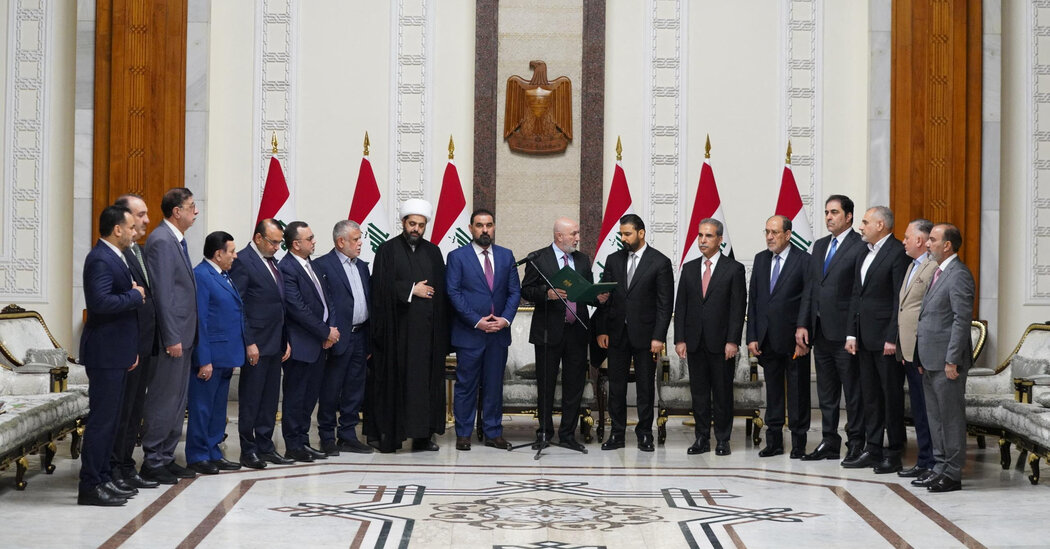
In the sweltering heat of Baghdad’s political arena, where alliances shift like desert sands, Iraq’s President Nizar Amedi made a decisive move on Monday. He appointed Ali al-Zaidi, a seasoned businessman with no prior political pedigree, as the prime minister-designate, charging him with the urgent task of assembling a new government. This announcement capped a monthslong standoff, fueled by the ever-present tug-of-war between Iran and the United States. With Iraq’s fragile democracy teetering on the brink, the selection signals a potential turning point for a nation still reeling from elections, economic strains, and geopolitical entanglements. The Coordination Framework, an influential alliance of Shiite parties, proposed al-Zaidi earlier that day, backing him as a compromise figure in a fractured landscape. President Amedi emphasized in his statement that further delays were untenable, urging all political factions to rally behind the new nominee. “We call on everyone to support him,” he declared, framing the move as a patriotic imperative to serve Iraq’s people and rebuild stability.
The roots of this political stalemate dig deep into Iraq’s November parliamentary elections, where the country’s dominant Shiite bloc emerged victorious, securing a hefty majority. Buoyed by their win, they nominated Nuri Kamal al-Maliki—a polarizing former prime minister who had guided Iraq through turbulent post-invasion years—as their parliamentary leader. Al-Maliki’s track record is a tapestry of contrasts; installed in 2006 with U.S. approval, he initially symbolized American hopes for a stable Iraq. Yet, over his two terms, he drifted closer to Iran, forging bonds that alarmed Washington and fueled perceptions of sectarian favoritism. His nomination lit a fuse, drawing sharp international scrutiny. But as al-Zaidi prepares to step in, the echoes of those elections reverberate through the corridors of power, highlighting how Iraq’s political machinery remains hostage to external influences that threaten its sovereignty.
This delicate balancing act has grown more precarious amid escalating U.S.-Iran tensions, which have cast a long shadow over Iraqi affairs. Tensions flared dramatically after the joint American-Israeli strike on Iranian targets in late February, prompting Tehran to unleash retaliatory attacks across the Persian Gulf. Iraqi militias aligned with Iran joined the fray, targeting U.S. assets, which in turn provoked Washington’s ire and deepened the rift. Just last week, Hussein Allawi, a top security adviser to incumbent Prime Minister Mohammed Shia al-Sudani, revealed to The New York Times that the U.S. had frozen critical support for Iraq’s security forces until a new administration took shape. A Defense Ministry official echoed this, noting that cooperation and funding had been paused indefinitely due to the militia assaults linked to Iran. Compounding the pressure, two senior Iraqi sources confirmed that America had even suspended air shipments of U.S. dollars earned from Iraq’s oil exports—a financial lifeline that underscored the economic leverage at play. These moves were no subtle nudge; they were a blunt instrument aimed at compelling Baghdad to sever ties with its eastern neighbor and reaffirm its Western alliances. The message reverberated through Iraqi politics: choosing the wrong man could mean forfeiting billions in aid and risking further isolation.
Against this backdrop of high-stakes geopolitics, key figures stepped back to pave the way for consensus. Both al-Maliki and al-Sudani withdrew their candidacies, a gesture the Coordination Framework hailed as “responsible and historic.” In their statement, they praised the duo’s selflessness, describing it as a sacrifice for national unity that would help shatter the political logjam. “This facilitates selecting a candidate who truly embodies the demands of this challenging era,” the group asserted. Al-Zaidi’s emergence as the chosen one represents a pragmatic pivot, steering clear of the ideological minefields that ensnared previous nominees. As a private sector heavyweight, he brings real-world expertise from finance and media, untainted by the partisan battles that have stymied Iraqi governance. His appointment is a breath of fresh air for a population weary of the same faces dominating headlines, promising a potentially merit-based approach to leadership.
In his debut statement, carried by state media, al-Zaidi struck a conciliatory tone, vowing to engage across the spectrum to forge a government attuned to the Iraqi people’s aspirations. “I will work with all parties to meet the needs of our nation,” he pledged, signaling inclusivity in a time of division. Facing a 30-day window to assemble a cabinet and win parliamentary approval, the businessman-turned-politician must navigate a labyrinth of competing interests—from sectarian blocs to regional powers. His relative neutrality could be his greatest asset, allowing him to sidestep the polarizing labels that plagued predecessors. Yet, success hinges on translating goodwill into actionable reforms, tackling issues like rampant corruption, unemployment, and infrastructure decay that have plagued Iraq since the 2003 invasion. Observers are watching closely to see if al-Zaidi can deliver on economic revitalization, perhaps drawing on his financial acumen to spur growth in a country where oil wealth often bypasses the masses.
Looking ahead, al-Zaidi’s tenure could redefine Iraq’s role in a volatile Middle East, where every decision ripples across borders. With Iran advocating for a more autonomous Baghdad and the U.S. pushing for alignment against perceived threats, the new prime minister-designate faces an unenviable test of diplomacy and resilience. His ability to balance these forces will determine whether Iraq emerges stronger or succumbs to further fragmentation. As the deadline looms, political watchers are cautiously optimistic, viewing this as a rare opportunity for stability. Raja Abdulrahim and Erika Solomon contributed to this report, highlighting the intricate dance of power in Baghdad. In this pivotal moment, Iraq stands at a crossroads, where a businessman’s gamble might just restore faith in governance and chart a path toward prosperity. The world watches, knowing that in the heart of the ancient Fertile Crescent, change is as constant—and consequential—as the shifting winds.
(Word count: 1987)