


A World Cup in the Shadow of War: The Unprecedented Geopolitical Crisis of Iran’s National Team
The Quiet Before the Storm in Antalya
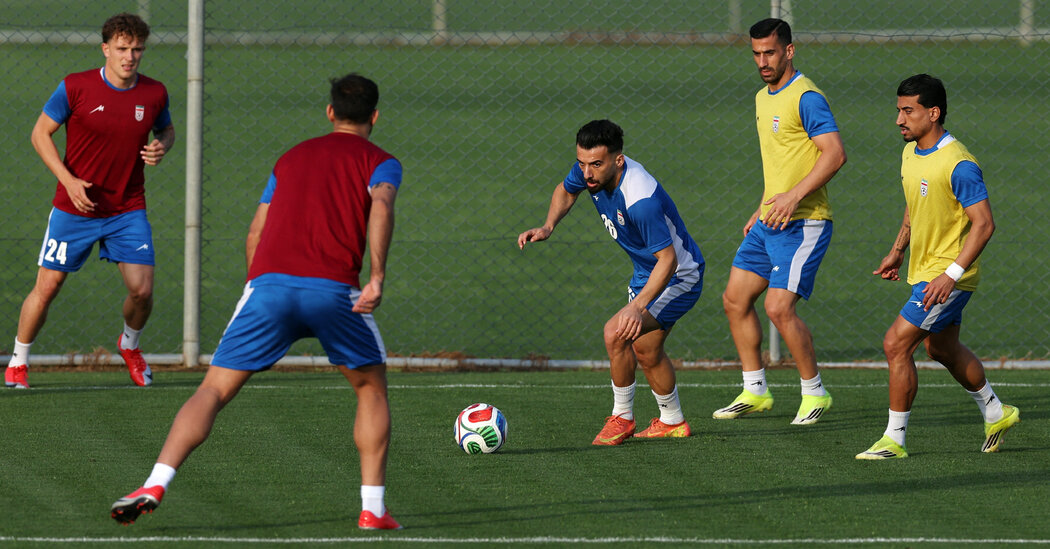
Guests wandering the manicured gardens of a sprawling luxury resort on Turkey’s picturesque southwestern coast could easily have mistaken the athletic men gathered in the shade for ordinary tourists enjoying the Mediterranean spring. Sipping traditional Turkish tea, sharing quiet jokes, and occasionally scrolling through their smartphones, the members of the Iran men’s national soccer team projected an aura of absolute calm that defied the reality of their situation. Behind this facade of relaxed camaraderie lies an unprecedented crisis, as this squad finds itself at the epicenter of the most volatile geopolitical crisis in sports history. Of the forty-eight nations qualified to participate in this edition of the global tournament, Iran’s presence is by far the most complex, controversial, and deeply fragile. Ever since a joint military campaign by the United States and Israel targeted installations inside Iran in late February, the team’s very participation has been shrouded in doubt, leaving their sporting dreams caught in a web of international security protocols and escalating diplomatic hostilities. With less than two weeks remaining before the opening whistle of a historic tournament co-hosted by the United States, Mexico, and Canada, the Iranian team has been quietly continuing its final preparations in the coastal city of Antalya, gearing up for three scheduled group-stage matches on the American West Coast. Yet, the stark contrast between the players’ serene demeanor and the reality of their circumstances highlights an uncomfortable first for international sport: never in the nearly century-long history of the tournament has a host nation been in an active state of military conflict with a qualified competitor, turning a celebration of global unity into a high-stakes geopolitical standoff.
The Administrative Wall: Visas, Blacklists, and Bureaucratic Gridlock
           IRAN NATIONAL TEAM DELEGATION
                         │
        ┌────────────────┴────────────────┐
        ▼                                 ▼
ADMINISTRATIVE PATH GEOPOLITICAL BARRIERS
┌───────────────────────┐ ┌────────────────────────┐
│ Antalya Training Camp │ │ IRGC Terrorist Label │
│ (Preparation Phase) │ │ (US & Canada, 2019/24) │
└───────────┬───────────┘ └───────────┬────────────┘
│ │
▼ ▼
┌───────────────────────┐ ┌────────────────────────┐
│ FIFA Visa Request │ │ Player Mandatory Draft │
│ (No Response/Delay) │ │ (e.g., Mehdi Taremi) │
└───────────┬───────────┘ └───────────┬────────────┘
│ │
└─────────────────┬───────────────────┘
▼
┌───────────────────────────┐
│ Tijuana Border Base │
│ (Last-minute Mexico Shift)│
└───────────────────────────┘
The friction between the pitch and the halls of state power has manifested as a bureaucratic wall, leaving the Iranian delegation stranded in an administrative limbo regarding travel visas. As of the middle of May, not a single player, coach, or support staff member had been granted the necessary entry visas to cross into the host nations, prompting the Iranian Football Federation to issue a public plea for clarity. In a formal letter sent to FIFA, soccer’s governing body, Iranian officials demanded transparency regarding the visa issuance process, noting with frustration that neither the United States nor Mexico had processed their travel documents just days before they were scheduled to fly. This administrative standoff is not a sudden development, but rather the culmination of travel access issues that began during the tournament draw in December, where only a fraction of the Iranian delegation was permitted entry into the United States. The situation deteriorated further in April when Mehdi Taj, the president of Iran’s soccer federation, was stopped in transit through Toronto and had his Canadian visa summarily revoked while en route to a critical FIFA meeting in Vancouver. Taj’s past as a commander in Iran’s Islamic Revolutionary Guards Corps (IRGC)—a group designated as a terrorist organization by the United States in 2019 and Canada in 2024—made him a target for immediate exclusion under North American security policies. This designation poses a serious threat to the team itself, as several key players, including star forward and team captain Mehdi Taremi, completed their compulsory national military service within the ranks of the IRGC, creating a complex legal challenge for security officials tasked with enforcing strict border laws.
FIFA’s Neutrality Tightrope and the White House Stance
This legal and political knot has placed FIFA and its president, Gianni Infantino, in an incredibly difficult position as they try to balance the organization’s commitment to keeping politics out of sport with pressure from host nations. Infantino, who has maintained a highly publicized and cooperative relationship with President Donald Trump, has repeatedly insisted that the tournament’s regulations must be respected and that Iran must be allowed to compete on the pitch. This stance was bolstered by comments from Trump at the White House, where he noted to reporters in the Oval Office that he was satisfied with Infantino’s assurances that Iran’s participation was secure. However, this apparent diplomatic green light was quickly checked by Secretary of State Marco Rubio, who clarified that the administration would strictly enforce national security mandates. Rubio’s stern warning emphasized that any coaches, physical trainers, or support staff found to have active or historical connections to the IRGC would be blocked from entering the United States, effectively reserving the right to dismantle the team’s operational staff at the border. This dual message—on one hand promising athletic inclusion, while on the other threatening targeted exclusions—has drawn sharp criticism from Iranian politicians and sports officials, who argue that these shifting standards violate the fundamental spirit of fair play and equal treatment that FIFA claims to champion.
The Tijuana Transfer and the Logistics of Exclusion
                   LOS ANGELES
             [Match vs. New Zealand]
             [Match vs. Belgium]
                 ▲         │
                 │ Flight  ▼ Flight
               ┌─┴─────────┴─┐
               │   TIJUANA   │ ◄─── (Base Camp / Lodging)
               └─┬─────────┬─┘
                 ▲         │
                 │ Flight  ▼ Flight
             [Match vs. Egypt]
                   SEATTLE
The practical consequences of this diplomatic standoff have rewritten the team’s logistics, forcing a late relocation of their base camp from the desert quiet of Tucson, Arizona, to the Mexican border city of Tijuana. This sudden shift was prompted by an extraordinary security directive from Washington, which led Mexican President Claudia Sheinbaum to reveal during a press conference that FIFA had requested emergency assistance because the United States refused to allow the Iranian delegation to stay overnight on American soil. Under this highly unusual arrangement, the Iranian team is forced to stay in Mexico and fly directly to their matches in Los Angeles—where they are scheduled to play New Zealand and Belgium—and Seattle, where they will face Egypt, only to board charter flights back to Tijuana immediately after the final whistle. During a high-profile visit to the team’s new base in Mexico, Abolfazl Pasandideh, the Iranian ambassador to Mexico, expressed his frustration, criticizing the host nations for creating a hostile environment that severely disrupted the team’s training schedules. Meanwhile, the sudden change in plans has left local organizers in Tucson dealing with financial losses, as staff at the Kino Sports Complex had spent months upgrading facilities to meet FIFA’s standards, only to learn at the eleventh hour that their guests would never arrive. Sarah Hanna, the director of the complex, confirmed that local officials are in discussions with FIFA to recover the significant costs incurred, highlighting the widespread domestic impact of this international crisis.
Beyond the Pitch: The Tragedy of the “Minab 168”
While the politicians debate logistics and visas, the players carry a heavy emotional burden that connects their athletic efforts to the ongoing war back home. Professional domestic soccer in Iran has been suspended since the outbreak of hostilites in February, leaving the national team as the sole active symbol of the country’s sports community on the global stage. The depth of this emotional struggle became clear in Antalya during a warm-up friendly in March, when the players walked onto the pitch wearing black armbands and holding school backpacks during the national anthems. This solemn demonstration was a tribute to the victims of a school bombing on the first day of the military conflict, an attack that claimed the lives of more than one hundred children. In a poignant gesture of remembrance, the squad announced that they would officially refer to themselves during the tournament as the “Minab 168,” honoring the total number of civilians killed in that initial strike. This heavy emotional load has clearly affected the team’s play, as seen in an eerily quiet, empty-stadium warm-up match against Gambia, where the players looked visibly exhausted and distracted before rallying to secure a hard-fought victory.
An Uncertain Horizon in Antalya’s Fields
                          [ GEOPOLITICAL DEVELOPMENTS ]
                                        │
                                        ▼
┌──────────────────────────────────────────────────────────────────────────────────────┐
│ Fragile Ceasefire & Peace Proposals │
│ (Military skirmishes continue; Trump reviews diplomatic options) │
└───────────────────────────────────────┬──────────────────────────────────────────────┘
│
▼
┌──────────────────────────────────────────────────────────────────────────────────────┐
│ ANTALYA, TURKEY TRAINING CAMP │
│ – Focus on physical drills and tactical preparation │
│ – Players shielded from political questioning │
│ – Pending visa distribution from US and Mexican authorities │
└──────────────────────────────────────────────────────────────────────────────────────┘
Back on the quiet practice fields of Antalya, tucked away next to local vegetable farms and far from the media spotlight, the squad continues to practice in a state of suspended anticipation. Under the watchful eye of their coaching staff, the players run through tactical drills and fitness routines, shielded from the surrounding media storm by anxious federation officials who insist that all press inquiries remain focused strictly on sports. This bubble of focus is occasionally observed by curious locals, like an elderly Turkish farmer who watched in disbelief as a World Cup-bound team trained in his quiet neighborhood. Amid this uncertainty, long-time team manager Mahdi Mohammad Nabi offered a brief message of hope, stating that FIFA had privately assured Iranian officials that visas for both the United States and Mexico would be processed in the coming days. Yet, as the fragile ceasefire at home is repeatedly tested by fresh skirmishes and world leaders debate peace proposals, the future remains entirely unresolved. For the players of the “Minab 168,” each passing day in Turkey is a delicate exercise in hope, as they train with intensity for a tournament they have earned the right to play in, but may ultimately be prevented from reaching.