






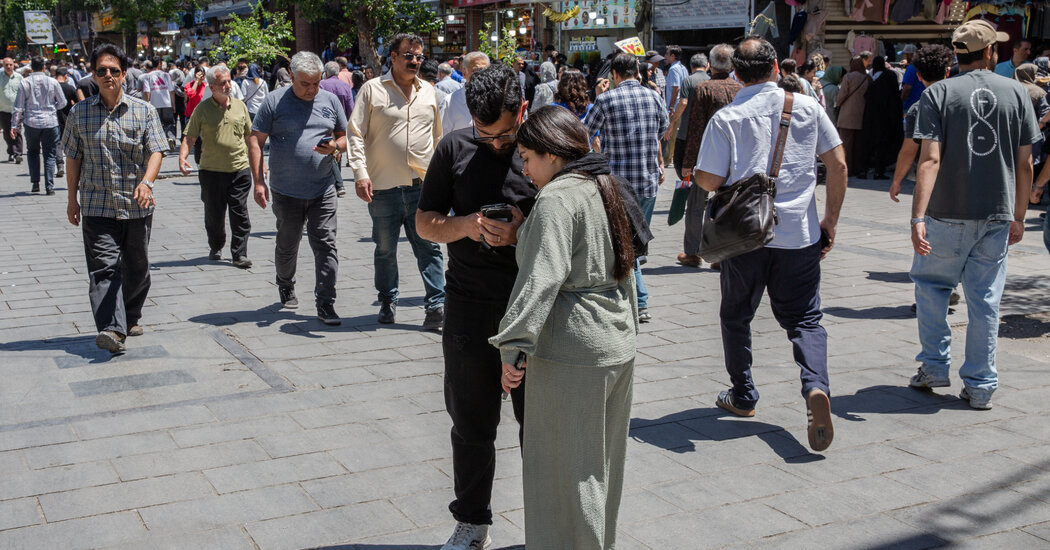
Imagine waking up one morning to find that the vast, invisible threads connecting you to the rest of global human society have been abruptly severed, plunging your entire world into a quiet, suffocating vacuum of digital silence. For eighty-eight agonizing days, this was the grim, day-to-day reality for nearly ninety million people living in Iran, who endured what digital rights advocates have classified as the longest nationwide internet shutdown in modern history. Throughout this prolonged period of forced isolation, the routine, almost subconscious digital habits that define modern human existence—checking in on loved ones across the globe, accessing independent foreign journalism, keeping independent businesses afloat, or simply finding distraction in a streaming television show—were completely eradicated. When the state finally began loosening its iron grip on the nation’s communication channels, the sudden rush of connectivity was met not with unalloyed joy, but with a deeply complicated, bitter mixture of relief and profound humiliation. This emotional complexity was vividly articulated by Hamid, a twenty-nine-year-old technology professional living in the bustling, chaotic capital of Tehran, who described his immediate reaction in a voice note recorded just moments after his devices reconnected to the global web. Hamid confessed to feeling an embarrassing, almost degrading sense of happiness about the restoration of a simple connection, lamenting that a basic utility, which should be as fundamental and unremarkable as running water or electricity, had become a cause for celebration. As a software worker whose entire livelihood and social ecosystem depended on his ability to access foreign servers and communicate globally, he described the preceding months as a period of complete stagnation, during which his career was frozen. Yet, even as he spoke of his newfound digital freedom, the shadow of authoritarianism loomed large; like many others who shared their experiences, Hamid insisted on partial anonymity, knowing that speaking honestly to a foreign observer could carry severe consequences in a society where surveillance outlives any temporary technological thaw.
The origins of this unprecedented digital blockade trace back to February 28, a dark date when regional geopolitical tensions erupted into active military conflict involving Iran, Israel, and the United States. Under the standard playbook of authoritarian governance, the Iranian regime quickly weaponized national security as a blanket justification for shutting down the nation’s communication infrastructure, effectively blindfolding its own population during a time of existential dread. The economic fallout of this state-mandated blackout was immediate and catastrophic, paralyzing a domestic economy that was already buckled under the weight of decades of severe international sanctions. Small business owners, digital entrepreneurs, independent couriers, and rural artisans who relied on foreign social media platforms and global payment gateways found their lifelines suddenly cut, resulting in estimated economic losses of up to eighty million dollars every single day. Merchants stood helplessly over silent payment terminals in Tehran’s historic bazaars, wondering if their businesses would survive the week as database servers in the cloud became unreachable. Yet, the quantifiable financial damage was merely one facet of a much larger, more insidious tragedy that played out in the private living rooms of ordinary families. The psychological toll of being plunged into informational darkness while war rages on your borders is a form of collective trauma that is difficult to overstate, leaving people unable to check if their relatives in targeted areas were safe. Parents could not contact children studying overseas, and families sat in their living rooms, hearing the terrifying roar of military aircraft overhead without any way of knowing where the bombs were falling. By silencing the digital square, the state did not just protect its borders; it chose to isolate its citizens in terror, transforming the internet from a public utility into a weapon of domestic control.
To survive this digital siege, the Iranian people were forced to navigate a heavily restricted, state-sanctioned network known colloquially as the “domestic internet.” This walled garden of technology was composed strictly of government-approved applications and localized websites, all of which were subjected to rigorous surveillance, heavy-handed censorship, and ideological cleansing by the ruling clerical authorities. For the average citizen, this meant that the only accessible news reports were those manufactured by state propaganda machines, which presented a sanitized, highly biased, and controlled narrative of both domestic affairs and international conflicts. Communicating with friends and family across the country required the use of domestic messaging apps that were widely known to be monitored by state intelligence, rendering any private conversation extremely hazardous and turning everyday speech into a minefield of paranoia. Maryam, a thirty-nine-year-old advertising specialist in Tehran, described this period as living within a complete informational black hole, where truth was a scarce commodity and psychological claustrophobia became the default state of mind. She recalled the suffocating experience of reading only state-authorized media, knowing that every sentence was designed to mislead or pacify, yet having absolutely no way to cross-reference the information with independent global sources. Her professional life, which existed entirely on creative concepts and regional client outreach, collapsed into absolute silence. Upon the partial restoration of the global internet, Maryam likened her experience to stepping out of a pitch-black prison cell into the blinding, chaotic light of physical reality. She admitted that she was in a state of deep sensory shock, unable to articulate the depth of her frustration and instead choosing to sit in her quiet apartment, merely absorbing the mundane sounds of the traffic outside as she tried to reconstruct her connection to a world that had moved on without her during those eighty-eight days of forced historical amnesia.
The systemic cruelty of this digital blockade was further compounded by the stark, artificial inequalities in how the shutdown was enforced, revealing a multi-tiered hierarchy of digital privilege that activists refer to as “whitelisting.” While tens of millions of ordinary citizens, cash-strapped students, and struggling merchants were entirely cut off from the outside world, a select class of political elites, government officials, and loyalist academics were quietly granted open, unrestricted access to the global web. This selective connectivity allowed the regime’s loudest defenders and high-ranking cadres to post propaganda on the very global platforms—such as X and Instagram—that were strictly banned and inaccessible for the rest of the domestic population. This system of digital apartheid served several calculated purposes: it kept key administrative and academic research institutions functional, rewarded political loyalty with technological luxury, and ensured that the regime could maintain its international public relations campaigns while keeping its internal population completely silenced. Meanwhile, ordinary doctors struggled to access international medical journals to treat complex patient conditions, and university students were barred from downloading basic academic textbooks. For the average Iranian, watching state officials post ideological updates online while they themselves could not send a simple text to a sick relative was a source of profound, burning exasperation. This technological stratification turned a supposedly universal tool of human liberation into a mechanism of control, where access to reality was a privilege granted by a paranoid state to its loyal subjects. By creating these artificial tiers of connectivity, the government successfully weaponized the internet to reinforce existing class dynamics and political hierarchies, proving that in the eyes of the ruling elite, basic digital access was not a universal human right, but a conditional favor to be traded for strategic subservience.
The current, fragile restoration of the internet is not a sign of uniform policy progress, but rather the contested outcome of an intense, chaotic bureaucratic civil war raging within the upper echelons of the Iranian state. Last month, as public rage over the absolute shutdown reached a dangerous boiling point and threatened to alienate even some of the regime’s traditional domestic supporters, President Masoud Pezeshkian established a specialized working group to re-evaluate the nation’s draconian internet policies. When this group made the decision to begin lifting the restrictions, a government spokeswoman triumphantly broadcasted the move, offering a brief, fragile glimmer of hope to a weary public. However, this progress was almost immediately challenged by the ultra-conservative, security-focused judiciary, which issued a counter-directive through its official media outlets demanding that the restoration process be halted due to unspecified legal complaints, highlighting the deeply fractured and bureaucratic nature of Iranian governance. Fereidoon Bashar, the director of ASL19, a Toronto-based digital rights organization dedicated to fighting internet censorship in Iran, pointed out that these highly public, contradictory rulings make it virtually impossible to determine who actually holds the final authority over the nation’s digital airspace. This state of constant policy whiplash is an exhausting pattern for Iranians; this latest blackout represents the third major shutdown in just one year, following previous complete disruptions during the military engagements in June and the brutal suppression of nationwide civil protests in January. This cyclical pattern of digital blackouts illustrates how the regime uses the internet kill switch as an adaptive thermometer, toggling it to control domestic temperatures and isolate the populace during moments of severe political vulnerability, maintaining an atmosphere of constant anxiety where citizens never know if their connection will vanish overnight.
Despite the tentative and celebrated return of connectivity, the current digital landscape in Iran remains a highly fractured network defined by severe systemic inequalities and a lingering sense of foreboding, far from the open access enjoyed prior to the outbreak of war. Many digital rights advocates warn that this restoration is deeply incomplete, and has not even reached the baseline permitted in the brief windows between previous crackdowns, leaving millions of impoverished, elderly, and less technologically literate citizens completely stranded in digital darkness. For those fortunate enough to navigate the remaining digital checkpoints, their online activities are characterized by a frantic, desperate race to catch up on three months of buried emails, missed professional opportunities, and lost social connections. Others seek merely the simplest of pleasures, hoping to find a brief, affordable escape from a crippled domestic economy by streaming films, sharing photos, or organizing virtual gatherings with friends they can no longer afford to meet in person. Yet, underneath these tentative steps toward digital normalcy lies a deep, systemic trauma that Maryam and millions of other Iranians carry—a resentment born from the realization that their basic human interactions have been held hostage by a paranoid state apparatus. The psychological toll of this forced isolation has left a deep scar, and many express a profound sense of humiliation that their aspirations have been reduced to merely wanting a stable internet connection. Perhaps the most chilling aspect of this entire ninety-day ordeal is the ease with which people began to adapt to their digital confinement, leading to Maryam’s haunting observation that when a society starts to normalize its own captivity, the true victory belongs to the captors, leaving behind a population that feels less like citizens and more like hostages waiting for the cell door to swing shut once more.