







THE SILENT WAR IN THE GULF: U.S. STRIKES IRANIAN DRONE SITES AMID TENSIONS IN THE STRAIT OF HORMUZ
A Dangerous Standoff: U.S. Intercepts Iranian Attack Drones Over the Strait of Hormuz
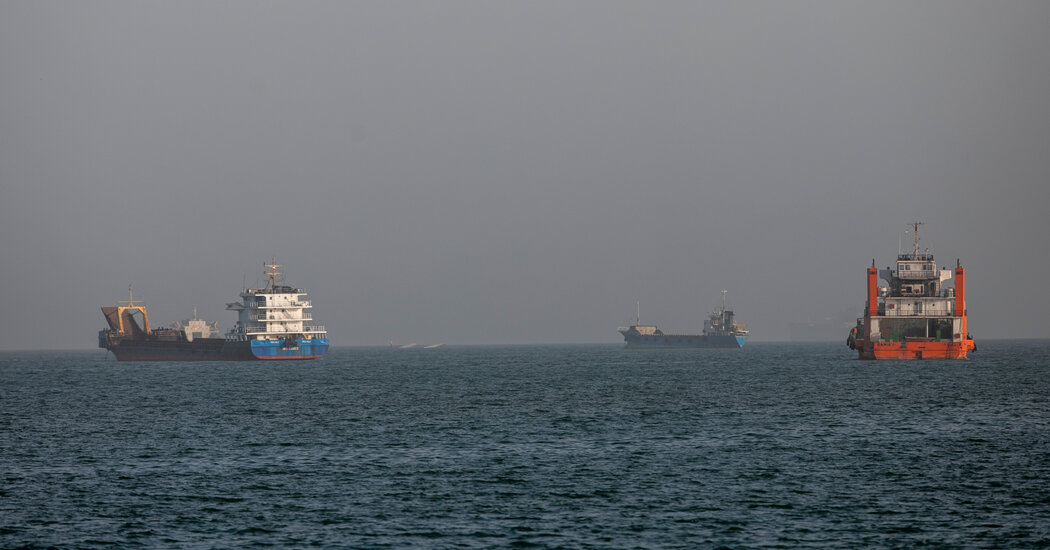
Underneath a blistering sun and amidst the heavy, salt-laden air of the Persian Gulf, the long-simmering military standoff between Washington and Tehran has once again erupted into open kinetic conflict. For the second time in a mere seventy-two hours, American naval and aerial forces operating in the volatile region have conducted what defense officials characterize as urgent, preemptive “self-defense strikes” against military targets in southern Iran. The latest catalyst for escalations came on Wednesday, when automated radar arrays aboard U.S. warships detected the coordinated launch of four one-way, explosive-tipped attack drones. These loitering munitions, manufactured and fielded by Iranian forces, were tracked on a direct, menacing trajectory over the Strait of Hormuz—the ultracritical maritime corridor that has been choked by an aggressive, months-long unilateral Iranian blockade. Navy strike fighters and shipboard air-defense systems quickly scrambled to intercept the threat, systematically neutralizing all four unmanned aerial vehicles (UAVs) before they could strike localized American assets or threaten the scarce and exceedingly brave commercial vessels still attempting to negotiate the contested waterway. According to a senior defense official who spoke on the condition of anonymity to discuss sensitive operational intelligence, the immediate trajectory and telemetry of the drones left little doubt that they posed an imminent and lethal threat to both international shipping crews and American military personnel deployed to guarantee the freedom of navigation in the region.
Precision Retaliation: Inside the Preemptive Strike on Bandar Abbas Command Centers
                       [ STRAIT OF HORMUZ ]
                                |
      +-------------------------+-------------------------+
      |                                                   |
[U.S. Navy Intercepts] [Preemptive Strike]
- 4 Iranian Attack Drones – Bandar Abbas Command Center
- Enforcing Freedom of Navigation – Neutralized 5th Drone Pre-Launch
Rather than limiting their response to reactive measures on the open sea, the American military command instantly authorized a decisive, counter-force strike directly onto sovereign Iranian territory to eliminate the threat at its source. Deep inside the military port city of Bandar Abbas, a crucial stronghold and logistics hub for the Islamic Revolutionary Guard Corps (IRGC), a specialized drone ground-control station was actively preparing a fifth kamikaze drone for launch. Utilizing real-time signals intelligence and precision-guided aerial munitions launched from strike aircraft, the U.S. military successfully obliterated the command station, disabling its telemetry links, launch rails, and operators before the final UAV could be dispatched into the sky. This targeted strike, though highly precise, represents a significant escalation in the scope of the regional conflict, demonstrating that Washington is increasingly willing to strike terrestrial Iranian assets inside the country’s borders to protect its forces. Operational details of the strike have been closely guarded, but the destruction of the Bandar Abbas platform highlights the highly sophisticated “left-of-launch” military strategy that United States Central Command (CENTCOM) has adopted to counter the proliferation of cheap, mass-produced Iranian drone technology, which has fundamentally rewritten the rules of modern asymmetric warfare in the Middle East.
A Pattern of Escalation: Sea Battles, Mine-Laying Tactics, and Naval Interdictions
This mid-week aerial skirmish was not an isolated incident but rather the latest chapter in a rapidly accelerating cycle of violence that reached a boiling point earlier in the week. On Monday, American forces engaged in a fierce maritime battle with the Islamic Revolutionary Guard Corps Navy (IRGCN) after Western intelligence analysts detected a surge of threatening activities along Iran’s southern coast over a frantic twenty-four-hour period. In a statement released shortly after the engagement, Captain Tim Hawkins, a veteran spokesman for U.S. Central Command, confirmed that American warplanes had taken aggressive action to stop Iranian forces from turning the Strait of Hormuz into a lethal minefield. U.S. fighter-bombers detected under-cover speedboats operated by the IRGC attempting to slip into the deep-water shipping lanes to plant naval contact mines, a tactic designed to completely paralyze global shipping and inflict catastrophic damage on commercial tankers. In the ensuing clash, American jets sank two of the fast-attack craft and successfully destroyed multiple coastal missile launch sites that had been locked onto allied positions. The escalations on Monday also saw Iranian forces launching explosive drones directly toward a massive U.S. naval armada—consisting of nearly two dozen warships, including an aircraft carrier strike group—currently deployed in the Gulf of Oman and the Arabian Sea to enforce a strict counter-blockade aimed at halting illicit incoming and outgoing cargo from Iranian ports.
The Choke Point of Global Energy: Economic Consequences of the Hormuz Blockade
To fully understand the global stakes of these localized military engagements, one must view the Strait of Hormuz not merely as a geographic trench, but as the economic jugular vein of the modern industrial world. Historically, this narrow, strategic waterway, which measures only twenty-one miles wide at its narrowest point, carried roughly one-fifth of the entire world’s daily petroleum supply, acting as the indispensable conduit linking the oil-rich fields of Kuwait, Saudi Arabia, Iraq, and the United Arab Emirates to international consumers. The ongoing war and Iran’s subsequent blockade of the strait have sent shockwaves through the global economy, driving marine insurance premiums to astronomical heights, forcing cargo liners to divert around the southern tip of Africa, and stoking fears of systemic fuel shortages across Europe and Asia. By utilizing an asymmetric naval doctrine centered on cheap sea mines, fast-swarming speedboats, and low-cost loitering munitions, Tehran has successfully disrupted the global energy market, proving that it can offset the crushing weight of Western economic sanctions by exerting leverage over this vital marine bottleneck. The U.S.-led naval coalition is therefore locked in a grueling war of attrition, tasked with the near-impossible mission of sweeping mines, escorting vulnerable merchant fleets, and neutralizing aerial threats across thousands of square miles of heavily monitored, hostile waters.
Diplomacy Under Fire: The Trump Administration’s Peace Initiatives and Military Posturing
                         [ THE GEOPOLITICAL TRADEOFF ]
                                      |
        +-----------------------------+-----------------------------+
        |                                                           |
[Trump Administration Diplomacy] [IRGC Field Operations]
- Proposed Peace Agreement – Aggressive Boundary Probing
- Lifting the Economic Blockade – Demonstrating Leverage on Water
- Reopening Vital Shipping Lanes – Sabotaging Pragmatic Concessions
Yet, the smoke rising from the burning drone pads in Bandar Abbas stands in stark contrast to the delicate diplomatic dance occurring behind closed doors, where the future of the entire conflict hangs in the balance. Senior American intelligence officials have suggested that this sudden surge in aggressive IRGC military maneuvers is a calculated attempt to test the geopolitical resolve and operational boundaries of a tentative, highly fragile peace agreement proposed by President Donald Trump. The administration’s outlined deal promises an end to the destructive naval war and a partial lifting of the maritime blockades in exchange for significant concessions regarding Iran’s regional militancy and drone manufacturing. However, within the complex, dual-structured government of the Islamic Republic, hardline military elements—specifically the IRGC leadership—operate with a high degree of autonomy, detached from the pragmatic diplomats in Tehran. Analysts suspect that these commanders are deliberately executing high-visibility strikes, such as the drone launches over Hormuz, to gauge whether Washington’s thirst for a peace deal has weakened its appetite for military retaliation, or if they can leverage tactical chaos on the water to secure more favorable terms at the negotiating table.
The Unsteady Balance: Deterrence, Asymmetric Warfare, and the Threat of Regional Conflagration
As both nations teeter on the precipice of a much larger, unrestrained regional war, the effectiveness of the Pentagon’s deterrence strategy remains stubbornly uncertain. While the United States undoubtedly possesses the technological and kinetic matching power to down every drone, sink every speedboat, and dismantle coastal installations at will, military power alone has historically proven insufficient in extinguishing the ideological and asymmetric ambitions of Tehran. With every precision strike on Iranian mainland targets like Bandar Abbas, the risk of a miscalculated retaliation that could drag the entire Middle East into a direct, multi-national conflagration grows exponentially. The international community now watches with bated breath, realizing that the survival of the global economy and the prevention of a major humanitarian crisis rest on an incredibly narrow margin. Whether the current flurry of military strikes will successfully deter Iranian aggression long enough to allow a enduring diplomatic breakthrough, or if these explosive encounters in the grey waters of the Persian Gulf are merely the opening salvos of an unstoppable, catastrophic war, remains the defining question of international security in 2026.