






Iran’s Bold Move in the Strait of Hormuz: Seizing Ships Amid Renewed Tensions
The Seizure: A Display of Naval Might
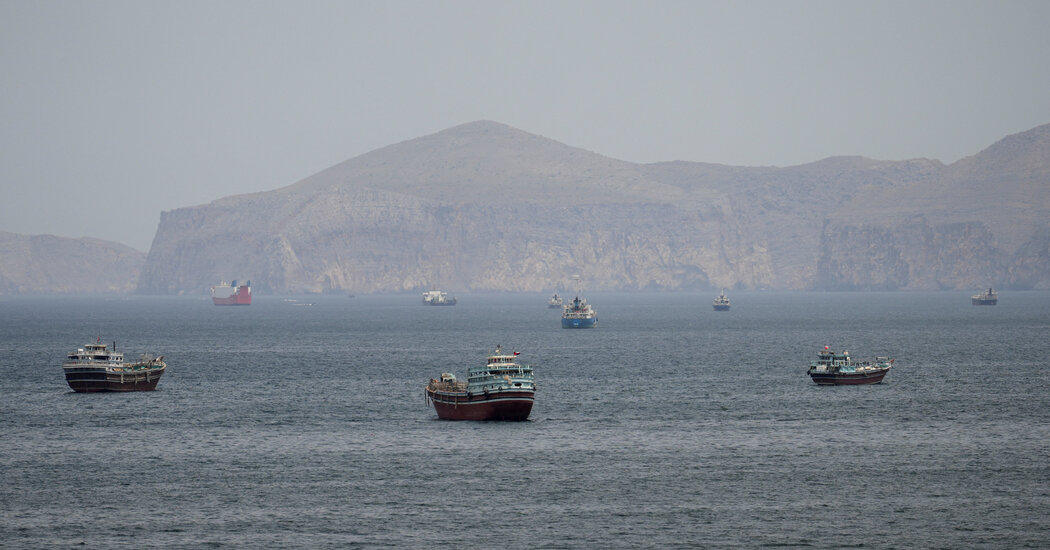
In a dramatic escalation that underscores Tehran’s unyielding stance on maritime control, Iran’s Islamic Revolutionary Guards Corps (IRGC) orchestrated the seizure of two cargo vessels near the strategically vital Strait of Hormuz on Wednesday. As reported by Iranian state media outlets, the Naval Forces of the Guards intercepted the ships, alleging they navigated the contested waters without proper authorization. This incident comes just hours after U.S. President Donald Trump announced an extension of a ceasefire with Iran, a fragile truce that was on the brink of expiration. The vessels in question—the MSC Francesca, operated by the global shipping giant MSC, and the Epaminondas, managed by Greece-based Technomar Shipping—were reportedly redirected toward Iran’s coast, signaling Tehran’s renewed push to assert dominance over one of the world’s most critical waterways. The IRGC’s statement, echoed through the semiofficial Tasnim news agency, framed the action as a defense of “order and security,” with the Guards declaring the strait as an absolute “red line” against disruptions. Eyewitness accounts from maritime sources paint a picture of swift and assertive enforcement, where boats were halted mid-voyage, their crews caught off-guard in the busy international shipping lane. This bold maneuver not only highlights Iran’s naval capabilities but also sends a clear message about its willingness to challenge international norms in pursuit of leverage. Analysts suggest that such seizures are part of a broader chess game, where Tehran uses the strait as a bargaining chip in ongoing geopolitical negotiations, testing the resolve of Western powers and their commitments to safe passage.
The details of the interception reveal a calculated operation. According to reports, the ships were approached without prior warnings, their captains receiving no radio alerts before being boarded or fired upon in some cases. The MSC Francesca, flying the Panamanian flag and en route to Sri Lanka, was targeted initially, its bridge sustaining significant damage from gunfire, yet miraculously, no crew members were injured. A similar fate befell the second vessel, the Liberian-flagged Epaminondas, which endured an assault by an IRGC gunboat eight nautical miles off Iran’s coast. Technomar Shipping confirmed the attack in a statement, emphasizing that while the ship was targeted, its crew remained unharmed and safe. Greece’s Foreign Minister Giorgos Gerapetritis, speaking candidly in an interview with CNN, shed light on the severity of the incident, noting “extremely wide damage” to the vessel, though it posed no imminent risk of sinking. He praised the resilience of the seafarers, stating, “All seafarers are in good health,” a relief amid the chaos. These accounts underscore the human element of these maritime standoffs, where skilled navigators find themselves in the crosshairs of international disputes. Maritime intelligence from firms like Ambrey and MarineTraffic further corroborates the seizures, with tracking data showing the ships anchored near Iran’s coast, indicating possible detention. Expert Daniel Mueller from Ambrey interpreted the data, suggesting the vessels were intercepted as they exited the strait, implying prior entry permissions that were abruptly revoked. This pattern of controlled access reflects a tightening of operational controls, where Iran selectively gatekeeps traffic to align with its strategic interests. As global trade pulses through these waters, incidents like this remind stakeholders of the precarious balance between economic imperatives and political posturing.
Yet, the drama extended beyond the two primary vessels. Whispers of a third ship, the Euphoria, added layers to Wednesday’s maritime saga. Reports initially suggested it had been fired upon and stranded off Iran’s coast, only for tracking services like Kpler to later indicate its safe passage into the Gulf of Oman. Mueller described its erratic movements near Larak Island—a designated route for vetted vessels—as indicative of potential Iranian directives, with abrupt stops and directional shifts hinting at last-minute interventions. “The Euphoria is now further south, not quite clear of the area,” Mueller noted, offering a glimpse into the ambiguity that often shrouds such encounters. These fluctuating reports highlight the foggy nature of naval incidents in the region, where rumors and real-time data intermingle, fueling speculation and anxiety among industry watchdogs. For operators and crews alike, the strait represents a gamble, where a routine transit can morph into a high-stakes confrontation at the whims of geopolitical winds. As newsrooms scrambled for updates, the Euphoria’s narrative became a reminder of how quickly situations can escalate or resolve in these contested waters, leaving spectators to question the stability of even temporary truces.
A Ceasefire in Name, Tensions Beneath the Surface
The backdrop to these seizures is a cease-fire announced by President Trump just before its expiration, intended to de-escalate hostilities that erupted following strikes on Iranian targets. However, the agreement appears paper-thin, with both sides accusing the other of violations. Iran lambasts the U.S. Navy’s blockade of its ports as a breach, while Washington counters that Tehran’s enduring naval aggressions undermine the peace process. Since the blockade’s inception over a week earlier, the U.S. Central Command reported turning back more than two dozen ships attempting to access Iranian ports, a statistic that underscores the deadlock. This cat-and-mouse game in the Persian Gulf illustrates the fragility of diplomacy in the face of entrenched rivalries. For the Strait of Hormuz—a lifeline carrying roughly one-fifth of the world’s oil and a substantial portion of global gas supplies—the implications are profound. Maritime security officials describe an “operating environment” fraught with risk, where cease-fires feel more like armistices than resolutions. Since the onset of intensified skirmishes on March 1, the UK’s Maritime Trade Operations has logged 34 incidents, ranging from projectile strikes causing hull damage to veiled threats from Iranian forces. The agency’s Tuesday report warns that “the cease-fire remains fragile, and blockade-related enforcement activity continues,” painting a portrait of a waterway where normalcy is illusory.
Compounding the unease are the unknowns surrounding U.S.-Iran bilateral talks. With the path forward murky, industry stakeholders grapple with uncertainty. Shipping firms are re-routing vessels, insurers are hiking premiums, and global markets watch closely as oil prices could spike with any prolonged disruption. The seizures serve as a litmus test for American resolve under Trump’s leadership, who vowed to maintain naval presence even as he extended the truce. Critics argue this approach prolongs instability, while proponents see it as necessary deterrence against Iranian adventurism. In interviews with industry veterans, a recurrent theme emerges: the need for sustainable diplomatic breakthroughs rather than patchwork agreements. One seasoned maritime analyst, who wished to remain anonymous amid sensitivities, likened the strait to a “powder keg,” where a single spark could ignite wider conflict. The IRGC’s actions, framed as security measures, contrast sharply with international norms demanding free passage for commerce. As nations eye the horizon, the question looms—can dialogue prevail in an era of muscular nationalism?
International Response: Diplomacy and Military Planning
Amid the turmoil, European powers are stepping into the fray with coordinated efforts to restore order. On Wednesday, military leaders from Britain, France, and over 30 countries convened in London to hash out strategies for reopening the strait once a genuine cease-fire takes hold. Britain’s Defense Minister framed the gathering as a bid to “advance military plans” toward a diplomatic zenith, building on a prior assembly of 50 nations condemning the strait’s closure. This transnational summit signals growing impatience with unilateral actions, emphasizing collective security measures. Greek officials, affected directly by the Epaminondas incident, have amplified calls for accountability, with Foreign Minister Gerapetritis invoking international law in his public statements. Such alliances aim to counterbalance Iranian influence, fostering a united front that includes naval escorts and intelligence-sharing protocols. Maritime experts hail these initiatives as pragmatic steps toward normalization, yet they admit challenges persist. “Reopening the strait sustainably requires trust-building measures,” said one EU diplomat en route to the talks, highlighting the gap between rhetoric and reality.
As the day unfolded, reactions from shipping giants underscored the human cost. MSC, while declining immediate comment, hinted at deeper concerns through industry channels, where executives voiced unease over vessel safety. Technomar’s assurance of crew welfare brought some solace, but the broader fallout for global supply chains remains palpable. Economically, disruptions here ripple outward, affecting everything from fuel prices to consumer goods. Environmental watchdogs add another layer, warning of potential ecological disasters if incidents like these escalate. Peter Eavis, contributing reporter, noted in secondary briefings that these events echo historical frictions, reminding us that the Strait of Hormuz has long been a crucible for superpower rivalries. From ancient trade routes to modern oil pipelines, its significance endures, making today’s standoff a continuation of age-old struggles for control. As journalists dissect the narratives, one thing is clear: the seizure of these ships is not isolated but symptomatic of a region at a crossroads. Whether through diplomatic corridors or naval maneuvers, the race to redefine Hormuz’s future intensifies, with global stability hanging in the balance. In this chess match, every move counts, and for the world watching, the stakes could not be higher.