







Australia’s Gas Titans: Unequal Burdens Amid Boom and Bust
In the sterile chambers of Australia’s Parliament, where budget discussions often drone on into bureaucratic monotony, a sharp exchange earlier this year ignited a national conversation that refuses to fade. Senator David Pocock, a crossbench independent known for his straightforward critiques, quizzed treasury officials about the federal budget’s revenue streams. His question cut to the heart of a perplexing imbalance: Why was the excise tax on beer—hauled in by pubs, brewers, and thirsty Aussies—projecting $2.7 billion in income, while the Petroleum Resource Rent Tax (PRRT), levied on the nation’s prodigious natural gas and oil exports, barely topped $1.1 billion? Pocock’s incredulous follow-up echoed a sentiment bubbling in community forums and op-eds across the country: “How do we live in a country, one of the biggest gas exporters in the world, and we’re getting more tax from beer?”
This February dialogue wasn’t mere parliamentary theater; it spotlighted the simmering discontent over resource taxation in a nation where fossil fuels have long been both economic lifeline and political albatross. Australia, the world’s third-largest exporter of liquefied natural gas (LNG) after the United States and Qatar, ships massive volumes to energy-hungry markets in Asia. Yet, the PRRT—a mechanism intended to ensure Australians benefit from their offshore deposits—yields paltry returns due to generous tax credits that slash industry’s obligations, offsetting investments in rigs, pipelines, and exploration. As global energy prices soar amid geopolitical turmoil, questions about fairness are no longer abstract. Households grapple with ballooning utility bills, while gas giants like Statoil, Chevron, and Santos post record profits. The debate has resurfaced with fresh fervor this week, propelled by the Iran war’s disruptions to Middle Eastern supplies, turning what was once a niche policy gripe into a defining issue of economic equity.
The Roots of a Taxing Disparity
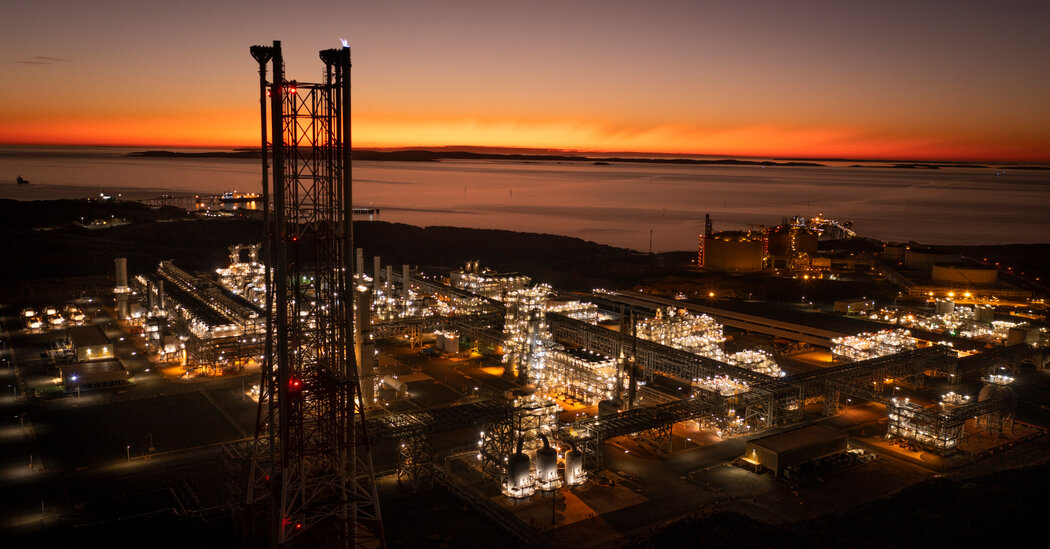
Diving deeper into Australia’s natural gas industry reveals a paradox: immense wealth generation with minimal fiscal contribution. The PRRT, introduced in the 1980s during the Hawke government era, was conceived as a profit-splitting scheme, where the state claims a share of windfalls from gas and oil fields plucked from federal waters off the northwest shelf and Northern Territory. But over decades, exemptions have eroded its bite. Credits for exploration costs, deduction allowances, and phased introductions for new projects mean the tax captures only a sliver of revenues—historically, less than 2 percent by some analyses. This arrangement has fueled a boom: Australia now exports around 100 million tonnes of LNG annually, with giants operating vast floating facilities that power economies from Tokyo to Singapore.
Critics argue this model prioritizes corporate coffers over public good. Ken Henry, the esteemed economist and former treasury secretary who chaired the macroeconomic task force behind the Rudd government’s 2009 stimulus response, testified before a Senate inquiry on Tuesday. “Those resources are the property of the people of Australia,” he declared, his voice steady amid the committee room. “If we want to ensure that present generations and future generations of Australians get fair value from the commercialization of these finite stocks of natural resources, created millions of years ago, then we have to ensure they get more tax revenue.” Henry’s words underscored a broader environmental ethos; now chair of the Australian Climate and Biodiversity Foundation, he ties taxation to sustainable stewardship, warning that unchecked exploitation depletes shared heritage for fleeting private gains.
The industry’s response is a familiar refrain: higher taxes stunt innovation and deter global investment. The Australian Energy Producers (AEP), an umbrella group representing multinationals and locals, warns that additional levies could erode Australia’s edge in the cutthroat LNG market. “This would leave Australia more exposed to future shocks by undermining its domestic capacity,” the AEP states in its submissions, highlighting how augmented taxes might spur companies to redirect capital to competitors in Qatar or the U.S., where incentives are more alluring. Concerns aren’t confined to boardrooms; Japan, a major investor and buyer of Australian LNG—sourcing 40 percent of its needs from Down Under—has voiced worries. A proposed 25 percent export levy could ripple through trade relations, straining alliances built on mutual energy interdependence. As energy minister Chris Bowen navigates these pressures, the government is treading carefully, mindful that overheating the debate might alienate allies or accelerate offshore shifts.
Sparks from the Middle East Ignite Domestic Flames
The Iran war, with its September airstrikes devastating Qatar’s key production sites, has supercharged this conversation, transforming a tributary into a torrent. Disruptions to global supply chains have already hiked natural gas prices worldwide, and Australia’s exporters—poised to fill the void—are eyeing unprecedented profits. Yet, this windfall arrives as Australian consumers face their own afflictions: Energy bills have jumped by double digits, exacerbated by inflation and the perennial strain of living in a cost-of-living hotspot. For many, it’s a galling juxtaposition—billion-dollar reserves enriching a few while everyday workers pinch pennies at the pump.
Economists like Kevin Morrison, an analyst at the Institute for Energy Economics and Financial Analysis, connect the dots between Middle Eastern chaos and backyard grievances. In an interview replete with data-driven insights, Morrison mused that the war’s ripple effects might finally galvanize public opinion. “We’re suffering here, we’re paying much more. Why should these guys make more money off it?” he asked rhetorically, framing the issue as one of distributional justice. With Australia’s LNG trade volume set to climb, partly due to diminished Qatari output, advocates see a moral imperative. The energy crisis isn’t just a foreign policy quagmire; it’s a domestic litmus test for how nations balance profit and people. Precarious households in suburbs from Sydney to Perth aren’t economists—they’re voters, feeling the pinch in every inflated grocery bill and darkened living room, pondering why their nation’s subterranean treasure seems to line others’ pockets first.
Echoes of Global Precedents in a Push for Parity
Australia isn’t isolated in grappling with windfall dynamics; other nations have weaponized “surprise taxes” to redistribute gains during crises. Post-Ukraine invasion, the UK slapped a 25 percent levy on oil majors’ excess profits, channeling funds to cushion heating costs for millions. The U.S. experimented with similar mechanisms during past spikes, while European allies pondered analogous paths. Yet, Australia’s threshold for intervention remains notably higher. Think tanks like the Australia Institute, a vocal advocacy hub, crunch numbers showing the PRRT’s decade-long yield at a mere 1.6 percent of total gas revenue. Founder Richard Denniss, in policy briefs laced with comparative data, points to Norway’s sovereign wealth fund—built on aggressive resource taxation—as a blueprint. There, petroleum profits fuel pensions and infrastructure, ensuring intergenerational equity. Qatar, with its state-owned behemoths, funnels exports directly into public edifices, making Australia’s model look downright disincentivized.
Rod Sims, the no-nonsense chair of Superpower Institute and a former Australian Competition and Consumer Commission (ACCC) heavyweight, amplifies this critique. In a candid exchange peppered with frustration, Sims labeled Australia an “outlier” among resource-rich democracies. “We in Australia are almost uniquely positioned as the country that has taken the least share of the profitability of our resources,” he exclaimed, his institute’s analysis pitting Australian take-rates against American models, which, despite tax breaks, extract more. Sims advocates recalibrating the PRRT to mirror international norms, arguing that Australia’s benign approach undermines not just fiscal prudence but also energy security. With allies like Japan eyeing greener horizons, and domestic pressure mounting from environmental groups decrying fossil prolongment, the call for reform melds economic pragmatism with ecological urgency.
Navigating the Storm: Government’s Balancing Act
As the federal budget looms, Prime Minister Anthony Albanese’s Labor administration is cautiously exploring options to tax wartime profits, per reports from the Australian Broadcasting Corporation (ABC). Treasury mandarins are modeling scenarios, including a targeted windfall levy to buttress households battered by inflation. This isn’t radical—far from it—in the global playbook. But in Australia’s polarized landscape, where mining states like Western Australia wield outsized influence, implementation demands deft diplomacy. Environmentalists, economists, and civil society outfits have long campaigned for overhauls, bolstered now by the Iran war’s momentum. Groups such as the Australian Climate and Biodiversity Foundation advocate for channeling tax boosts into green transitions, offsetting fossil dependence with renewables investments.
Yet, the road is fraught. Industry lobbyists paint doomsday scenarios of flight capital and job losses, while Japan frets over supply reliability. Albanese, himself a progressive change-maker, must reconcile the vitriol of public sentiment—fanned by viral clips of Pocock’s beer tax quip—with the need for stability. Polls suggest majority support for ripping a bigger share from gas gains, but translating that into policy requires navigating union backing, crossbench brinkmanship, and the shadow of climate accords. Morrison’s sobering forecast resonates: This crisis might catalyze change, turning fiscal complacency into accountability. As Australia braces for budget reveals, the stakes extend beyond dollars—they encompass generational fairness, economic resilience, and the nation’s place in a decarbonizing world.
Prospects on the Horizon: Reforms and Reflections
Looking ahead, the push for equitable natural gas taxation in Australia signals broader shifts in how democracies manage finite resources. The Iran war’s aftermath could usher in lasting reforms, embedding lessons from global peers into antipodean policy. If enacted, a rejigged PRRT or new windfall mechanisms might not just pad budgets but foster trust, alleviating perceptions of corporate favoritism. Environmental advocates envision funds seeding solar farms and electric grids, accelerating Australia’s laggard shift to net-zero emissions. Economists predict enhanced competitiveness through infrastructure boosts, countering naysayers’ fears of exodus.
But success hinges on consensus. As Ken Henry’s testimony rippled through Senate halls, it evoked Australia’s egalitarian ethos—the fair go ethos—that has defined national identity since Federation. Tonight, as families huddle around thermostats grappling with bills, and gas platforms hum off distant coasts, the query lingers: Can Australia reconcile its resource bounty with shared prosperity? The answer may lie in bold policy tweaks, ensuring that finite treasures—forged eons ago—enrich not just a select few, but the collective soul of the nation. In an era of cascading crises, this debate isn’t about beer versus gas; it’s about reclaiming the commons in a world on edge.