



As the morning sun gently breaks through the blinds, casting soft geometric shadows across a quiet kitchen, millions of us perform the familiar, quiet ritual of greeting the brand-new day. We reach for our favorite mugs, feel the comforting warmth of freshly brewed coffee radiating against our palms, and prepare our minds to step into the vast, turbulent flow of the wider world. In a brief ten-minute window, the ambient sounds of our domestic sanctuaries yield to the collective heartbeat of global events—a daily audio pilgrimage that untangles the complex web of human power, systemic struggle, corporate temptation, and artistic legacy. It is a moment of transitional vulnerability where we balance our private peace with a profound, necessary empathy for the lived experiences of others across the globe. Today’s journey takes us from the marble halls of Capitol Hill, where political fortunes are fiercely fiercely guarded, into the vulnerable living rooms of immigrant families striving to survive against hostile policy shifts. We will walk through the chaotic corridors of modern schools where exhausting battles are waged daily over the attention spans of a hyper-connected generation of teenagers, and finally, we will pause in solemn grace to honor the rebellious, transformative spirit of a literary giant whose ink redefined how we perceive revolutionary history. This morning listen is not merely an itinerary of headlines, but an intentional space designed to humanize the heavy machinery of our modern social landscape, reminding us that behind every policy proposal, corporate strategy, and statistical trend lies a beating heart, a family searching for safety, or a teacher trying to reclaim the sacred space of a classroom.
In our first major story, reporters Annie Karni and Robert Jimison guide us into the high-stakes, partisan battleground of Washington, where the protective ramparts of the Republican Party have once again been fortified around their standard-bearer. In a decisive display of political solidarity, congressional Republicans successfully defeated a legislative maneuver designed to prevent Donald J. Trump from utilizing campaign contributions and political action committee funds to cover his astronomical personal legal expenses. This legislative skirmish gets to the very heart of how we understand the intersection of public trust, political loyalty, and the sheer, gravity-defying weight of immense wealth within democratic institutions. For critics, the defeat of this measure signals a troubling normalization of using donor contributions—often sent by everyday working-class citizens who believe they are funding a broader ideological movement—as a private financial shield to absorb the shocking costs of personal criminal and civil litigation. For Trump’s steadfast allies on the Hill, however, the defense of this payout pipeline is framed as a righteous counter-offensive against what they describe as a weaponized and politically motivated judicial system aiming to bankrupt their candidate. As we look past the exhausting partisan talking points, we are left to ponder the deeply human elements of this administrative drama: the quiet disillusionment of modern voters wondering where their hard-earned dollars truly go, the internal calculations of lawmakers navigating the razor-thin boundary between personal conscience and party survival, and the profound transformation of American political campaigns from ideological crusades into highly sophisticated, multi-million-dollar legal defense funds.
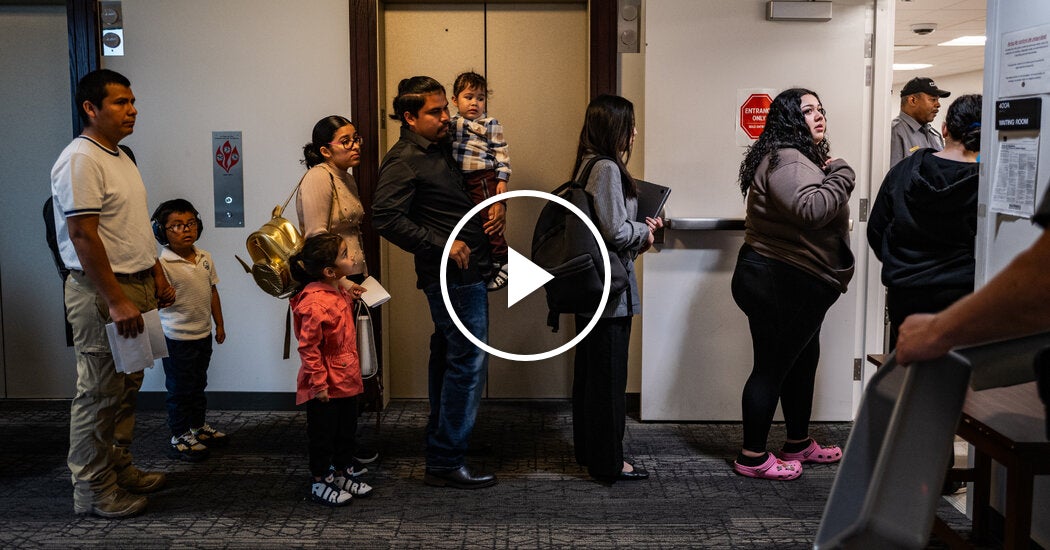
Shifting focus from the corridors of legislative power to the raw, visceral reality of human survival on the ground, a collaborative investigation by Nicholas Nehamas, Miriam Jordan, Coral Davenport, Hamed Aleaziz, Lydia DePillis, and Zolan Kanno-Youngs reveals the terrifying scope of a coordinated policy blueprint designed to systematically squeeze immigrants out of the essential fabric of American life. This far-reaching strategy seeks to bypass traditional, highly publicized border walls in favor of erecting invisible, administrative barriers that cut off non-citizens from the basic necessities of human dignity: stable employment, accessible health care, and secure housing. By targeting the bureaucratic valves of daily survival, these proposed measures aim to make life within the United States so untenable, stressful, and isolated that millions will feel forced to leave through a process of self-deportation. The human cost of these cold, clinical policy mechanisms is devastatingly intimate. Imagine the daily terror of an undocumented mother standing in a pharmacy aisle, cradling a feverish toddler in her arms, weighing the urgent medical needs of her child against the paralyzing fear that seeking healthcare might trigger an administrative red flag leading to family separation. Consider the quiet despair of a father who has labored honestly for years in agricultural fields or construction sites, suddenly finding his work permit revoked, unable to pay rent or guarantee a safe roof over his children’s heads. By translating broad, ideological talking points into the lived reality of vulnerable populations, this reporting encourages us to look beyond nationalistic rhetoric and confront the fundamental moral question of whether a society’s greatness is measured by its capacity to harbor compassion or by its efficiency in manufacturing structural misery for those who built its foundations.
Meanwhile, the battle for the minds and souls of the next generation is playing out in the seemingly ordinary spaces of our local schools, where a silent, digital crisis has reshaped the landscape of teenage development. Investigative reporter Jennifer Valentino-DeVries pulls back the curtain on the alarming ways social media giants have deliberately and systematically engineered their platforms to bypass school safeguards, effectively hooking teenagers during hours designated for academic and social growth. The internal corporate communications detailing these strategies are chillings, containing self-aware warnings that “teachers are going to hate it,” yet proceeding anyway to maximize screen time, engagement metrics, and advertising revenue. These tech companies did not merely create entertaining passive distractions; they weaponized sophisticated psychological mechanisms—variable reward schedules, endless scrolling, hyper-targeted algorithmic feeds, and invasive notification cycles—specifically designed to exploit the fragile, developing neural pathways of adolescent brains. In classrooms across the nation, exhausted, underpaid educators find themselves forced into the role of reluctant police officers, constantly fighting an uneven, losing battle against a invisible adversary designed by elite software engineers to strip away their students’ focus, critical thinking, and capacity for deep learning. This story forces us to look past the superficial debate over phone bans in schools and deeply examine the profound human toll of this digital colonization: the agonizing rise of teenage anxiety and depression, the fracturing of authentic, face-to-face social bonds, and the quiet, collective tragedy of a generation whose formative years are being commodified, packaged, and sold to the highest corporate bidder.
Amidst these heavy structural realities, the global community of literature and art pauses this morning to mourn a deeply personal and collective loss, as Amelia Nierenberg and Ségolène Le Stradic share the heartbreaking news that Marjane Satrapi, the visionary and fiercely independent creator of the seminal graphic novel Persepolis, has passed away at the age of 56. With her passing, we lose an extraordinary voice who possessed the rare, transformative ability to bridge deep geopolitical divides through the disarming simplicity of black-and-white ink drawings and courageous, raw storytelling. Persepolis was not merely an autobiographical account of growing up during the turbulent Islamic Revolution in Iran; it was a profound act of cultural translation that humanized a nation and a people who had been reduced to cartoonish, flat villains in Western media. Through her rebellious, punk-rock-loving teenage self, Satrapi invited global readers to see the warmth, humor, intellectual curiosity, and enduring defiance of ordinary Iranians living under the stifling weight of authoritarian fundamentalism. Her art was a visceral reminder that the human spirit cannot be easily contained by national borders, religious dogmas, or political iron curtains, and that the search for individual freedom, artistic expression, and domestic peace is copywritten in the DNA of all humanity. As we grieve her untimely departure, we are invited to look at her life’s work as a towering monument to the revolutionary power of personal testimony, reminding us that when the history books are written by those who hold power, it is often the courageous narrative of the artist that preserves the true, untamed heart of human history.
As this informative morning journey draws to its gentle conclusion, we are left to carry the collective weight, wisdom, and nuance of these stories with us as we step out of our front doors and into the hum of our daily lives. To help us process this rich tapestry of human experience and ground our understanding of the fast-moving current of global events, we invite you to stay tuned for the final portion of our morning listen: our engaging, interactive audio news quiz. This trivia challenge offers a playful yet intellectual space to test your recollection, sharpen your awareness, and actively engage with the complex issues shaping our geopolitical, social, and cultural landscapes today. If you find yourself craving a deeper dive or wish to challenge your friends, colleagues, and family members, you can easily access the fully comprehensive weekly online news quiz directly through The Times’s interactive platform. Engaging with the news must never be a passive process of consuming distant tragedies or absorbing statistical data; rather, it is an active, ongoing practice of building civic empathy, fostering intellectual curiosity, and choosing to remain deeply connected to the shared human journey that unites us all. May the stories of political maneuvering, systemic vulnerability, technological responsibility, and creative defiance inspire you to navigate your day with an open mind, an analytical perspective, and a steadfast commitment to treating every individual you encounter with compassion and respect.