





On the Front Lines of Myanmar’s Forgotten War
The Echoes of a Fractured Land: Entering the Crucible of Myanmar’s Silent Conflict
                          ___
                   ___   /      ___
                  /   _/     _/
                 |   Myanmar's State |
                  ___   Frontline   /
                      _       _/
                             /
                         ___/
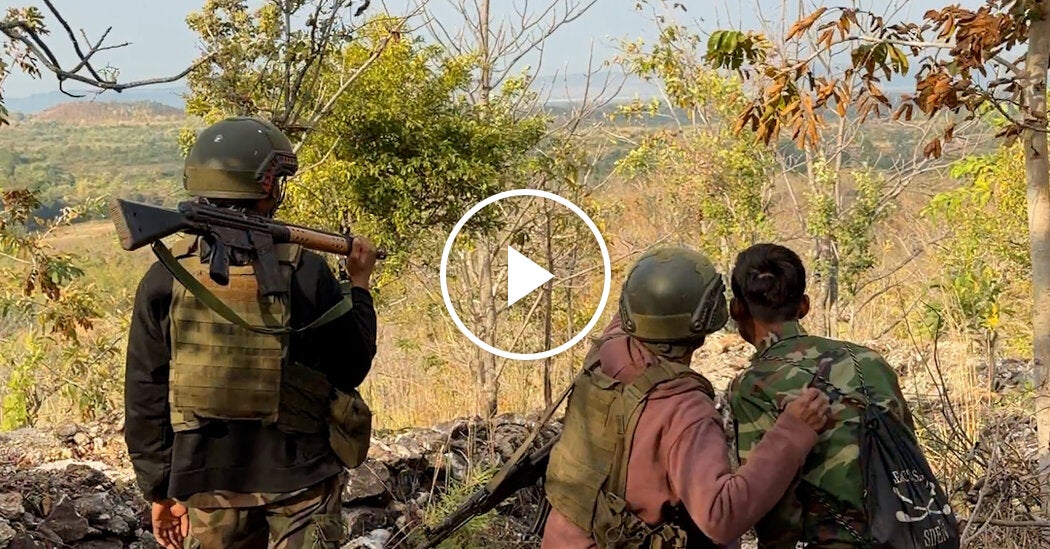
Deep within the unforgiving, emerald-canopied hills of Myanmar’s eastern borderlands, where the humid air hangs heavy with the scent of damp earth and cordite, a quiet but fierce revolution is unfolding away from the gaze of a distracted world. Five years after the military junta seized power in the devastating coup of February 1, 2021, the conflict has metamorphosed from urban street protests into a brutal, multi-front civil war that threatens to permanently splinter the nation. Award-winning Times correspondent Hannah Beech, working alongside photojournalist Daniel Berehulak and a dedicated reporting team, recently journeyed into the heart of this armed resistance movement to document a conflict that has largely become a forgotten war. Here, along mud-slicked trenches and inside makeshift outposts constructed from bamboo and tarp, they encountered a patchwork army of rebel fighters who are severely outgunned and undermanned but driven by an unyielding desire for self-determination. The sounds of distant, heavy artillery and the constant, ominous hum of Russian-made military aircraft overhead serve as a perpetual reminder of the asymmetric nature of this struggle, where an autocratic regime utilizes its vast arsenal of heavy armaments, fighter jets, and armor to crush a population defending its hard-won, decade-long experience of partial democracy. Despite suffering catastrophic casualties, losing entire villages to the military’s scorched-earth military operations, and enduring severe physical deprivation, these resistance forces continue to hold their ground, proving that the spirit of the Spring Revolution remains unbroken even as the international community looks the other way.
The Transformation of a Generation: From Classrooms to the Trenches of the PDF
  [ Before: Classrooms ] -------------> [ After: Jungle Warfare ]
  * Medical Students                    * Drone Operators
  * Software Engineers                  * Trench Diggers
  * Rural Farmers                       * Guerrila Fighters
The human face of this resistance is both young and remarkably diverse, comprised of an entire generation of Burmese youth who surrendered their dreams of civilian careers to take up arms against the dictatorship. Before the coup, these volunteer soldiers were university students, software engineers, teachers, medical doctors, and agricultural laborers; today, they form the backbone of the People’s Defence Forces (PDF), operating in loose coordination with veteran Ethnic Armed Organizations (EAOs) like the Karen National Liberation Army and the Kachin Independence Army. In these remote jungle encampments, young recruits learn the grim mechanics of guerrilla warfare, manufacturing their own rudimentary firearms, 3D-printing components for surveillance drones, and modifying commercial quadcopters to drop improvised explosive devices on junta military outposts. The transition from peaceful civic activism to armed defensive combat has been a profound shock to their collective identity, leaving deep psychological and physical scars on individuals who never envisioned themselves holding automatic rifles or digging defensive bunkers. Their days are defined by a grueling routine of military drills, malaria prevention, and the constant threat of aerial bombardment, yet their camaraderie and shared hatred for military dominance foster a resilient micro-society in the wilderness. By relinquishing their comfortable modern lives and embracing the hardships of the jungle, these citizen-soldiers have demonstrated a level of commitment that has shocked the senior generals in Naypyidaw, who initially calculated that the civilian resistance would collapse under the weight of sheer, unchecked state terror.
The Collapse of a Nation: Life in the Shadow of the Junta’s Campaign
                   =============================
                   THE HUMAN TOLL (2021 - 2026)
                   =============================
                   * 3,000,000+ Internally Displaced
                   * Thousands of Villages Burned
                   * Complete Collapse of Public Healthcare
                   * Widespread Educational Disruption
                   =============================
Behind the military front lines lies a staggering humanitarian catastrophe, characterized by the systematic destruction of civilian infrastructure under the military junta’s notorious “four cuts” counter-insurgency doctrine. This strategy—designed to sever the rebel forces’ access to food, funds, intelligence, and recruits—has resulted in the deliberate burning of thousands of villages, the extrajudicial execution of suspected dissidents, and the displacements of more than three million people nationwide. In the territories carved out and secured by the resistance, parallel administration systems are emerging, with the National Unity Government (NUG) attempting to establish subterranean healthcare services, mobile jungle clinics, and clandestine school networks in deep caves to shield children from frequent airstrikes. The formal economy has lay in ruins, leaving local populations entirely dependent on informal trade networks, mutual aid, and subsistence farming to survive in a landscape where simple necessities like rice, fuel, and basic antibiotics have become scarce luxury items. Volunteer doctors and nurses, many of whom fled government-controlled urban hospitals during the Civil Disobedience Movement, work tirelessly under the dense forest canopy, performing complex surgeries by flashlight while listening for the low rumble of approaching military helicopters. This deep societal trauma has forged an existential bond of mutual survival between the civilian populace and the armed resistance, rendering the population willing to endure unfathomable hardships rather than submit once again to the total authority of an oppressive military regime that has terrorized them for generations.
The Grim Asymmetry: Surviving Under an Unforgiving Skyline
[ Junta Air Superiority ]                 [ PDFs Ground Cohesion ]
* Sukhoi & MiG Jet Fighters               * Complex Network of Bunkers
* Mil Mi-24 Attack Helis                  * Underground Supply Lines
* Advanced Thermal Cameras                * Dense Jungle Canopy Defense
The tactical reality of this conflict is defined by a punishing asymmetry, as rebel light infantry units armed with bolt-action rifles and captured automatic weapons continuously face off against a professional military equipped with modern fighter jets, heavy artillery, and armored columns. The junta’s air superiority has become their primary weapon of terror, allowing them to rain down devastation on schools, hospitals, and civilian gatherings with complete impunity, knowing that the resistance forces possess almost no anti-aircraft capabilities. To survive this relentless aerial onslaught, the fighters have developed sophisticated early-warning systems, utilizing spotters equipped with satellite internet to track military flights departing from major airbases and broadcasting warnings to hidden civilian populations who have only minutes to scramble into deep underground bunkers. On the ground, the dense, mountainous jungle remains the resistance’s greatest ally, offering critical concealment from thermal imaging and aerial reconnaissance, while enabling small, highly mobile guerrilla units to execute rapid ambushes and retreat before the military can mobilize its heavy firepower. The persistent appeals from the parallel National Unity Government for international allies to supply defensive anti-aircraft weaponry, such as man-portable air-defense systems (MANPADS), have met with global silence, leaving these brave fighters to develop creative, improvised defenses using whatever materials they can scavenge or buy on the regional black market.
A Geopolitical Silence: The isolation of Myanmar’s Democratic Crusade
                    _______________________
                   |  THE GEOPOLITICAL ARC |
                   |_______________________|
                   |                       |
                   |  [China & Russia]     | ---> Military & Diplomatic
                   |  * Jet fighters       |      Support to the Junta
                   |  * Heavy weaponry     |
                   |                       |
                   |  [Atlantic Powers]    | ---> Slogans, Sympathy,
                   |  * Sanctions list     |      and Token Sanctions
                   |  * Dry statements     |
                   |_______________________|
The profound isolation of Myanmar’s democratic resistance stands in stark, painful contrast to other high-profile modern global flashpoints, highlighting a double standard in international relations that breeds deep resentment on the front lines. While trillions of dollars in state-of-the-art Western military aid and intelligence-sharing have poured into Eastern Europe and the Middle East, the fighters in Myanmar have been left to wage their struggle using crowdsourced funds raised by Myanmar’s global diaspora and sympathetic citizens at home. Regional powers, including China, India, and Thailand, navigate the conflict with cold pragmatic calculation, balancing border security, illicit transnational trade, and massive energy transshipment infrastructure projects against any real moral imperative to support democratic self-rule. Beijing continues to supply the State Administration Council (SAC) with sophisticated military hardware and diplomatic cover in international forums, ensuring that the junta remains economically viable despite sweeping, though ultimately leaky, Western economic sanctions. This cynical geopolitical landscape forces the resistance to operate in a vacuum, relying on their own resourcefulness to sustain a protracted war of attrition that many international diplomats and military analysts incorrectly predicted would fade away within months of the military coup.
Unity in Adversity: A New Vision for a Federal Democratic Union
                ===============================
                THE HISTORIC COALITION of 2026
                ===============================
                 * Dissolution of Old Prejudices
                 * Mutual Respect and Defense Pact
                 * Dismantling of Bamar Hegemony
                 * Unified Vision of Federalism
                ===============================
Despite the immense physical suffering and systemic geopolitical isolation, the fires of this war have forged an unprecedented degree of unity among Myanmar’s historically fractured ethnic communities, laying a crucial foundation for a future democratic state. For the first time in the country’s turbulent post-independence history, the majority Bamar population has developed a deep, retrospective empathy for the decades of oppression long endured by ethnic minority groups, such as the Karen, Kachin, Chin, Shan, and Karenni, who have fought separate wars for self-determination since 1948. This newfound cross-cultural solidarity has shattered old prejudices, paving the way for joint military operations, shared strategic command structures, and a collective political vision of a truly federal democracy that guarantees equality and self-governance for all ethnic groups. As the shadows lengthen over the jungle trenches of Karen State in June 2026, a young rebel fighter stands guard under the starlit sky, his worn rifle slung over his shoulder, embodying an entire nation that has moved irrevocably beyond the point of return. The path forward remains perilous and filled with potential tragedies, yet the journey of Hannah Beech and her group through the combat zone reveals that the people of Myanmar have rejected the fatalism of defeat, choosing instead to sustain their quiet, heroic fight for freedom until the military dictatorship is permanently dismantled.
Comparative Assessment: The Changing Front Lines (2021 vs. 2026)
Below is an analytical overview tracking the structural, military, and geopolitical shifts that have occurred in Myanmar’s domestic landscape over the five years since the civilian government was overthrown:
| Metric / Dimension | The Early Landscape (2021) | The Current Reality (2026) | Trend and Operational Impact |
|---|---|---|---|
| Resistance Structure | Uncoordinated municipal protests; spontaneous, local defense groups using hunting rifles. | Structured PDF battalions integrated with veteran Ethnic Armed Organizations (EAOs). | Streamlined command, allowing for sustained, strategic cross-provincial offensives. |
| Junta Military Control | Secure hold over major cities, key administrative hubs, and regional highway networks. | Main city centers secure, but widespread loss of rural territory and isolated border outposts. | Regime forced to rely heavily on aerial bombardment and artillery to hold territory. |
| Logistics & Technology | Basic makeshift weapons; lack of tactical communications and medical supplies. | Advanced drone warfare capabilities; 3D-printed gun components; satellite comms. | Technology bridges the asymmetric gap, making rebel ambushes deadlier to junta troops. |
| Geopolitical Stance | Global condemnation of the coup; widespread hope for direct foreign diplomatic intervention. | Entrenched international neglect; regional neighbors normalizing relations with the junta. | Forced total self-reliance on the part of the resistance, funded primarily by diaspora donations. |
| Ethnic Integration | Traditional distrust between the majority Bamar and marginalized border minority groups. | Unprecedented military cooperation and political alignment towards a true federal democracy. | Dissolution of long-standing internal divisions, presenting a unified front against the SAC. |