


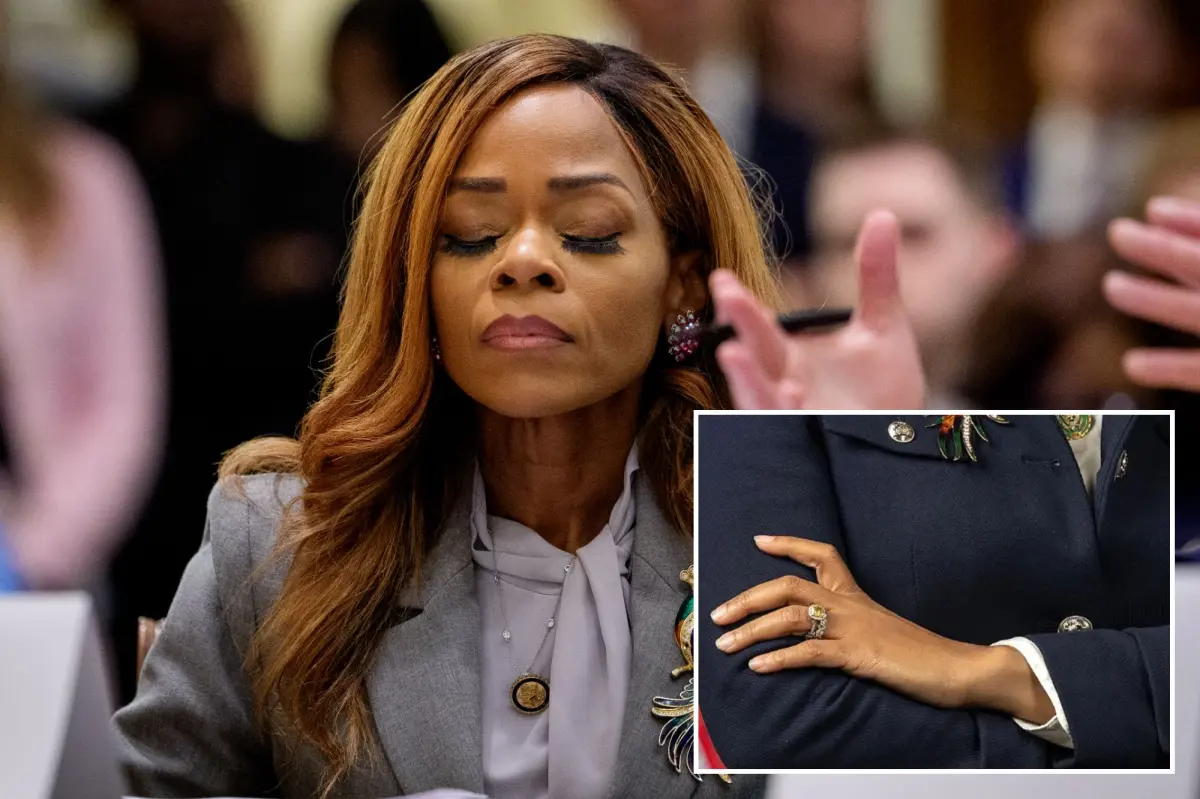
Rep. Sheila Cherfilus-McCormick, the Florida Democrat facing intense scrutiny over her ties to federal disaster relief funds, stepped into a high-stakes spotlight during a House Ethics Committee hearing on a crisp Thursday afternoon. The atmosphere in the committee room was charged, with lawmakers from both sides of the aisle seated behind polished oak tables, their faces a mix of curiosity and stern judgment, as flashing cameras captured every gesture. Amid the tension, her defense attorney, William Barzee, leaned forward with a calm yet assertive demeanor, addressing one of the only moments in the hearing that directly tackled allegations of mishandling FEMA funds. Barzee portrayed his client not as a schemer seeking personal gain, but as a business-minded individual rightfully entitled to her share. “She was entitled to a certain percentage of profits from a health care company that took taxpayer dollars and paid out six-figure consulting fees to LLCs that she owned,” he explained, his voice steady and professional, as if painting a picture of a legitimate entrepreneurial venture rather than anything untoward. The hearing, held in the ornate confines of the U.S. Capitol, drew national attention, with news outlets buzzing about potential ethics violations in Congress. For Cherfilus-McCormick, who represents Florida’s 20th District—a coastal area scarred by hurricanes and now grappling with pandemic recovery—this defense was more than legal jargon; it was a personal vindication, a way to humanize her role as a congresswoman committed to her community while navigating the complexities of private enterprise. The payments from Trinity Health Care Services, Barzee insisted, weren’t bribes or illicit perks but a fair return on investment, aligning with how many Americans aspire to profit from honest dealings, even in politics. As he spoke, one could almost sense the weight of the watchdog role the committee plays, balancing accountability with fairness, ensuring that public trust in elected officials isn’t eroded by unproven claims. This moment underscored the delicate dance politicians perform between public service and personal interests, reminding onlookers that behind the headlines are individuals with families, ambitions, and, in this case, a story of business acumen that might prove defensible under the law.
Delving deeper into the defense, Barzee emphasized that the payments Cherfilus-McCormick received weren’t funneled into her political campaigns, which added a layer of humanity to the proceedings, portraying her as someone separating her professional life from her electoral ambitions. “It was money that was legally obligated to be paid to her as part of the profit-sharing agreement,” he stated confidently, his words echoing through the room like a beacon of clarity amid the fog of accusations. This assertion humanized the congresswoman by highlighting her as a pragmatic negotiator, one who understood contractual obligations and the importance of boundaries. Imagine the scene: Barzee, with his tailored suit and measured tone, gesturing toward a dossier that outlined the agreement, while committee members nodded thoughtfully or exchanged skeptical glances. For many in the audience, this resonated with the everyday struggles of balancing work and finances, even for high-profile figures like Cherfilus-McCormick. Her background as a former school board member and community advocate in the vibrant, diverse neighborhoods of Broward County lent credence to the idea that she wasn’t out for personal enrichment at any cost. Instead, it suggested a multifaceted career where profits from legitimate ventures could coexist with dedication to public causes. As the hearing unfolded, observers couldn’t help but reflect on how such arrangements mirror those in ordinary professions—doctors earning from private practices, consultants profiting from expert advice—raising questions about where the line blurs between self-interest and outright wrongdoing. Barzee’s delivery, devoid of defensiveness, aimed to reconnect Cherfilus-McCormick to her constituents, painting her not as a villain in wait but as someone navigating the gray areas of American entrepreneurship, much like countless small business owners who dream of turning investments into secure futures for their loved ones.
The attorney’s defense wasn’t standalone; he invoked a previous Federal Election Commission settlement, weaving in a historical context that made the narrative more relatable and less abstract. This reference to the FEC’s involvement added a tangible foundation, showing that regulatory bodies had already scrutinized and, in effect, approved aspects of Cherfilus-McCormick’s financial dealings. “Citing a previous Federal Election Commission settlement over the matter,” Barzee noted, framing it as further evidence of legitimacy rather than guilt. The settlement, outlined in documents that committee members perused, underscored a resolution that cleared her of using the funds improperly in electoral contexts, allowing her to reclaim some narrative control. For the public watching, this humanized the process by illustrating that politics isn’t just about soundbites and scandals but involves layers of bureaucratic oversight, where agencies like the FEC act as arbiters, much like referees in a heated game. Cherfilus-McCormick, with her poised demeanor and years of experience in community leadership, embodied resilience—a woman who had risen from grassroots activism to the House floor, now defending her integrity against mounting pressures. This chapter in her life stirred empathy, as audiences considered the toll of public scrutiny on personal and family lives; after all, how many professionals face such intense reviews of their finances, where one FEC ruling could define reputation for years? By tying back to this settlement, Barzee crafted a story of vindication, reminding everyone that justice often unfolds incrementally, not in dramatic unveilings, and that Cherfilus-McCormick’s path, like many Americans’, involved overcoming legal hurdles with poise and perseverance.
Shifting to the financial details revealed in a January 2025 ethics report, the narrative gained personal depth with insights into Cherfilus-McCormick’s income surge, casting light on a pivotal year that reshaped her professional landscape. The report, a meticulously compiled document from the House Ethics Committee, detailed how her income “surged more than $6 million in 2021—the same year she set up some of those LLCs, which took payments from Trinity Health Care Services.” This revelation wasn’t presented as cold data but as a transformative chapter in an individual’s life, evoking images of hustle and opportunity amidst a backdrop of national crisis. 2021 was a tumultuous time globally, with the COVID-19 pandemic raging, economies reeling, and communities like Cherfilus-McCormick’s in South Florida bracing for impacts beyond health alone. For her, setting up these limited liability companies represented a calculated move to capitalize on expertise and connections, a human endeavor akin to entrepreneurs everywhere who adapt to changing tides. Imagine the long hours, the strategic planning, the thrill of seeing figures rise on balance sheets—all while representing constituents devastated by storms and sickness. This surge humanized her by highlighting ambition and adaptability, traits that resonate with American dreamers who see opportunity where others see chaos. The ethics report, while critical, also implicitly acknowledged the entrepreneurial spirit within politics, prompting reflections on whether such wealth accumulation is inherently wrong or simply a byproduct of savvy navigation in a complex world. Cherfilus-McCormick’s story, then, became one of contrasts: a public servant whose private fortunes climbed dramatically, stirring debates about priorities and the intersection of wealth with public office, much like historical figures from Teddy Roosevelt’s era of progressive reforms to modern innovators turning side hustles into fortunes.
At the heart of the allegations lay a deeper connection to federal disaster relief efforts, with FEMA’s involvement adding layers of public significance and human stakes to Cherfilus-McCormick’s narrative. The agency had awarded a contract to Trinity Health Care Services, a company tasked with aiding Floridians in receiving COVID-19 vaccinations—a mission that touched lives far and wide in her district, where vaccination sites became beacons of hope against the invisible enemy. This role in pandemic response wasn’t just bureaucratic; it was deeply personal for many, including Cherfilus-McCormick herself, who had witnessed firsthand the despair of loss during the height of the health crisis. Her ties to Trinity, through the LLCs that received payments, positioned her as a bridge between government resources and private execution, a partnership that aimed to expedite lifesaving vaccines to the elderly, immunocompromised, and frontline workers. By humanizing this aspect, one could envision the congresswoman engaging with health officials, doctors, and worried families, her efforts driven by a genuine desire to protect her community from a disease that claimed millions worldwide. However, the contract’s taxpayer-backed nature underscored ethical questions, making the case not merely about finances but about trust—how federal funds intended for public welfare were allegedly diverted. This duality painted Cherfilus-McCormick as a figurative lifeguard tossing out aids, yet potentially dipping into the pool, a tension that amplified the emotional weight of the hearing. Audiences empathized with the human cost of such scandals, where one executive decision could ripple into national distrust, affecting everything from vaccine rollouts to future disaster aid. Trinity’s contract, therefore, wasn’t just a footnote but a central thread, humanizing the congresswoman’s challenges as she balanced advocacy with accountability in a system where clarity is often elusive.
Finally, the culmination of these threads led to the grave indictment in November, where Cherfilus-McCormick faced charges of allegedly stealing $5 million in FEMA funds, a figure that plunged her story into the realm of high-stakes drama and profound personal repercussions. Among the allegations was the sensational purchase of a $109,000 ring, an item that symbolized excess and ignited public fury, transforming her image from dedicated legislator to someone accused of extravagant indulgence at taxpayers’ expense. This indictment wasn’t just legal proceedings; it was a shattering moment for a woman who had climbed the political ladder through community service, education advocacy, and resilience in a district marked by economic disparities and natural disasters. Imagine the headlines dominating cable news, the late-night calls to her family, the isolation of facing such charges—reminders that behind the politics are real emotions, fears of ruin, and the human cost of ambition gone awry. The $5 million sum represented not mere dollars but diverted resources that could have fed families, rebuilt homes, or vaccinated more Floridians during desperate times, evoking empathy for those impacted while casting doubt on her integrity. As prosecutors detailed the allegations, insights into her personal expenditures highlighted a contrast between public persona and private choices, prompting soul-searching among admirers and critics alike. Cherfilus-McCormick’s defense stood as a bulwark, but the indictment humanized her trial as one of redemption versus downfall, echoing broader themes in American justice where figures from corporate CEOs to lawmakers grapple with hubris. Her journey, now defined by legal battles and public reckoning, invited reflection on wealth, power, and morality, leaving a legacy that might one day be seen as cautionary or inspirational, depending on the verdict. Throughout, the human element prevailed: a woman’s fight to reclaim her narrative amid storms of accusation and scrutiny.