







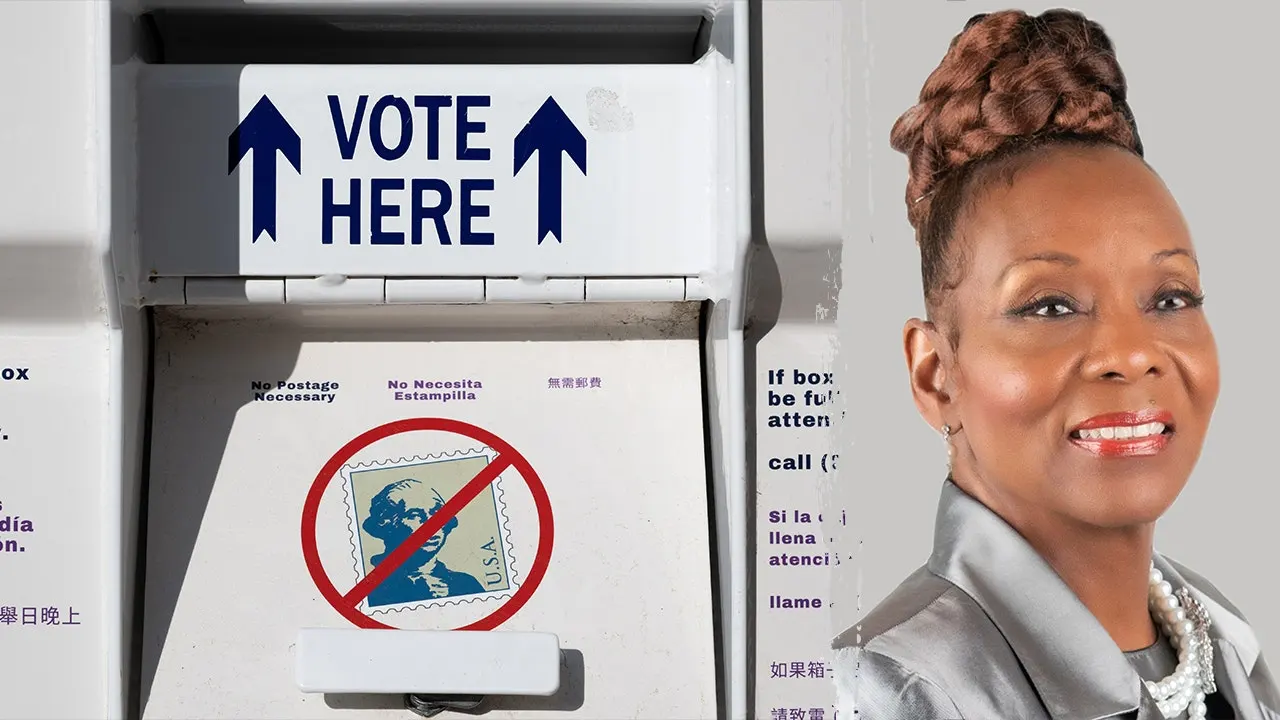
In the quiet, hardworking community of Waukegan, Illinois, local politics is often a deeply personal affair, defined by familiar faces and long-standing family roots. For Sylvia Sims Bolton, a 67-year-old alderperson representing the city’s 1st Ward, public service and family history were closely intertwined. However, the delicate balance between personal grief and civic duty shattered when the Lake County State’s Attorney’s Office filed criminal charges against her. Authorities allege that during the high-stakes Illinois primary election in the spring of 2026, Bolton crossed a perilous legal boundary by submitting a vote-by-mail ballot in the name of her recently deceased mother, Mary Sims. What may have begun in the shadowed corridors of personal mourning ultimately morphed into a dry, public legal drama, transforming a sitting community leader into a criminal defendant charged with one felony count of mutilation of election material and one misdemeanor count of disregarding the election code.
The chronology of the incident unfolds like a quiet tragedy, highlighting the mechanical efficiency of modern election systems operating alongside the unpredictable nature of human grief. On February 5, 2026—the very first day mail-in ballots could legally be distributed for the General Primary Election—a ballot destination-bound for Mary Sims was dispatched. Just one week later, on February 12, the bureaucratic machinery of the state processed a somber update: Mary Sims’ voter registration was officially cancelled following a notification of her death routed through the Illinois State Board of Elections. Yet, two weeks after her passing, on late February, the completed ballot envelope in Mary’s name was slipped into a secure drop box outside the Lake County Clerk’s Office. To the system, it was a discrepancy waiting to be caught; to the family, it was a final, quiet act that would soon ignite a storm of controversy. During the routine post-election reconciliation following the March 17 primary, election staff cross-referenced the dates, realizing that a vote had been cast by someone who was no longer there to speak for herself.
For the election workers inside the Lake County Clerk’s Office, the discovery was not a political statement, but a validation of their painstaking daily routines. Lake County Clerk Anthony Vega pointed to the incident as proof that the quiet, behind-the-scenes checks and balances of local democracy are resilient and effective. Rather than a failure, the detection of the ballot was framed as a triumph of systemic vigilance. Investigators alleged that Bolton received her late mother’s mail-in ballot, filled out the selections, forged Mary’s signature, and personally deposited it into the government drop box, unaware of how quickly the electronic databases would flag the timeline of her mother’s passing. The suspect ballot was quickly isolated, voided, and separated from the legitimate votes before it could ever influence the tally, ensuring that the integrity of the local election remained entirely uncompromised.
The political fallout was swift and sobering. On a chilly Wednesday morning, Sylvia Sims Bolton walked into a local police station to surrender herself to authorities, facing a future now clouded by criminal proceedings. The charges leveled against her carry the heavy weight of potential prison time and the certain loss of public trust, presenting a stark contrast to her decade-long reputation as an alderperson advocating for her constituents. Seeking to assure a rattled public, Lake County State’s Attorney Eric Rinehart and Sheriff John D. Idleburg released statements emphasizing that while the automated safeguards worked flawlessly, any attempt to undermine the sanctity of the vote must be met with firm prosecution. Crucially, investigators took care to note that there was no link between Bolton’s alleged actions and her official duties as an alderperson, sparing the city of Waukegan a broader investigation into municipal corruption, though doing little to soften the blow to her personal reputation.
This case lands in the middle of an intense, often polarizing national debate over mail-in voting, voter roll maintenance, and the security of American elections. For years, critics have pointed to the presence of deceased individuals on voter rolls as a vulnerability ripe for exploitation, while advocates have argued that existing security measures make actual voter fraud vanishingly rare and easily detectable. The situation in Lake County provides fuel for both arguments, illustrating that while human beings will occasionally try to bend the rules, the safety net cast by modern election administration is incredibly tight. It also highlights a deeply human, if misguided, motivation: the desire to preserve a loved one’s voice, even when the law dictates that their civic participation has ended. By attempting to give her mother one last say in the democratic process, Bolton effectively silenced her own, trade-off that now threatens to end her career in public service.
As Waukegan moves forward, the community is left to reckon with the complex emotional and legal aftermath of the incident. The empty seat of an alderperson undergoing criminal prosecution serves as a quiet reminder of how quickly lifelong dedication to a community can be undone by a single, catastrophic error in judgment. For the voters of the 1st Ward, the lesson is a bittersweet one: the systems designed to protect their voices from dilution worked perfectly, but the cost of that defense was the fall of one of their own leaders. Sylvia Sims Bolton’s journey from the chambers of city hall to the inside of a courtroom stands as a cautionary tale about the absolute rigidity of the law, proving that even under the guise of family loyalty or personal loss, the rules of democracy bend for no one.