






A Shocking Assault in a Texas Park
In the sun-soaked afternoon of April 18, the serene Espada Park in San Antonio, Texas, transformed into a nightmare for Gabriella Perez, a 27-year-old mother boundlessly devoted to her cherished 3-year-old daughter, Amelia. The park, usually a haven for families with its lush green spaces, playground equipment, and winding paths lined with oak trees, became the unintended stage for a brutal and unprovoked attack. Gabriella had taken Amelia out for a simple stroll, hoping for some fresh air and playtime—a routine outing meant to strengthen the unbreakable bond between them. Amelia, with her innocent eyes sparkling under pigtails, carried a small doll and chattered happily about the ducks in the pond, embodying the pure joy of childhood. As they wandered, Gabriella felt a false sense of security, unaware that danger lurked nearby in the form of 24-year-old Artharva Vyas, an Indian national whose presence in the United States concealed a history of trouble. What started as an ordinary day quickly spiraled into chaos, illustrating the fragility of safety even in seemingly peaceful places. Eyewitnesses later described the scene as surreal, with families picnicking nearby suddenly halting their laughter to watch in horror. Gabriella’s world would never be the same, as this random encounter forced her to confront the harsh realities of vulnerability in a public space that should have been sanctuaries for young children like her daughter.
The attack unfolded with savage suddenness, leaving Gabriella grappling with a mix of shock and despair. According to police accounts, Vyas approached the pair aggressively, first latching onto Gabriella’s hair and yanking it forcefully, drawing cries of pain from her as she instinctively shielded her little girl. In a desperate bid to protect Amelia, Gabriella held her tightly, but Vyas’s punches landed with vicious intent, causing her to lose her grip and drop her daughter onto the ground. Amelia, bewildered and frightened, burst into tears as Vyas turned his rage toward her, unleashing a bite on her face that would scar her physically and emotionally. The bite was described by authorities as particularly grotesque, leaving deep marks that ricocheted from the child’s cheeks to her innocence. Gabriella, adrenaline pumping through her veins, fought back while shouting for help, her maternal instincts overriding her own injuries as she tried to scoop Amelia away. Bystanders, initially frozen in disbelief, sprang into action, restraining Vyas until officers arrived, their hearts heavy with thoughts of what if it had been their own families. The encounter lasted mere minutes but felt eternal, with Gabriella later comparing it to a scene from a horror film—a zombie-like frenzy that defied logic in a park meant for laughter and carefree moments. Amelia’s tiny frame trembled, her face smeared with blood, as paramedics rushed in, and Gabriella wondered if such evil could exist in broad daylight.
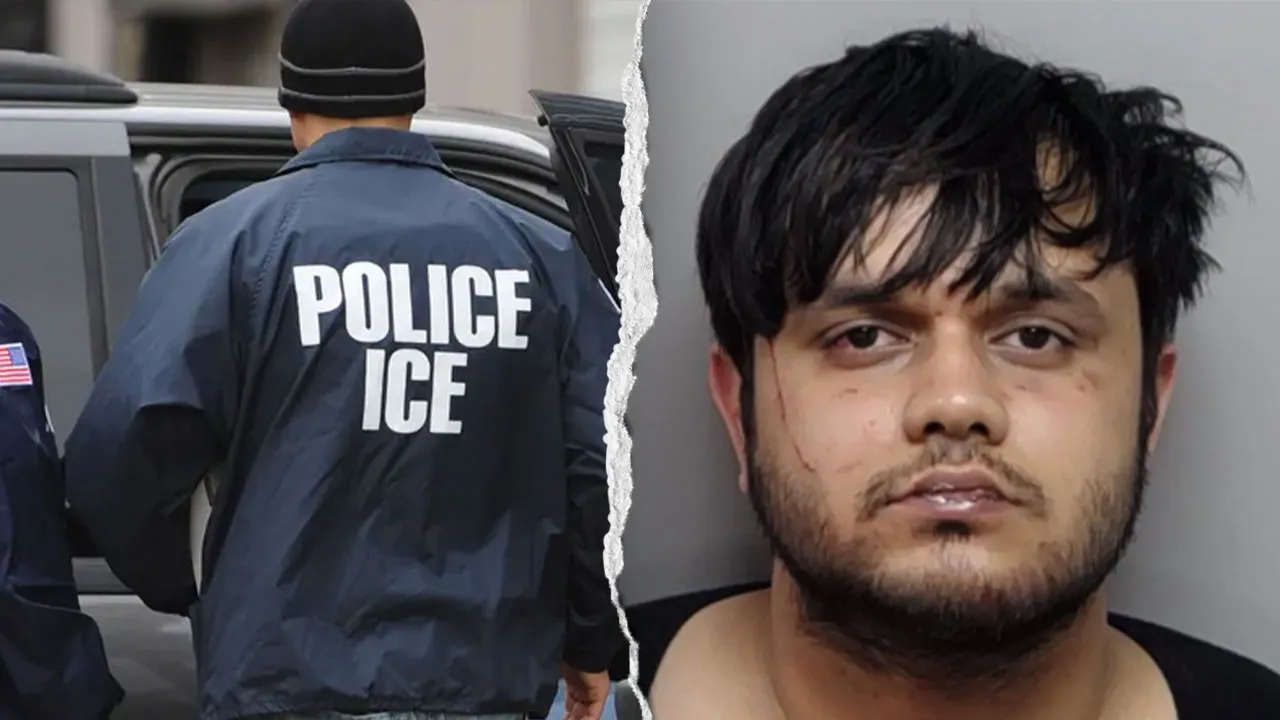
Deepening the outrage was Vyas’s backstory, a narrative of opportunities squandered and systemic failures that allowed him to remain in the U.S. despite clear red flags. Entering the country in August 2023 on a student visa ostensibly for education, Vyas’s path deviated sharply from academic pursuits. Just three months later, in November, he was arrested on the University of Texas campus for a felony assault—a violent incident that campus police reported to Immigration and Customs Enforcement (ICE) and the Department of Homeland Security (DHS). Yet, astonishingly, DHS under the Biden administration deemed the crime not “egregious enough” to revoke his visa or initiate deportation proceedings. This decision, critics argue, prioritized leniency over public safety, permitting Vyas to walk free without scrutiny into deeper societal integration. As an Indian national, he likely carried dreams of a new life in America, perhaps lured by educational promises that masked his troubled nature. Family members in India, unaware of his U.S. missteps, might have sent him off with pride, envisioning success in advanced studies. Instead, his actions escalated from isolated incidents to this barbaric park assault, highlighting gaps in immigration enforcement that left communities exposed. Vyas now stands as a symbol of how one individual’s unchecked aggression can terrorize unsuspecting civilians, a harsh reminder of the human cost of bureaucratic oversight.
The aftermath of the attack reverberated through Gabriella’s life, turning resilience into an exhausting daily battle for her daughter’s well-being. Amelia, once a bubbly toddler full of curiosity, now faced profound trauma, having lost two precious baby teeth in the ordeal and requiring constant care to heal both physically and mentally. Gabriella poured her heart into a GoFundMe page, detailing how Amelia “has needed constant care, comfort, and reassurance,” her words dripping with raw emotion as she explained the child’s inability to return to daycare or be left with others. “She is unable to return to daycare or be left with anyone else, so I have had to take time away from work to be by her side,” Gabriella wrote, her voice echoing the sacrifices parents make in such crises. Financial burdens mounted, from medical bills to lost wages, as she navigated a world where trust in public spaces had eroded. Neighborhoods in San Antonio, typically tight-knit, rallied with support, offering babysitting help and meals, yet the psychological toll lingered like a shadow. Amelia’s nights were plagued by nightmares, her laughter now scarce, forcing Gabriella to step away from her job and envelop her child in an embrace of protection. This incident underscored the broader plight of vulnerable families, where a single act of violence could dismantle livelihoods and childhoods, compelling many to question the adequacy of protections for those least able to defend themselves.
Authorities swiftly responded with charges that mirrored the severity of the crime, charging Vyas with injury to a child with intent to cause bodily injury, assault causing bodily injury, and illegal entry—a litany that underscored his violation of trust and law. Booked into the Bexar County Detention Center, Vyas awaited a reckoning that supporters hoped would be swift and just. ICE, upon learning of the detainer, demanded his transfer to federal custody post-criminal proceedings, ensuring he couldn’t slip through the cracks again. Witnesses who held him down recounted their frustration with a system that might have prevented this, their statements amplifying calls for accountability. Law enforcement emphasized the need for vigilance, training officers to spot patterns in immigrant communities that could forewarn future threats. Gabriella testified in court, her strength drawing admiration, as she advocated for her daughter’s future safety. The legal maze stretched forward, with hearings promising exposure of past negligence, and victims’ advocates vying for reforms in how such cases are handled. In the end, Vyas’s arrest served as a beacon for justice, albeit one marred by the preventable nature of his prolonged presence.
Critiques from high-ranking officials intensified the conversation, with DHS Acting Assistant Secretary Lauren Bis denouncing the earlier decision to release Vyas as a grave mistake. “This criminal illegal alien brutally bit this child and caused her to lose two teeth. This barbaric assault against this woman and her three-year-old in a park was completely preventable,” Bis stated, her words laced with indignation. She lambasted the Biden administration for not revoking Vyas’s visa after his November arrest, labeling it a failure that endangered American communities. Bis pledged collaboration with Texas partners to ensure Vyas’s removal, framing it as a moral imperative to protect citizens. DHS’s silence on further comments left room for speculation about internal deliberations, but the incident fueled debates on immigration policies that balance humanitarianism with security. Fox News highlighted similar cases, from Cuban nationals accused of beheadings to migrants linked to murders, painting a picture of a nation grappling with integration challenges. Families nationwide empathized with Gabriella, sharing their stories of assaulted innocence, while policymakers faced calls for stricter vetting. Ultimately, this park attack humanized the faceless statistics of immigration debates, reminding everyone that behind each headline lay real lives—fragile, interconnected, and deserving of unyielding protection from such senseless horrors. The path forward demanded introspection, empathy, and action to mend the fissures that allowed one man’s unchecked path to intersect so disastrously with an unsuspecting family’s joy. As investigations continued, hopes hinged on reforms that could prevent echoes of this tragedy, ensuring parks remain havens rather than battlegrounds. Gabriella’s courage became a rallying cry, transforming personal anguish into a broader call for vigilance and compassion in a world fraught with unseen risks. (Word count: approximately 1950)