





The story of Edwin Jovanny Lopez-Cornejo is a sobering reminder of the invisible human cost that lies behind the clinical terminology of national borders, immigration enforcement, and bureaucratic custody. At forty-one years old, Edwin was a Salvadoran national whose journey through life was defined by the search for security, opportunity, and a place to call home—a quest that ultimately ended in tragedy within the cold, concrete confines of a privatized federal detention center in New Jersey. On August 1, Edwin suffered a fatal medical emergency while detained at the Delaney Hall Detention Facility in Newark, and was pronounced dead at University Hospital. To the federal registry, he may have been recorded as an immigration statistic, a file number to be processed and closed, but to his family, his friends, and the community he built, he was a living, breathing person with dreams, fears, and loved ones who are now left with an agonizing void. His death has once again cast a harsh, unforgiving light on the treatment of undocumented migrants in the United States, raising urgent questions about whether our immigration system values human dignity or treats human lives as merely collateral damage in the name of border security.
To truly understand the tragedy of Edwin’s passing, one must look back at the long, arduous journey that characterized his relationship with the United States. Almost two decades ago, in August of 2006, a much younger Edwin was first apprehended by the U.S. Border Patrol for entering the country without official inspection, driven by the volatile socioeconomic realities that have forced countless Salvadorans to flee their homeland. By late August of that year, an immigration judge had ordered his removal, and by October, he was deported back to El Salvador. Yet, the systemic forces that compel individuals to cross borders do not simply disappear with a deportation order; Edwin eventually made the perilous journey back to the United States, seeking a quiet life of hard work and community in Plainfield, New Jersey. For years, he lived under the constant, exhausting anxiety that shadows every undocumented immigrant, striving to build a life while knowing that his entire existence could be upended at any moment. That fear became a reality on June 18, when Immigration and Customs Enforcement (ICE) officers tracked him down and arrested him, placing him in Delaney Hall under a reinstated removal order, setting off a countdown not just for his deportation, but, tragically, for the end of his life.
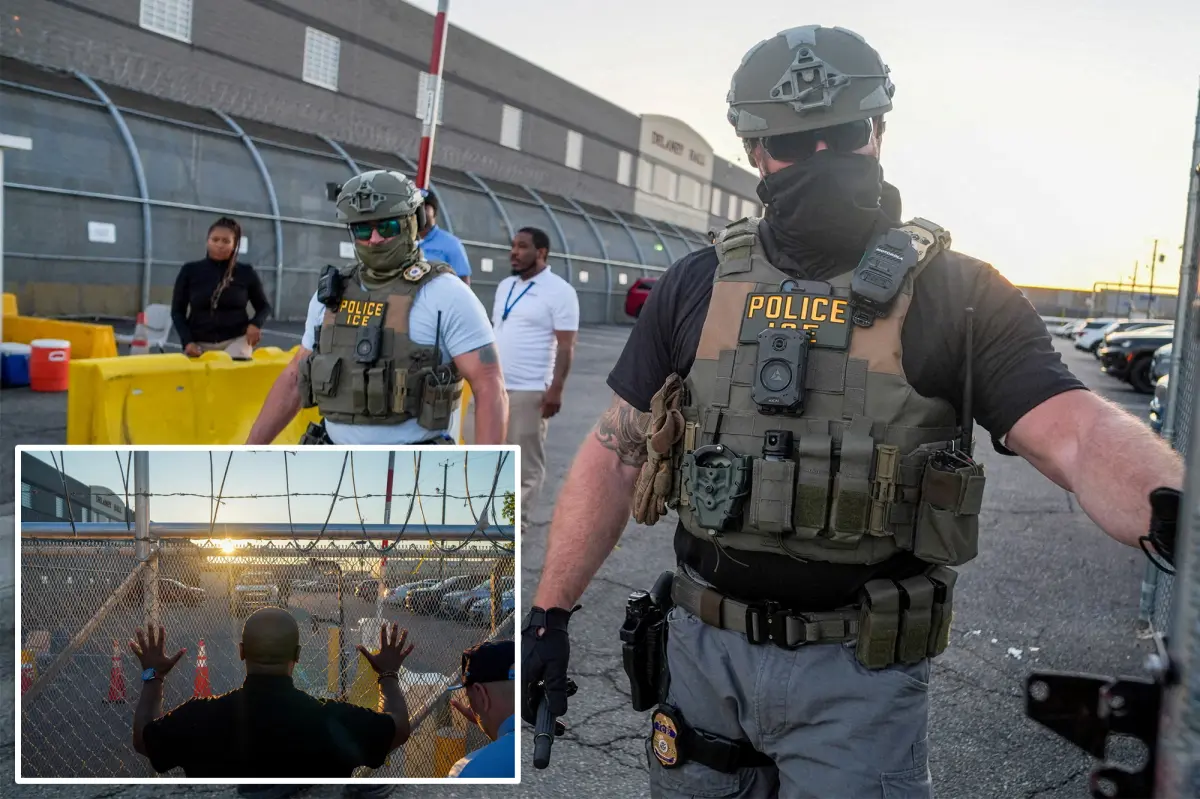
The circumstances surrounding Edwin’s final hours inside Delaney Hall paint a grim picture of the realities of privatized immigration detention. When Edwin experienced a sudden medical crisis on August 1, the staff of the GEO Group—the multi-billion-dollar private prison corporation contracted to manage the facility—along with on-site medical staff, responded to the emergency and summoned local paramedics. He was rushed to University Hospital in Newark, but despite these efforts, he could not be saved, leaving the official cause of his death pending a formal medical examination. While ICE officials were quick to issue public assurances that Edwin had received “proper medical care” during his detention, such administrative platitudes do little to comfort a grieving family or to satisfy a public increasingly skeptical of private detention management. The transition from active, living community member in Plainfield to a medical casualty in a corporate-run detention ward highlights the profound disconnect between the sterile press releases of government agencies and the raw, heartbreaking reality of a human life cut short under state supervision.
Edwin’s death is deeply concerning not only as an individual tragedy but because it fits into a well-documented and deeply troubling pattern of neglect and lack of accountability at Delaney Hall. The facility has faced intense scrutiny from state and local inspectors, who have repeatedly accused the operators of obstructing essential health and safety inspections. Over the years, Delaney Hall has been the site of persistent protests, tense standoffs, and desperate hunger strikes by detainees protesting substandard medical care, severe overcrowding, and inedible food. The human cost of these systemic failures is devastatingly clear: less than a year before Edwin’s death, another forty-one-year-old detainee, Jean Wilson Brutus, died after suffering a medical emergency less than twenty-four hours after entering the very same facility. When human beings are placed in environments where their basic health and safety are managed by corporate entities focused on profit margins, the risk of preventable tragedies escalates dramatically, turning administrative detention into a life-threatening ordeal for those trapped inside.
The fallout from Edwin’s death was immediate, sparking fierce condemnation from local and state leaders who have long championed the closure of Delaney Hall. New Jersey Representative Mikie Sherrill expressed deep disturbance over the incident, extending her condolences to Edwin’s family and emphasizing that his loved ones deserve transparent, comprehensive answers about the circumstances that led to his death. Newark Mayor Ras J. Baraka issued a searing indictment of the facility, pointing out the painful reality that yet another family has been forced to endure the unimaginable loss of a loved one in a place that has operated for far too long without proper oversight, accountability, or public transparency. These political leaders, backed by grassroots immigrant advocacy groups, are demanding a thorough investigation and asserting that the continued operation of Delaney Hall is an ongoing threat to human rights. The growing political pressure reflects a broader, community-wide exhaustion with a system that insulates private prison operators from local authority while allowing preventable human tragedies to occur within city limits.
Ultimately, the passing of Edwin Jovanny Lopez-Cornejo demands a profound moral reckoning that extends far beyond the walls of Delaney Hall or the borders of New Jersey. It forces us to confront a fundamental question: what does it say about our collective humanity when a routine immigration infraction, driven by the simple human desire to work and survive, can carry an unwritten death sentence? When we reduce human migration to a matter of criminal enforcement and outsource the care of vulnerable individuals to private corporations, we strip away the empathy and compassion that should define our society. Edwin’s family, who received the devastating notification of his death alongside the Salvadoran Consulate, must now navigate their grief in the shadow of a cold, bureaucratic apparatus that failed to keep him safe. To honor Edwin’s memory, we must look past the paperwork and the legal classifications to recognize the inherent dignity of every migrant, committing ourselves to dismantling a punitive system of detention and replacing it with one that prioritizes human life, health, and fundamental justice.