


Crisis at The Hague: Inside the Suspension of ICC Chief Prosecutor Karim Khan Amid Sexual Misconduct Allegations
A Court in Crisis: The Sudden Suspension of Karim Khan
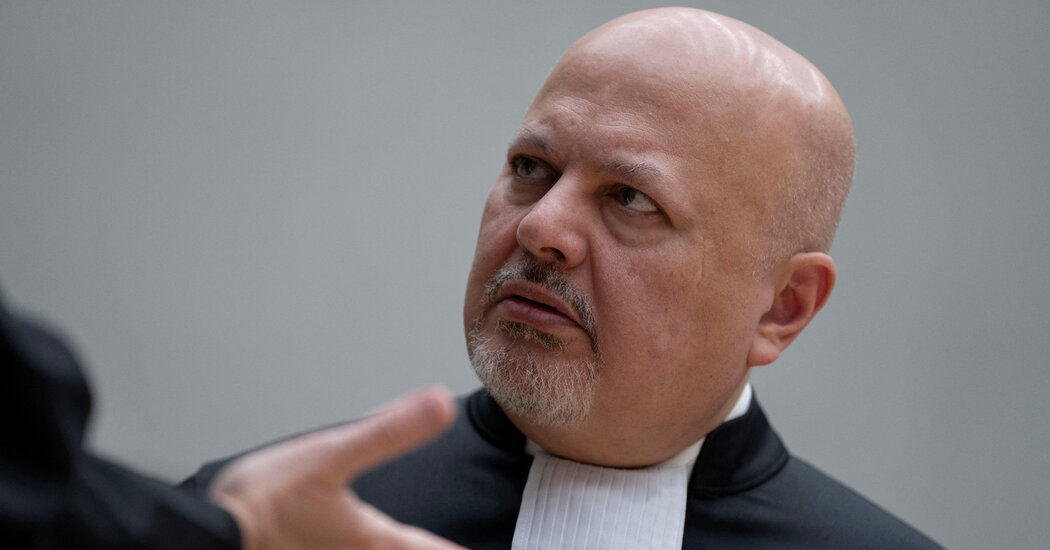
The International Criminal Court (ICC), sitting in its sprawling, modern headquarters in The Hague, has long presented itself as the clean-cut arbiter of global justice—a resilient institutional shield designed to hold the world’s most powerful war criminals, dictators, and genocidaires to account. Today, however, that shield is severely fractured, not by external geopolitical pressures, but by an internal crisis of governance that strikes directly at the credibility of its highest office. Karim Khan, the court’s high-profile chief prosecutor, has been formally suspended from his duties while the court’s governing member states weigh serious disciplinary measures against him. This dramatic intervention marks the latest and most damaging chapter in an escalating two-year saga of internal upheaval, paralyzing the very institution established under the 2002 Rome Statute to deliver impartial justice to the victims of humanity’s gravest atrocities. The Bureau of the Assembly of States Parties—a powerful 21-member oversight and management committee tasked with safeguarding the court’s administrative integrity—announced on Monday night that it had finalized a pivotal decision regarding allegations of sexual misconduct lodged against the prosecutor. While the bureau elected to keep the accompanying documentation and the granular details of its decision strictly confidential, it has officially referred the matter to the full Assembly of States Parties for further disciplinary proceedings. For an institution that depends entirely on moral authority, public trust, and the perceived integrity of its leadership, this suspension is a devastating self-inflicted blow, casting a long shadow of uncertainty over its ongoing investigations in volatile regions across the globe.
Inside the Bureau’s Confidential Findings and the Legal Backlash
                   ┌──────────────────────────────┐
                   │ Assembly of States Parties   │
                   │ (All 124 Member Countries)   │
                   └──────────────┬───────────────┘
                                  │
                                  ▼
                    ┌───────────────────────────┐
                    │    21-Member Bureau       │
                    │ (Conducts initial review) │
                    └─────────────┬─────────────┘
                                  │
                   ┌──────────────┴──────────────┐
                   ▼                             ▼
   ┌───────────────────────────────┐     ┌──────────────────────────────┐
   │   Majority Bureau Finding:    │     │   Final Removal Standard:    │
   │   "Serious Misconduct"        │     │   Requires Majority Vote     │
   │   Recommended for Disciplinary │     │   of the Full Assembly       │
   │   Proceedings                 │     │                              │
   └───────────────────────────────┘     └──────────────────────────────┘
The administrative decision to sideline the chief prosecutor was not taken lightly, reflecting a deep-seated division within the court’s governing structures regarding how to handle allegations of this magnitude. A source closely acquainted with the bureau’s deliberations revealed that a clear majority of the 21-member panel concluded that Mr. Khan—who had already stepped back on a voluntary leave of absence—had indeed committed “serious misconduct” during his tenure. Under the strict, formal procedural guidelines governing the International Criminal Court, a chief prosecutor may be suspended from their post pending a final disciplinary ruling if the underlying allegations are deemed to be of a “sufficiently serious nature.” However, the bureau took great pains in its public statement to clarify that this interim suspension is a safeguarding administrative measure and does not legally predetermine the final outcome of the broader disciplinary process. The path forward remains fraught with diplomatic and legal complexities; under the rules of the court, Mr. Khan cannot be permanently terminated or stripped of his mandate unless a majority of the entire Assembly of States Parties, representing all 124 member nations, votes in favor of his removal following a formal review. In response to this institutional quarantine, Mr. Khan’s legal representatives issued a defiant statement through Reuters, vehemently denying any wrongdoing and aggressively challenging the court’s administrative machinery. His attorneys characterized the bureau’s recent decision as “unlawful, procedurally unfair and unsupported by evidence,” signaling a fierce, protracted legal battle that threatens to play out in public view and further damage the court’s standing.
The Troubled Timeline: From Internal Whisper to Public Exposure
May 2024 Oct 2024 Nov 2024 May 2025
│ │ │ │
▼ ▼ ▼ ▼
┌──────────────┐ ┌──────────────┐ ┌──────────────┐ ┌──────────────┐
│ Allegations │ │ Media Leak │ │ Independent │ │ Khan Steps │
│ First Raised │ │ (Daily Mail │ │ UN Inquiry │ │ Down │
│ Internally │ │ Report) │ │ Commissioned │ │ Temporarily │
└──────────────┘ └──────────────┘ └──────────────┘ └──────────────┘
To understand the gravity of the current crisis, one must trace the circuitous and often defensive path the court took in addressing the initial allegations. The first internal reports of sexual harassment involving Mr. Khan surfaced within the court’s administrative channels in May 2024, yet the institution initially hesitated, failing to launch an immediate, formal internal investigation into the chief prosecutor’s conduct. This silence was shattered in October 2024 when the British tabloid The Daily Mail published a scathing exposé detailing how a female official at the international tribunal had expressed deep distress over Mr. Khan’s behavior toward a junior colleague, ultimately prompting another staff member to report the matter directly to the court’s human resources department. The scandal deepened when The Guardian subsequently reported that Mr. Khan had actively attempted to suppress the accuser’s claims internally, leveraging his immense institutional power to keep the allegations from gaining traction. Confronted with a rapidly escalating public relations disaster and mounting accusations of institutional cover-ups, the court finally acted in November 2024, announcing that it had commissioned an independent inquiry to ensure a “fully independent, impartial and fair process” untouched by internal political configurations. It was this independent pressure that eventually forced Mr. Khan to temporarily step back from his prosecutorial duties in May 2025, paving the way for investigators from the United Nations to step in and dissect the allegations away from the political influence of The Hague.
The UN Investigation: Details of the Alleged Abuse of Power
The resulting United Nations investigation produced a deeply troubling portrait of the internal power dynamics within the Office of the Prosecutor, revealing behavior that contrasted sharply with the high ethical standards the ICC demands of global actors. According to a summary of the investigation prepared by reviewing judges and obtained by The New York Times, UN investigators uncovered credible evidence demonstrating that Mr. Khan had engaged in “non-consensual sexual contact” with a female staff member who was serving as his special assistant. The victim detailed a progressive, escalating pattern of inappropriate behavior and sexual overtures from her superior, which began with pushy, overly familiar conduct during an official work trip to London and later escalated to physical touching inside his office at The Hague. According to her testimony, these unwanted advances eventually culminated in explicit sexual activity both within his office walls and during subsequent international business trips. The narrative laid bare by the investigation highlighted the profound structural asymmetry of their professional relationship, with the reviewing judges’ report noting that “the power dynamic between them meant that she could not say no to Mr. Khan.” Furthermore, the UN inquiry found evidence suggesting that Mr. Khan had engaged in retaliatory behavior against two other court employees who had acted as whistleblowers, reporting the special assistant’s disclosures to HR after she confided in them, thereby painting a picture of an office culture defined by intimidation and the weaponization of bureaucratic authority.
The Judicial Conundrum: Evaluating Evidence in the Legal Shadow
Despite the disturbing nature of these narrative findings, the UN investigation ultimately yielded an ambiguous and highly complex legal outcome that divided the court’s leadership. The UN investigators stopped short of making definitive, clear-cut determinations regarding the overall credibility of the witnesses they interviewed—a procedural omission that reviewing judges argued severely limited the practical utility of the investigation’s final report. Upon reviewing the raw files, a panel of ICC judges determined unanimously that the gathered evidence, while deeply concerning, did not meet the rigorous “beyond a reasonable doubt” legal standard required for a formal, binding judicial finding of misconduct against the chief prosecutor. This judicial determination created a complex legal vacuum: while the evidence was deemed insufficient to meets the criminal threshold of proof in a court of law, the underlying behavior described was far too severe for the court’s oversight bodies to simply ignore or dismiss. Armed with both the UN investigators’ detailed report and the subsequent judicial analysis, the Assembly of States Parties wrestled with how to bridge this gap between legal technicalities and ethical accountability. In April, refusing to let the matter rest, the full assembly voted decisively to continue the disciplinary proceedings against Mr. Khan, establishing an alternative, direct review process that gave both the chief prosecutor and his accuser a formal venue to submit additional testimony and evidence directly to the governing delegates for a final, non-judicial administrative determination.
Shredded Credibility: The High-Stakes Geopolitics of Global Justice
This domestic civil war within the ICC occurs at the worst possible geopolitical moment, threatening to permanently damage the court’s reputation at a time when its work is subject to unprecedented global scrutiny. Karim Khan is not merely an administrative bureaucrat; he is an internationally recognizable figure who has aggressively wielded his office to challenge some of the world’s most powerful leaders, most notably obtaining historic arrest warrants for Russian President Vladimir V. Putin over war crimes in Ukraine, and seeking warrants for Israeli Prime Minister Benjamin Netanyahu and Hamas leaders regarding conflicts in Gaza. The revelation that the person leading these high-stakes global prosecutions is himself entangled in a severe, highly credible sexual misconduct scandal provides immense political ammunition to the court’s detractors, who have long sought to portray the ICC as a politically motivated, hypocritical, and illegitimate theater. Kenneth Roth, the distinguished former executive director of Human Rights Watch, underscored the existential gravity of this crisis, noting that “a chief prosecutor needs to be known for the truth.” Roth warned that if the governing bureau has effectively repudiated Khan’s denials of misconduct, “it shreds his credibility and raises important questions as to whether he should even continue to contest the charges, as opposed to resigning for the benefit of the court.” As the Assembly of States Parties prepares for a highly polarized final vote, the international community is left to contemplate a sobering reality: in its quest to hold the world’s most powerful actors accountable, the International Criminal Court must first prove that it has the courage, the transparency, and the procedural integrity to govern itself.
Key Takeaways of the ICC CRISIS
| Issue | Details / Status |
|---|---|
| Accused official | Karim Khan, Chief Prosecutor of the International Criminal Court (ICC) |
| Current Status | Suspended from his post while disciplinary proceedings are considered |
| Primary Allegations | Sexual misconduct/non-consensual contact with an assistant; retaliation against whistleblowers |
| UN Investigation Finding | Evidentiary support for non-consensual contact, but lacked witness credibility ratings |
| Judicial Panel Determination | Unanimously ruled the evidence did not meet “beyond a reasonable doubt” standards |
| Governing Body Action | Assembly of States Parties voted in April to continue disciplinary reviews directly |