



The New Horizon: How Intra-African Tourism is Rewriting the Global Travel Narrative
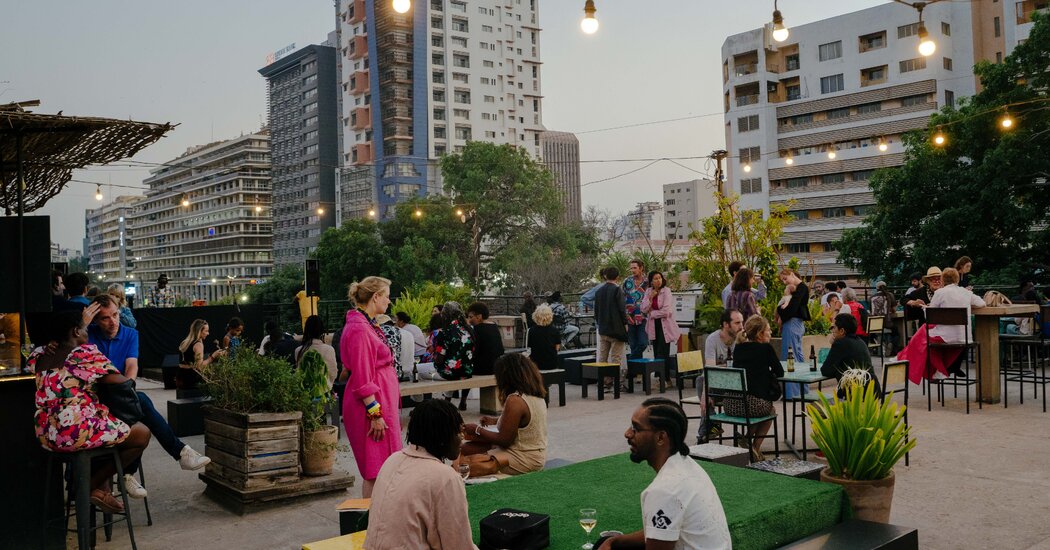
A few years ago, at a lively dinner party where the conversations were as vibrant as the cuisine, I sat next to a prominent Nigerian non-profit executive who spent her life splitting her time between the political corridors of Washington, D.C., and the bustling, hyper-creative neighborhoods of Lagos. Exasperated by the persistent, outdated Western media stereotypes that stubbornly reduce her home continent to a monolith of poverty and rural isolation, she painted a picture of a vastly different Africa—one defined by the edgy street-art festivals of Accra, the exclusive, high-energy beach clubs of Cape Town, the haute couture runways of Senegal, and the meteoric rise of “Nollywood,” Nigeria’s multi-billion-dollar film industry, which had recently gripped television audiences with “Fifty,” a saucy, critically acclaimed drama analyzing menopause and midlife crises through a highly glamorous, cosmopolitan lens. Hearing her speak, it became immediately obvious how much of the continent remained criminally undiscovered by outsiders; yet, today, this fascinating cultural renaissance is no longer a secret kept for intrigued European travelers. Instead, as my colleague Saikou Jammeh reports with striking clarity, a profound demographic and cultural revolution is underway from within: a new generation of middle-class African travelers is completely reshaping the tourism industry, increasingly viewing their own continent not as a hurdle to bypass in search of a Western visa, but as an aspirational, sophisticated, and deeply enriching playground worth exploring for their own leisure. For generations, the ultimate aspiration of travel for young, upwardly mobile Africans was almost exclusively oriented outward, making a point of pride to flood social media feeds with snapshots of the Champs-Élysées in Paris, the neon-lit corridors of Times Square in New York, or the historic architecture of London. But a quiet, undeniable paradigm shift has taken place over the last few years, and after relocating to Dakar, the oceanfront capital of Senegal, in the summer of 2024, the reality of this transformation hit home through a relentless stream of messages from friends and acquaintances across the continent announcing their imminent arrival—not for corporate summits or development conferences, but purely for holidays, weekend getaways, and creative retreats. This shift is backed by hard economics: according to latest data from the United Nations World Tourism Organization, international tourist arrivals in African nations grew by nearly 8 percent last year, marking the fastest regional growth rate anywhere in the world. Crucially, industry experts note that this historic surge is being propelled from the inside out by a growing African middle class—spearheaded by expressive Gen-Zers and millennials—who are rapidly dismantling the colonial legacy of international travel and, in doing so, radically altering global perceptions of leisure, self-expression, and African identity itself.
Breakouts and Borders: How Open Skies and Visa Reform are Unlocking the Continent
Historically, the structural odds have been aggressively stacked against anyone attempting to travel within Africa for pleasure, with the legacy of artificial colonial borders manifesting as a bureaucratic nightmare of epic proportions. For decades, it was notoriously easier and cheaper for an African citizen to secure a flight and visa to Europe than to visit a neighboring nation, as most countries required expensive, exhaustive visa applications, while the regional aviation sector suffered from astronomical operating costs, lack of infrastructure, and a baffling absence of direct routes. This disconnect once forced travelers into absurd itineraries—such as embarking on an agonizing long-haul journey from the Gambia to Namibia by flying through Doha, Qatar, or connecting through London and Dubai just to travel between West and South Africa. Today, however, these long-standing barriers are rapidly dissolving under the dual pressures of market demand and progressive diplomacy, creating a historic boom in regional air connectivity. Eager to capture this burgeoning market, a new wave of localized airlines has emerged across the continent, prompting innovators like Omoniyi Kolade, chief executive of the cross-border digital financial platform SeerBit, to observe that routes once requiring multi-day detours through Europe are now easily navigated through rapid continental hubs like Addis Ababa, Ethiopia. Simultaneously, a wave of forward-thinking diplomatic policies has swept the continent, with nations such as Benin, the Gambia, Kenya, Rwanda, and Ghana completely dismantling their historic visa restrictions to offer hassle-free, visa-free access to all African passport holders. This administrative liberalization has been a monumental game-changer for the hospitality sector; in commercial capitals like Lagos, billboards now openly advertise “stress-free, visa-free weekend escapes” to neighboring Benin for a modest $150, including transport and lodging. Now, strolling past the colossal bronze African Renaissance Monument in Dakar, the tangible fruits of this policy are impossible to ignore: the air is filled with a rich symphony of diverse languages and accents from across East, West, and Southern Africa, as groups of stylish youth pose for highly produced social media videos, claiming their space on the global stage and showing that the coveted digital real estate once reserved for New York or Paris now belongs firmly to the landmarks of their own continent.
Digital Sovereignty: How Influencers are Reclaiming the African Narrative
The deeply ingrained perception of tourism and leisure as a predominantly Western pursuit is undergoing a systemic dismantling, largely driven by a digital-first generation that refuses to see their world through an exoticized, foreign lens. Historically, tourism promotions on African television screens and towering city billboards featured almost exclusively European or North American faces, reinforcing a subtle, post-colonial subtext that exploration and relaxation were privileges reserved for the global elite. However, the democratization of media through social platforms has catalyzed an explosion of native travel entrepreneurs and charismatic digital content creators who are fiercely committed to educating their peers on the breathtaking beauty, historic depth, and sheer vastness of their own continent. A prime exemplar of this cultural reclamation is Berthold Ackon, a prominent Ghanaian digital storyteller known to his millions of global subscribers as Wode Maya, who recently set his sights on Southern Africa after observing a bizarre cultural disconnect. Inspired by a high-profile diplomatic visit to Zambia by his own president—who sparked a firestorm of confusion and critique on Zambian social media merely by wearing a traditional, loose-fitting Ghanaian smock known as a fugu—Ackon realized that young Africans remain profoundly disconnected from the diverse cultures of their neighboring countries due to a historic lack of authentic, peer-to-peer media representation. Determined to bridge this educational chasm, Ackon embarked on a month-long journey through Zambia, showcasing its pristine natural marvels, vibrant local markets, and intimate conversations with ordinary citizens to his millions of fascinated followers. Standing entirely drenched in the mist of the awe-inspiring Victoria Falls, he captured the essence of this modern movement by declaring into his camera that “God indeed took his time to create beautiful Africa for Africans”—a simple yet revolutionary sentiment that resonated so deeply that a trip he originally planned to last seven days ultimately stretched into five weeks of continuous exploration and cultural synthesis.
Choke Points and Collisions: Geopolitical Fractures Rattle the Persian Gulf
While Africa celebrates a newfound era of connection and integration, other vital junctions of the global travel and trade network are grappling with dangerous escalations of geopolitical tension and military friction. In a stark reminder of the fragile security environment governing the international travel market, a terrifying barrage of missiles and explosive drones launched by Iran recently struck Kuwait’s International Airport, resulting in at least one confirmed fatality and leaving dozens of commercial travelers injured. The dramatic attack, which ripped a gaping hole in the terminal roof and triggered chaotic scenes of smoke and flames, was verified by independent news outlets and occurred amid a mounting regional back-and-forth between Tehran and Washington. Iranian officials quickly attempted to shift blame for the structural damage onto Western military infrastructure, claiming the devastation was caused by a malfunctioning U.S. air defense system that failed to properly intercept their inbound ordnance, though independent analysts view the strike as a direct response to recent U.S. military strikes on a sensitive Iranian military base situated on Qeshm Island. This lethal exchange represents the first high-profile casualty in a Gulf state since a tentative ceasefire was brokered in April, severely threatening the strategic stability of the region’s busy aviation corridors and forcing airlines to once again rethink the safety of their global transit routes. The ripples of this escalation have traveled all the way back to the highest levels of government in Washington, where political tensions have boiled over behind closed doors. Former U.S. President Donald Trump privately confirmed that he had lashed out at Israeli Prime Minister Benjamin Netanyahu during an incredibly tense, expletive-laden phone call, reportedly calling the Israeli leader “crazy” and expressing immense frustration with the strategic execution and diplomatic fallout of Israel’s continuous military operations in Lebanon, highlighting a widening fracture between Western allies as the threat of a wider, unchecked regional conflict looms over global markets.
Demography is Destiny: The Graying of Japan and the Preservation of Legacy
Far from the immediate, volatile conflicts of the Middle East, East Asia is quietly battling a slow-moving, existential emergency of a different nature—one driven not by munitions, but by a chilling demographic contraction that threatens to redefine the global economic hierarchy. Newly released national census data reveals that Japan’s population has plummeted by an astonishing three million people in just the last five years, signaling a severe acceleration of a demographic crisis that serves as an ominous warning to other developed, industrialized nations. This rapid decline, fueled by decades of persistently low birth rates and a cultural resistance to large-scale immigration, has transcended mere social commentary to become an immediate threat to national stability, triggering critical labor shortages in vital industries, stalling domestic economic growth, and placing an unsustainable structural burden on the nation’s social safety nets and healthcare systems. As Japan struggles to adapt its economic engine to an aging, shrinking workforce, the global community is watching closely, recognizing that this demographic winter is a harbinger of the structural headwind that many European and East Asian nations will inevitably face in the coming decades. Meanwhile, in London, a parallel conversation about time, mortality, and the preservation of historic legacy is taking place in the cultural sphere, though through a much more intimate, creative lens. A prestigious local gallery has assembled a comprehensive Retrospective displaying the extensive, often overlooked painting portfolio of Winston Churchill, the iconic British Prime Minister whose towering political and wartime leadership has dominated 20th-century history. While volumes have been written about his strategic decisions during the dark days of the Second World War, this exhibition offers a rare, deeply personal window into the statesman’s inner life, revealing how he used oil on canvas as a therapeutic sanctuary to navigate deep bouts of depression and the immense weight of global leadership, demonstrating that even those who shape the physical layout of our world often seek solace in the quiet preservation of art.
Cultural Custody: From Global Canine Disputes to Culinary Fusion
This global intersection of identity, legacy, and cultural ownership is not limited to the grand halls of European museums or the shifting demographics of East Asia; indeed, it frequently manifests in the most unexpected, fiercely defended aspects of daily life and regional pride. A bizarre diplomatic and cultural custody battle has recently erupted between Brazil and Mexico over the rightful heritage of the “Caramelo”—the ubiquitous, honey-colored mixed-breed street dogs that have roamed the neighborhoods of Brazil by the millions. Once neglected and marginalized, these resilient, highly adaptable animals have undergone a stunning cultural elevation in Brazil, becoming celebrated figures in viral internet memes, local folk songs, and even honored with elaborate floats during the world-famous Rio de Janeiro Carnival, with citizens viewing the street dog as a living, breathing symbol of the country’s own diverse, resilient, and beautifully blended heritage. However, the authorities in Mexico have sparked widespread outrage across Brazilian social media by officially declaring the caramelo a “Mexican national treasure” and claiming them as a native breed akin to the Chihuahua. This bureaucratic claim has drawn fierce resistance from everyday Brazilians, who argue that Mexico is attempting to misappropriate a vital piece of their collective soul—a sentiment capturing how deeply symbols of identity are protected in an increasingly globalized world. Yet, as nations clash over ownership, humanity’s shared stories continue to find exquisite harmony on our plates, as exemplified by the rising popularity of dishes like vegan chile paneer. This spicy, tangy culinary creation—inspired by Indo-Chinese cuisine, which was born when Chinese immigrants migrating to Kolkata, India, masterfully adapted their traditional cooking styles to satisfy the vibrant palates of their local Indian neighbors—replaces traditional cheese with cornstarch-dusted, crispy pan-fried tofu. The resulting dish acts as a beautiful, delicious metaphor for our modern world: a place where borders may shift, tensions may rise, and demographics may change, but the unstoppable human drive to connect, explore, adapt, and rewrite our shared narratives remains the most powerful force of our time.