


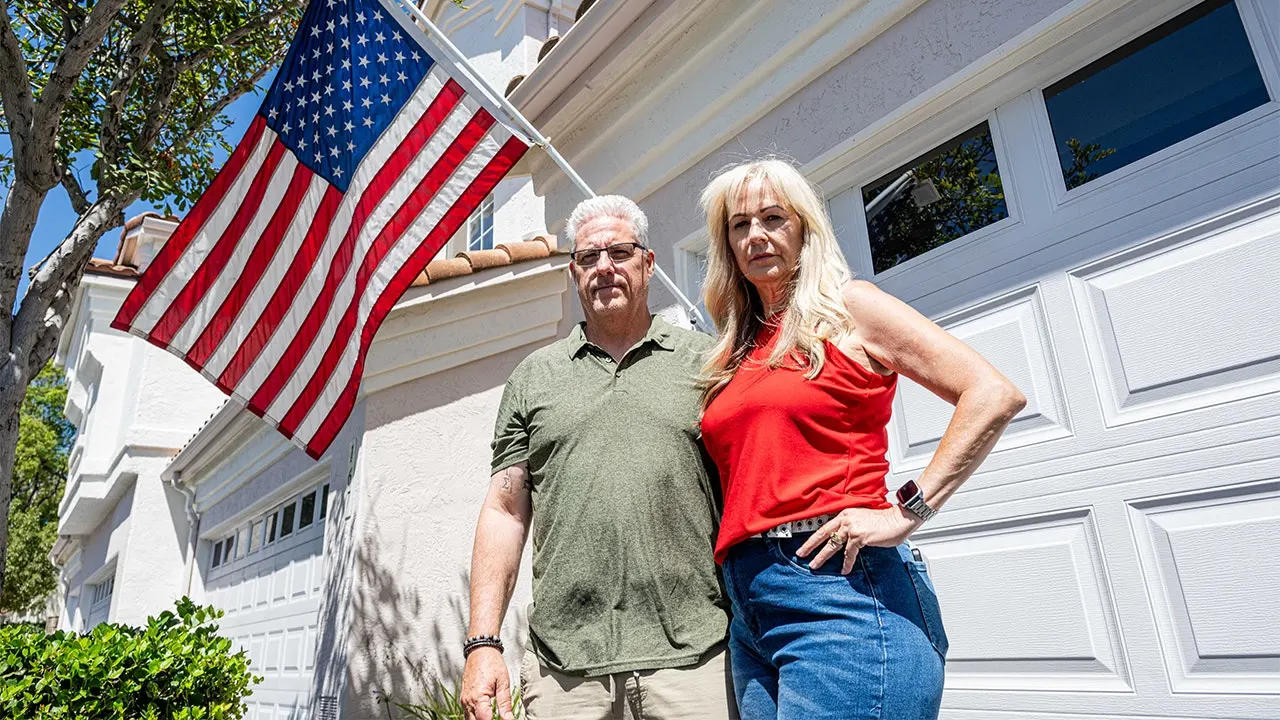
Nestled within the sun-drenched hills of San Marcos, California, lies the Ambiance community—an upscale enclave of townhomes valued at nearly a million dollars apiece, where manicured lawns and quiet streets suggest an idyllic suburban paradise. Yet beneath this tranquil surface, a fierce battle over patriotism, property rights, and community identity is unfolding on the eve of America’s landmark 250th birthday. For decades, the neighborhoods of Southern California have symbolized the American dream, a place where families strive to build lives of comfort, safety, and personal expression. But for residents like Amy and Christopher Cooke, that dream is currently being clouded by bureaucratic overreach. The Cookes, along with several of their neighbors, find themselves locked in an intense, emotionally draining standoff with their own homeowners association (HOA), which has threatened them with escalating fines and legal actions for displaying the American flag outside their homes. What began as a simple, silent act of national pride has quickly morphed into a high-stakes standoff, transforming their peaceful neighborhood into a symbolic battleground over the right of citizens to fly the Stars and Stripes in the very country they call home.
To understand why this conflict runs so deep, one must look past the fabric of the flag itself and into the profound human stories woven into its threads. For the Cooke family, the flag mounted beside their garage door is not merely a seasonal decoration or a casual political statement; it is a sacred, living tribute to Christopher’s grandfather, a decorated World War II hero who made the ultimate sacrifice while rescuing his fellow sailors during the global conflict. Posthumously awarded both the Navy Cross and the Purple Heart, his legacy of bravery has been kept alive by the family through the quiet, steadfast display of the American flag for more than twenty years without a single complaint. Now, being ordered to tear down this heirloom feels to them like an attempt to erase their family’s proud military history. Their neighbor, Terri Collins, who also received a violation notice for her own flag display, has stood shoulder-to-shoulder with the Cookes, refusing to back down in the face of what they describe as a heartless disregard for personal sacrifice and national heritage. Collins describes the journey as incredibly long, exhausting, and fraught with anxiety, yet she remains resolute, fueled by the belief that defending the flag is a moral obligation to those who died protecting it.
The roots of this neighborhood dispute trace back several years and reveal a baffling shift in the HOA’s enforcement policies that has left residents feeling blindsided and betrayed. According to Amy Cooke, the trouble began when another resident in the community attempted to fly a sports flag supporting the San Diego Padres, which prompted the Ambiance Owners Association to reassess its guidelines. Ironically, letters from as recently as May 2023 explicitly affirmed that while sports and decorative banners were prohibited, “the American flag is the only approved flag to be hung on and within common property.” However, by May 2026, the board inexplicably reversed its posture, issuing a formal violation notice to the Cookes demanding that they remove their mounting bracket within fifteen days or face severe enforcement actions. When the Cookes requested clarification, the HOA hid behind bureaucratic ambiguity, failing to explain why a small portion of the garage frame—which the Cookes have maintained and used exclusively for two decades—suddenly fell under the restrictive classification of “common area” rather than “exclusive-use common area.” The board has repeatedly ignored formal requests for meeting minutes, legal precedents, and structural documents, leaving the homeowners with no choice but to prepare for a grueling, expensive legal battle.
Faced with a wall of administrative silence, the Cookes and their supporters have transitioned from bewildered victims to active, organized defenders of their constitutional liberties. Drawing on their own resilience, Christopher and Amy have spent nearly two years poured over dusty archives, researching complex federal housing laws, examining California’s civil codes, and documenting every piece of communication from the HOA. To level the playing field against the association’s deep financial coffers, the couple launched a grassroots online fundraiser to cover their mounting legal expenses, pledging that every remaining dollar will be donated directly to veteran charities and organizations supporting Gold Star families who have lost loved ones in military service. Their courageous stand has caught the attention of prominent civil rights advocates, including Courtney Corbello, counsel at the Center for American Liberty. Corbello notes that California law is unambiguous in its protection of homeowners, stating that while HOAs can implement sensible safety regulations, they are strictly prohibited from implementing blanket bans that strip citizens of their right to fly the national banner on their own doorsteps. Legal experts warn that the HOA’s aggressive intimidation tactics and refusal to seek common-ground solutions will likely subject the association to intense judicial scrutiny and costly public embarrassment.
As news of the local standoff spread beyond the borders of San Marcos, it quickly ignited a firestorm in the broader political arena, illustrating how local HOA disputes can mirror the deep ideological fractures of modern America. High-profile figures, including California gubernatorial candidate Steve Hilton, have rallied to the homeowners’ defense, venting their outrage at what they view as a symptom of a larger cultural malaise. Pointing out the bitter irony of punishing homeowners for patriotism just as the nation prepares to celebrate its historic semiquincentennial, Hilton lambasted the HOA board members as power-tripping bureaucrats who are actively stifling national pride at a moment when Americans should be coming together. His call to action was simple and defiant: he urged residents to ignore the petty threats, stand their ground, and respond to the HOA’s intimidation by raising even more American flags across the neighborhood. The controversy has struck a raw nerve across the country, highlighting an ongoing culture war where basic patriotic traditions are increasingly subjected to hyper-regulation, sparking an essential conversation about where a community association’s authority ends and an individual’s fundamental freedom begins.
Today, the atmosphere within the Ambiance townhomes is thick with tension, leaving a profound emotional impact on those who simply wish to live in peace. Amy Cooke laments that the neighborhood has been thrown into disarray, describing a bittersweet dynamic where neighbors now put up or take down their flags with heavy hearts and frayed nerves, turning what should be a peaceful symbol of unity into a source of constant stress and anxiety. Yet, despite the emotional toll, the Cookes remain hopeful that their struggle will serve as a beacon of encouragement for everyday citizens across the country who feel powerless against the arbitrary rules of local authorities. By refusing to let their flag be quietly tucked away in a closet, they are reminding their community—and the nation—that freedom is not a passive inheritance, but something that must be actively defended in our daily lives. As the legal battle looms, the flags in San Marcos continue to wave, serving as a reminder that the spirit of American independence is still very much alive, kept safe by ordinary citizens who refuse to let the symbols of their nation’s history be diminished by fear or bureaucracy.