



When Floods Came Rushing: A Tale of Washington State’s Recent Crisis
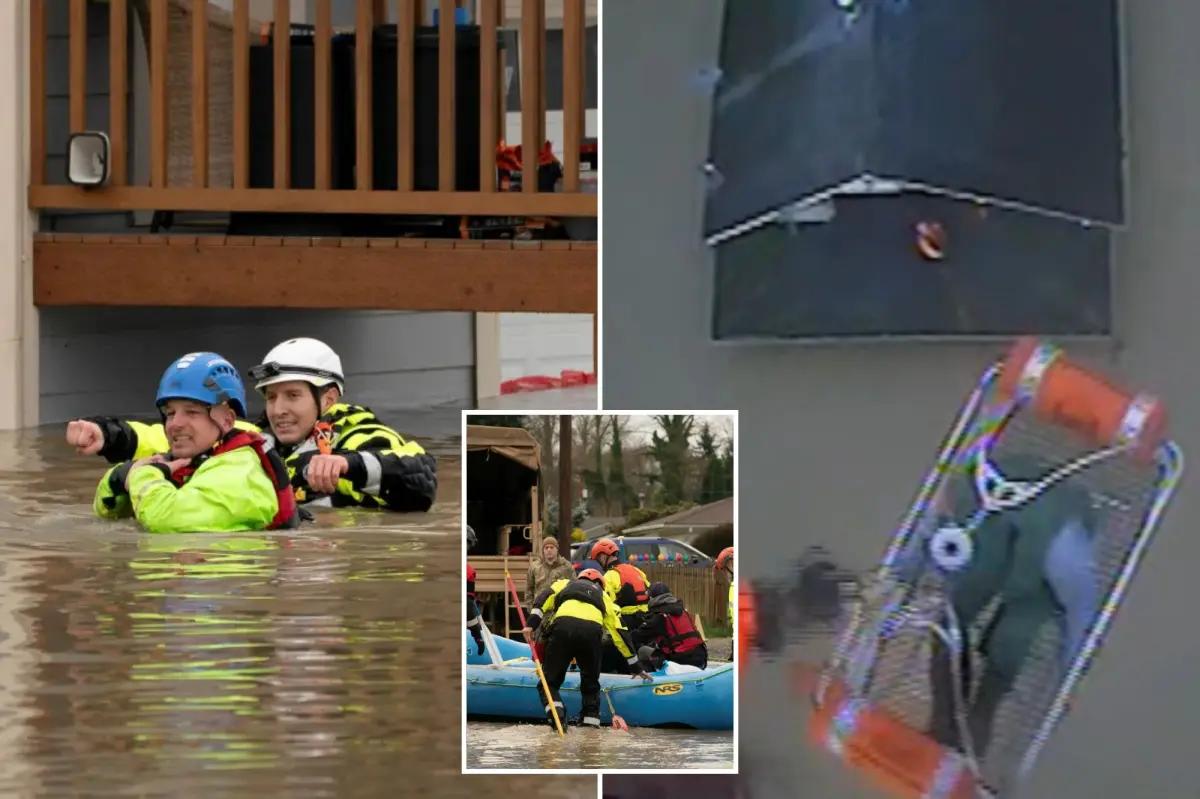
In late 2023, what began as a typical rainy season in Washington state quickly transformed into a catastrophic flooding event that would test the resilience of thousands of residents across the Pacific Northwest. Eddie and his wife, 30-year veterans of life alongside the Snoqualmie River in Duvall, had weathered many floods before. As they prepared for rising waters by moving their beloved animals—two donkeys to higher ground and eight goats to their outdoor kitchen—they had no idea this time would be drastically different. “It was hours, not days,” Eddie later recounted with disbelief. “In four hours it had to come up 4 feet.” The water rose so rapidly that the couple, who had initially planned to ride out the storm, found themselves trapped as their farmhouse was swallowed by floodwaters. Their dramatic rescue came when King County Sheriff’s Office marine rescue dive unit arrived by boat, navigating what had been their sunflower field but now resembled a vast lake, carrying them and their dog to safety. Eddie and his wife became just two faces among thousands forced to evacuate as an atmospheric river—a meteorological phenomenon bringing extraordinary moisture—unleashed its fury across western and central Washington.
The scale of the disaster was unprecedented, with some areas receiving over a foot of rain in just days. Rivers swelled beyond their banks at record speeds, transforming peaceful communities into waterlogged disaster zones. The Skagit River, which winds through the Cascade Range before spreading across farmlands on its journey to Puget Sound, surpassed its previous flood record by several inches when it crested at 37 feet in Mount Vernon. This catastrophic rising of waters prompted authorities to issue urgent “go now” evacuation orders to tens of thousands of residents, including nearly 10,000 people in the farming city of Burlington. National Guard members went door-to-door, helping transport stranded residents to shelters as muddy water rushed into homes. While the floodwaters began slowly receding by the weekend, emergency management officials warned that rivers would remain dangerously high for days, with ongoing threats of levee failures, mudslides, and more rainfall expected. Despite the extensive flooding, one small miracle emerged from the crisis: no deaths had been reported, a testament to the swift emergency response and community preparedness.
The human impact of the floods revealed itself in countless personal stories across the affected regions. Mario Rincón had evacuated with his family, including a newborn baby just one week old, to a local hotel. When they returned to check on their Burlington property, they found it inaccessible, with murky floodwaters reaching partway up the first floor. “It’s going to be a few days before the water recedes,” he said with resignation, facing the uncertainty that thousands of other residents were also experiencing. In communities like Sumas, Nooksack, and Everson near the Canadian border—home to approximately 6,500 residents combined—entire neighborhoods sat submerged. The international border crossing at Sumas closed as the waters rose. Sumas Mayor Bruce Bosch acknowledged his community’s anxiety with a simple message that captured the moment: “Hang in there.” These words echoed the sentiment across Washington as residents waited for the chance to return home and assess the damage to their lives and livelihoods.
The emergency response mobilized across the state demonstrated both the severity of the crisis and the extraordinary measures required to keep people safe. Helicopters became lifelines, dramatically rescuing two families from rooftops in Sumas after their homes were completely surrounded by floodwater. In King County, crews worked through the night to fill a dangerous sinkhole that had formed on a Green River levee in Tukwila, a Seattle suburb. President Trump signed the state’s request for an emergency declaration, allowing federal resources to flow into the disaster zone. Governor Bob Ferguson coordinated the deployment of National Guard units who conducted hundreds of evacuation operations. Meanwhile, in areas like Deming, nature’s power was displayed in terrifying fashion as two homes collapsed into the Nooksack River, their foundations completely eroded by the raging waters. Fortunately, no one was inside either structure at the time of collapse, but the images served as a stark reminder of the floods’ destructive potential.
The infrastructure damage spread far beyond individual homes. Throughout western and central Washington, debris and mudslides closed critical highways, while powerful currents washed away roads and bridges that had stood for decades. Communities found themselves isolated as transportation networks failed. In Burlington, about 1,000 residents evacuated in the middle of the night as floodwaters reached depths of 2-3 feet in residential areas. Mount Vernon narrowly avoided a similar fate when its downtown flood wall held fast against the record-breaking river levels. Each day brought new challenges as emergency managers assessed damage, coordinated rescues, and worked to restore basic services to affected areas. The disaster highlighted both the vulnerability and the resilience of these riverside communities, many of which sit on river deltas particularly susceptible to flooding events. As waters slowly began to recede, the focus shifted toward assessing the extensive damage and beginning the long process of cleanup and rebuilding.
While authorities had yet to calculate the full financial impact of the disaster, the emotional and psychological toll was immediately evident in the faces of displaced residents uncertain about when—or if—they could return home. The flooding event also prompted difficult discussions about climate change and extreme weather. Scientists note that while no single weather event can be directly attributed to climate change without specific study, the increasing frequency and intensity of extreme storms, floods, and other natural disasters align with climate change predictions. For residents of Washington’s flood-prone areas, this recent catastrophe raised questions about future vulnerability and necessary adaptations. As the initial emergency response transitions to recovery efforts, communities face the daunting task of rebuilding while contemplating how to better prepare for a future where such extreme weather events may become more common. Through it all, the spirit of community resilience remains evident—neighbors helping neighbors, strangers offering shelter, and emergency workers pushing beyond exhaustion to ensure everyone’s safety in the face of nature’s overwhelming power.