







The Enchantment of the Northern Lights: A Personal Encounter with Nature’s Electric Symphony
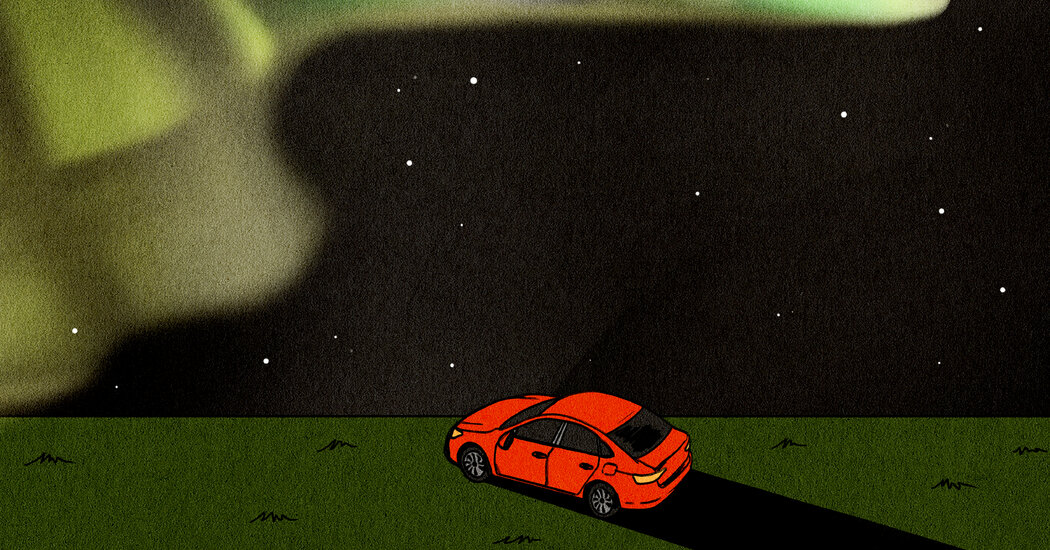
In the dead of night on a desolate stretch of North Dakota highway, surrounded by endless cornfields swaying gently in the breeze, I stumbled upon a spectacle that redefined my understanding of wonder. It was a late summer evening, and my friend and I were driving across this flat, unassuming landscape en route from Chicago to Calgary. The road was quiet, the sky a vast expanse of inky blackness pierced only by the faintest glimmers of stars. But then, without warning, the firmament erupted into a dazzling display. Neon green towers and skyscrapers materialized out of thin air, arching from the horizon toward the heavens like an electric cityscape born from some cosmic blueprint. The northern lights, or aurora borealis as scientists call them, transformed the ordinary into the extraordinary. Mesmerized, we slammed on the brakes, leaped from the car, and dashed into the fields, our laughter echoing as we chased these pulsating ribbons of light, desperate to touch the untouchable. It was raw, thrilling—a reminder that nature can conjure magic in the blink of an eye.
This memory resurfaced vividly this past week as I delved into an article in New Scientist chronicling the ambitious experiments of Karl Lemstrom, a 19th-century Finnish scientist whose obsession with replicating the aurora borealis bordered on poetic madness. Lemstrom, driven by the era’s burgeoning fascination with electricity, constructed elaborate apparatuses of copper wire, envisioning them as conduits to channel atmospheric forces and summon artificial lights. Naturally, he stumbled—the true mechanics of the aurora involve the sun’s charged particles crashing into Earth’s magnetic field, sparking those ethereal glows. Yet, in a twist of fate, his contraptions did produce some eerie luminosity, perhaps akin to the static discharge known as St. Elmo’s fire. Until his dying day, Lemstrom clung to the belief that he had conquered the skies. His story isn’t just a tale of scientific hubris; it’s a testament to humanity’s perennial yearning to demystify the mysteries that dance above us, blending empirical rigor with an almost artistic allure.
Today, decades after Lemstrom’s misguided ingenuity, researchers continue to unravel the aurora’s secrets, pushing the boundaries of our knowledge about electromagnetism and atmospheric phenomena. Take, for instance, the cutting-edge 10,000-antenna radar system now operational in Norway, a marvel detailed by The Times. This array promises to dissect the northern lights’ finer nuances: why their densities shift like clouds in a storm, how they undulate across the polar skies, and what cosmic variances propel their movements. Each revelation bathes our world in new light, underscoring the invisible forces that govern our existence. I remember brushing up on electromagnetism once—enough to grasp its basics—and feeling that familiar awe. It’s like collecting treasured artifacts: facts about birds navigating via Earth’s magnetic fields, sharks honing in on prey through electroreception, or the electric pulses coursing through our own veins. These aren’t mere curiosities; they’re threads woven into the fabric of life, reminding us that the universe is a symphony of energy we often overlook.
Yet, for all the scientific explanations, the empirical data doesn’t fully capture the emotional crescendo I experienced that night amid the cornfields. There was something profoundly humbling about it—the sheer spontaneity of darkness yielding to pyrotechnics, beauty erupting from nothingness without a single effort on our part. We were just two souls in a borrowed pickup truck, winding through the mundane, when reality flipped. Days later, a deep-seated gratitude lingered, a quiet affirmation that magic persists in our world, unbidden and free. It’s a feeling that lingers, teaching us to pause and appreciate the elemental forces we rarely acknowledge. Gravity tethers us, electromagnetism animates our biology, and the aurora erects its phantom skyscrapers from the Great Plains to Iceland’s Blue Lagoon. We count ourselves lucky to witness such grandeur, for it thrives beyond our comprehension or control.
In romanticizing Lemstrom, I see him not merely as a pioneer but as a bridge between science and wonder—a man who, like a poet wielding equations, sought to tame an incomprehensible spectacle. Most of us, ensnared in the trivialities of daily life, seldom ponder these elemental powers. Electromagnetism? Gravity? They fade into the background, taken for granted because they’re too vast, too intricate for our lunch-preoccupied minds to fathom fully. And yet, who needs a doctorate in physics to revel in their effects? The aurora’s dance, the earth’s firm hold—these continue unabated, indifferent to our awareness. It’s liberating, really. We can enjoy the show without deciphering every plot twist, basking in the privilege of simply being present.
Ultimately, this interplay of science and sensation invites reflection on our place in a wondrous cosmos. Whether it’s the accidental thrill of a midnight drive or the painstaking work of researchers piecing together auroral puzzles, the message is clear: beauty and brutality coexist in nature’s grand design. As we venture forth, let’s allow ourselves to be surprised, to let the lights guide us toward a deeper appreciation of the forces that shape our world. In doing so, we honor figures like Lemstrom and embrace the mystery that makes life an endless adventure.