



The Allure of Luxury and the Downfall Begins
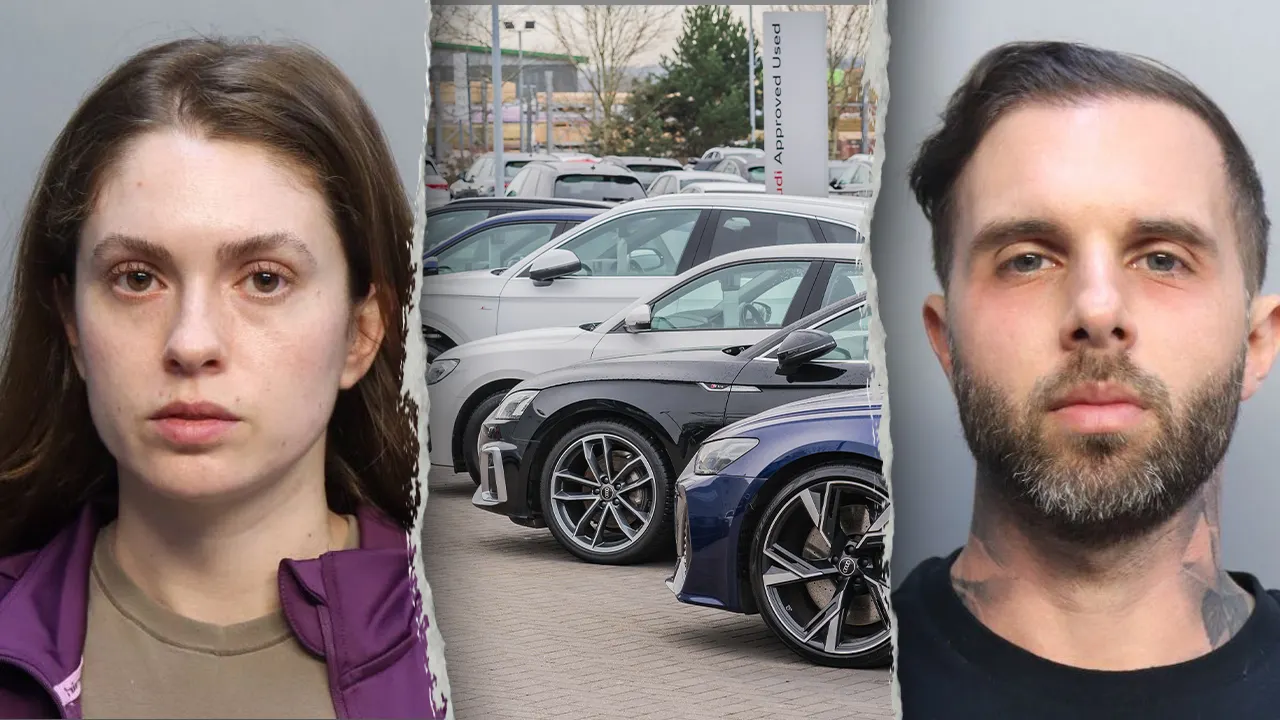
Imagine living the American Dream in sunny Florida, where palm trees sway and luxury cars gleam under the sun. That’s what Michael Anthony Lucci, 32, and his wife Emily Marie Lucci, 30, seemed to be building for themselves. They owned a dealership called Luxury Auto Source in Davie, a place where high-end vehicles like Bentley, Porsche, and BMW rolled off the showroom floor. By day, Michael handled the business operations, while Emily managed the paperwork, dreaming of a life filled with mansions, vacations, and the finer things. To the outside world, they looked like savvy entrepreneurs capitalizing on Florida’s vibrant economy. But beneath the polished sales pitches and gleaming exteriors, a web of deceit was unraveling. It started innocently enough, or at least that’s how they might have justified it to themselves—fudging numbers on invoices to boost the value of cars they sold. Who wouldn’t want to make a quick buck in the cutthroat world of used luxury autos? Yet, as investigators later uncovered, this wasn’t just creative accounting; it was a calculated scheme that could shatter lives, including their own. Michael and Emily might have thought they were simply adapting to the challenges of owning a small business, where every dollar counts and competition is fierce. Perhaps they started small, borrowing a page from stories they’d heard about other dealers who’d bent the rules to survive. But in the world of car titles, accuracy is everything—it’s the legal name tag that says who owns what, and forging it could lead to disaster. As they built their empire of fancy rides, they probably never imagined the day when the Florida Highway Patrol (FHP) would knock on their door, turning their dream into a nightmare. People often root for the underdog couple trying to make it big, but when ambition crosses into crime, it leaves a lasting scar on communities that trusted them. In conversations with friends, they might have boasted about their success, showing off photos of exotic cars lined up like trophies. Little did they know, one seemingly insignificant document would expose it all—a parts invoice that didn’t add up, sparking a chain reaction that threatened to pull everything down. Reflecting on their journey, it’s easy to see how the lure of easy money clouded their judgment; after all, Florida’s car market is booming, with tourists and locals alike chasing status symbols. Michael, with his entrepreneurial spirit, likely felt the pressure to perform, urging Emily to “just make the numbers look right” for one deal too many. This isn’t just a tale of greed; it’s about how ordinary people, in their quest for stability, can spiral into extraordinary trouble. The Luccis’ story serves as a cautionary reminder that in the pursuit of the high life, trust is the most valuable currency—and once broken, it’s hard to rebuild.
Uncovering the Web of Deceit
Fast-forward to January 21, when the FHP initiated an investigation, and the Luccis’ carefully constructed facade began to crack. It all started with a single red flag: a 2020 Nissan GT-R that Emily had submitted paperwork for at a tag agency in nearby Miami-Dade. The application for its bill of sale seemed standard, but attached was a parts invoice claiming over $18,000 in repairs to major components—a sum that screamed “high value” to potential buyers. Flagged by sharp-eyed officials, this invoice raised suspicions because it inflated the car’s worth dramatically. The real invoice, as authorities later pieced together, totaled a mere $1,200, showcasing nothing more than routine fixes. This Nissan wasn’t listed at a modest $55,000 like when they’d bought it in 2022; now it was priced at $94,500, a jump that promised big profits but hinted at something sinister. Emily, perhaps trusting her husband’s guidance, might have shrugged it off as a one-off mistake, but investigators weren’t convinced. They delved deeper, peeling back layers like detectives in a thriller novel. What started as a routine check on one vehicle blossomed into a full-blown probe of Luxury Auto Source. Michael and Emily could have been nervously glancing at their phones, wondering if this was just a hiccup. In their minds, they might have rationalized it as competing in a market where everyone “enhances” details to meet demands. But the FHP saw patterns—fraudulent documentation that made cars appear more desirable, luring in buyers who dreamed of owning exotic machines. This isn’t uncommon in Florida’s bustling auto scene, where immigrants and locals alike flock to places like Davie for deals. The Luccis probably felt the sting of envy from competitors, pushing them to level the playing field. Yet, humanizing this, one can imagine the late-night talks between Michael and Emily: “We can fix this,” he might have said, with her nodding, clinging to hope. Their world was shifting from glittering dealership to potential courtroom drama. Friends and family might have sensed the tension, noticing how the couple avoided certain topics. It underscores how trust in institutions can unravel personal relationships, leaving individuals questioning their choices. Ultimately, this discovery painted the Luccis not as villains, but as flawed humans caught in a system that rewards bold moves, even if illegal.
The Luxurious Prey: A Catalog of Stolen Value
As the investigation expanded, a shocking lineup of luxury vehicles emerged, each tied to the same fraudulent tactics. Picture this: a 2017 Bentley priced at $63,900, its title rebuilt with padded invoices; a sleek 2018 BMW M3 going for $37,900, seemingly flawless but built on lies; a dazzling 2022 Porsche 911 valued at $187,900, a dream car for the wealthy; a sporty 2020 Toyota Supra at $36,900; a roaring 2022 Dodge Charger SRT Hellcat at $52,900; and even a 2023 Cadillac Escalade, all propped up by manipulated documents. These weren’t just cars; they were symbols of aspiration, promising speed, elegance, and status to buyers who might never afford them otherwise. But authorities alleged each title was tainted, with parts invoices faked to justify inflated values—turning ordinary rides into liquid assets for quick flips. The Dodge Charger stood out grimly, possessing multiple VIN tags and its motor traced to a stolen vehicle from North Carolina, adding theft to the mix. In a state where car theft has surged, turning Detroit-like scams into reality, this dealership became a hub for illicit trade. Michael and Emily might have seen these vehicles as inventory to move, unaware—or willfully ignorant—of their shady origins. Humanizing this catalog, consider the buyers: a young executive saving for years for a Porsche, only to discover it could be seized; a family dreaming of a safe Escalade for road trips, instead facing forfeiture. The Luccis could have rationalized their actions by thinking, “In a tough economy, who’s really hurt?” But zoom out, and it’s clear how such fraud ripples through communities, eroding faith in marketplaces. Conversations with satisfied customers might have fueled their ego, but reality checks from news stories about stolen meal funds or home renovation scams made it eerily familiar. Perhaps Michael bonded with fellow dealers over beers, sharing “tips” that blurred ethical lines. This isn’t exploitation for power, but desperation masked as ingenuity—yet it leaves victims financially devastated. The vehicles, once objects of desire, now represent converted into cautionary tales, reminding us that beauty can hide deceit.
Charges and the Noose Tightens
The hammer fell with a barrage of criminal charges, totaling 37 counts that painted the Luccis as orchestrators of a systematic fraud. Nine counts each of making false statements in applications for bills of sale, possessing counterfeit titles or registrations, perjury by false written declarations, and uttering forged instruments—plus one count of racketeering and one of organized fraud. These weren’t minor misdemeanors; they signaled a state attorney’s view of a deliberate conspiracy to defraud buyers and evade detection. Imagine the gut-wrenching moment when FHP officers raided Luxury Auto Source, arresting Michael on the spot while Emily turned herself in shortly after. Released on $30,000 bonds each, they likely returned home to a surreal quiet, their dream business shuttered and reputations in tatters. Michael, the energetic businessman, might have felt the weight like chains, pondering if one wrong turn had destroyed it all. Emily, the detail-oriented partner, could have replayed conversations with tag agencies, wondering where it went wrong. In jail records, the picture sharpened: a couple accused of exploiting Florida’s title reconstruction laws for personal gain. Racketeering brought visions of organized crime, evoking images from mob movies, yet here it was a husband-and-wife team in suburbia. No attorney responded immediately, leaving them vulnerable and isolated. This humanizes the victimless crime narrative—while buyers suffer losses, so do the accused, facing ruined lives and broken families. Reflecting on similar cases, like “fake Chip and Joanna Gaines” scams, it shows a trend of identities exploited for quick riches. The Luccis weren’t magnates; they were ordinary Floridians leveraging their dealership to supplement income. Perhaps Michael had always wanted to prove himself, and Emily supported him loyally. But in the end, ambition turned into legal battles that drain futures. Communities now view them warily, their story a parable of unchecked greed in a land of opportunity.
Investigator’s Stark Revelations
Diving into the arrest reports, one investigator’s language cut to the bone: “At the conclusion of my review, I identified nine vehicles currently offered for sale by Luxury Auto Source LLC that were titled through the submission of fraudulent or manipulated parts invoices to DHSMV.” Declaring them contraband, the report warned of risks to “innocent purchasers” who could lose both vehicles and money. This wasn’t bureaucratic jargon; it was a call to action, highlighting how fraud undermines the integrity of property ownership. The investigator depicted a dealership not as a thriving enterprise, but as a hotbed of risk, with potential for even more tainted sales. Humanizing this, envision the investigator—a dedicated officer poring over documents late at night, seeing red flags in Emily’s submissions and tracing back stolen components. They might have empathized with the couple’s story, understanding entrepreneurial struggles, but duty demanded exposure. “Somebody’s getting paid,” as in reports about international car theft rings, echoed here. The Luccis could have been seen as small-fry in a larger network, yet investigators treated their case with the seriousness it deserved. Reports of mansions bought with stolen meal funds underscored parallels, proving fraud isn’t confined to cars. Buyers, in turn, feel the sting of betrayal, their dreams deferred. Michael and Emily, if interviewed, might defend themselves as overwhelmed by business pressures, not malice. This revelation isn’t just legal; it’s emotional, forcing reevaluation of trust in modern transactions. Families buying these cars for milestones like weddings now question every deal. Ultimately, the investigator’s words humanize the investigators themselves—dedicated professionals safeguarding society from everyday scams that escalate into crises.
Aftermath and Lifelong Lessons
In the wake of the arrests, the Luccis’ world crumbled, leaving echoes of what could have been. Released on bond, they faced a daunting road ahead: court dates looming, reputations shredded, and a business empire dismantled. Michael and Emily might retreat to each other, whispering plans for redemption, but the stigma lingers. Fox News Digital’s attempts at comment went unanswered, mirroring their silence amid chaos. This ordeal exposes broader issues in Florida’s auto industry, where lax oversight breeds schemes. Buyers beware—luxury dreams can turn nightmares when titles hide horrors. Humanizing the aftermath, consider a family losing a beloved car upon discovery of fraud; it’s not abstract, but emotional wreckage. The Luccis, once aspirational icons, now symbolize caution. Stories like theirs teach us: success built on deceit erodes foundations. As FHP continues probes, potentially more vehicles surface, multiplying the impact. In a state of transplants and transients, trust is paramount—and this breach deepens skepticism. Perhaps Michael and Emily find solace in counseling, rebuilding ethically. Yet, the truth remains: their choices affected livelihoods, demanding accountability. Reflecting society, it highlights moral quandaries in profit pursuits. Florida’s sunshine now casts shadows on their tale, a reminder that integrity pays dividends over deception. Communities learn, and the Luccis’ human struggle becomes a shared lesson in resilience and redemption. (Word count: 2053)