



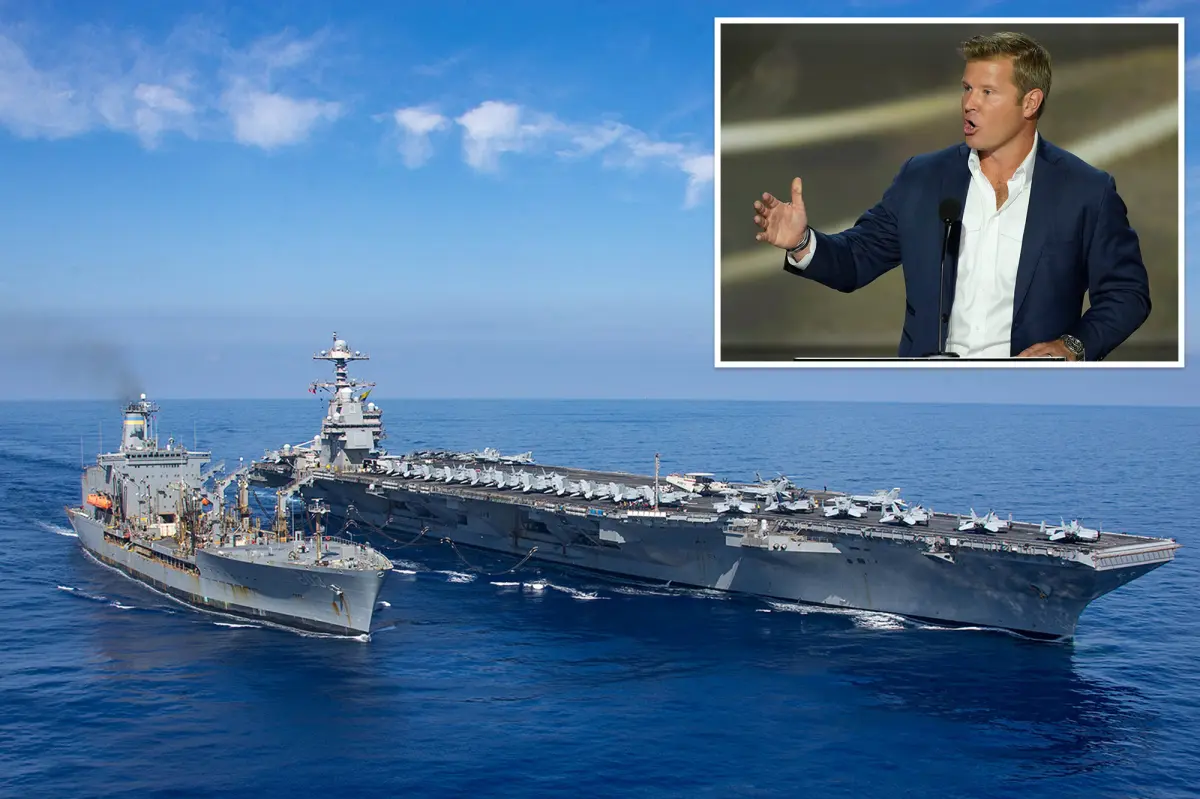
For decades, the steady, rhythmic heartbeat of American industrial might echoed across its oceanic shorelines, where massive ironworks and bustling shipyards stood as towering monuments to the nation’s global dominance. Yet today, that proud hum has quieted to a perilous whisper, leaving the country facing a national security crisis of unprecedented proportions. Speaking on “The Fox News Rundown” podcast, Senator Tim Sheehy, a former Navy SEAL who understands the physical and psychological toll of maritime warfare firsthand, issued a stark and uncompromising warning: the United States has dangerously lost its stride in the global race for naval supremacy, leaving the country severely outpaced by an aggressively expanding Chinese fleet. Sheehy, in his conversation with Fox News’ Aishah Hasnie, painted a sobering picture of a nation that has drifted into a deep state of complacency. He revealed that China’s shipbuilding empire now constructs naval vessels at a staggering speed—building ships an astonishing 230 times faster than the United States, while their modernized shipyards manage to complete complex naval repairs 90% quicker than domestic facilities. For a country whose global influence and economic security have long relied on its ability to project power across the high seas, this dramatic shift in industrial capacity represents a quiet but catastrophic vulnerability, threatening to tip the balance of global power in favor of a fierce geopolitical rival.
This critical decline did not happen overnight; rather, it is the result of a slow, thirty-year erosion of the American industrial base, driven by a persistent belief that the peaceful era following the Cold War would last forever. Sheehy explained that during this prolonged period of relative global stability, the United States succumbed to the seductive illusion of a permanent “peace dividend.” Under the comforting umbrella of Pax Americana, policymakers and military strategists alike began to view massive, capital-intensive warships as unnecessary relics of a bygone era of conflict, allowing the nation’s specialized shipbuilding infrastructure to gradually atrophy. While a depleted standing army can theoretically be rebuilt and retrained in a relatively short period of one to two years, and the Air Force can adjust its operational readiness within five years, rebuilding a nation’s maritime industrial base is a vastly different and far more grueling endeavor. Shipbuilding is not merely a matter of assembling metal plates; it is an incredibly complex art form that requires deep institutional knowledge, specialized dry docks, and a massive ecosystem of highly technical suppliers. Because America has not constructed ships in a truly meaningful, high-volume capacity for decades, the delicate generational chain of craftsmanship has broken, leaving the nation without the necessary pool of experienced shipwrights, engineers, and technicians required to easily revive this vital sector of national defense.
Compounding this loss of human skill is a profound cultural and economic shift that has physically transformed the very coastlines where American ships were once born. Sheehy pointed out that the physical sites of historic shipyards have been systematically dismantled and replaced, victims of a modern obsession with waterfront real estate and high-yield financial speculation. Across major American port cities, the gritty, soot-stained industrial docks that once forged the steel backbone of the nation’s defense have been demolished to make way for gleaming luxury condominiums, upscale restaurants, and recreational marinas. Under the prevailing philosophy of “financial optimization,” heavy manufacturing was widely dismissed as too loud, too dirty, and insufficiently profitable. Handing these vital processes off to foreign countries allowed America to present a clean, service-oriented domestic economy, but it stripped the nation of irreplaceable strategic assets that are essential for both building and maintaining a modern navy. This prioritizing of short-term financial gains over long-term national resilience has left both political parties with a sudden, alarming realization: by exporting its physical grit and blue-collar labor overseas, the United States has inadvertently dismantled the very engine that guaranteed its security.
The operational consequences of this industrial vacuum are terrifying for those currently serving on the front lines of global defense. When a modern naval fleet cannot rely on rapid domestic repair and construction, its strategic readiness collapses; as Sheehy noted, the ability of foreign competitors to repair damaged vessels 90% faster than the United States creates a massive tactical advantage during a prolonged conflict. If a modern American destroyer or submarine sustains major damage in the Pacific, it cannot simply be replaced or easily patched up; instead, it must join a decades-long queue at one of the nation’s few remaining, overburdened public shipyards. This backlog means that during an active international crisis, American sailors could find themselves fighting with a shrinking pool of deployable resources, while their adversaries can rapidly cycle repaired vessels back into theater. This stark mathematical reality transforms a dry policy discussion about shipyard capacity into a deeply human issue, where the lives of young servicemen and women are directly jeopardized by a lack of industrial support from the home front, underscoring the urgent need to view shipbuilding not as a corporate balance sheet, but as a crucial pillar of survival.
In response to this looming crisis, a bipartisan consensus is beginning to emerge in Washington, sparked by a realization that America cannot defend its global interests without reclaiming its status as a manufacturing powerhouse. In April 2025, the White House took a decisive step by releasing a sweeping executive order aimed at revitalizing and rebuilding the nation’s maritime industry. At the heart of this comprehensive legislative push is the Maritime Action Plan (MAP), a strategic blueprint designed to reignite the country’s manufacturing engines by making it significantly easier for private industry to invest in, design, and construct commercial and military vessels. By slashing bureaucratic red tape and directing Cabinet members to develop aggressive strategies to boost industrial output, the plan aims to jumpstart a long-overdue industrial renaissance. During a passionate joint address to Congress, Donald Trump vowed to “resurrect” the shipbuilding industry with unprecedented speed, emphasizing that while the nation has historically abandoned its manufacturing heritage, it would soon build ships very fast and very successfully, creating a monumental economic and military impact that would restore American strength on the global stage.
Reclaiming this lost industrial heritage, however, will require far more than executive pen strokes and legislative funding; it demands a profound cultural shift in how the nation views physical labor, blue-collar expertise, and the value of heavy industry. To successfully rebuild its navy, America must once again honor the men and women who work with their hands, inspiring a new generation of welders, pipefitters, and marine engineers to see glory in the loud, dirty, and physically demanding work of the shipyards. It means recognizing that a country’s ultimate security is not found in the virtual realm of financial algorithms and digital services, but in the tangible strength of its physical infrastructure and the dedication of its working-class communities. The journey to close the massive gap with competing nations will be long, difficult, and fraught with challenges, requiring sustained national will and a deep reinvestment in the industrial heartlands that once made the country great. Ultimately, the crisis of American shipbuilding is a powerful reminder that if a superpower wishes to secure its freedom and protect its democratic values for generations to come, it must first possess the capacity, the determination, and the human power to build the ships that guard its horizons.