


Glasgow Central Station Fire: Blaze Strikes Heart of Scotland’s Transport Hub
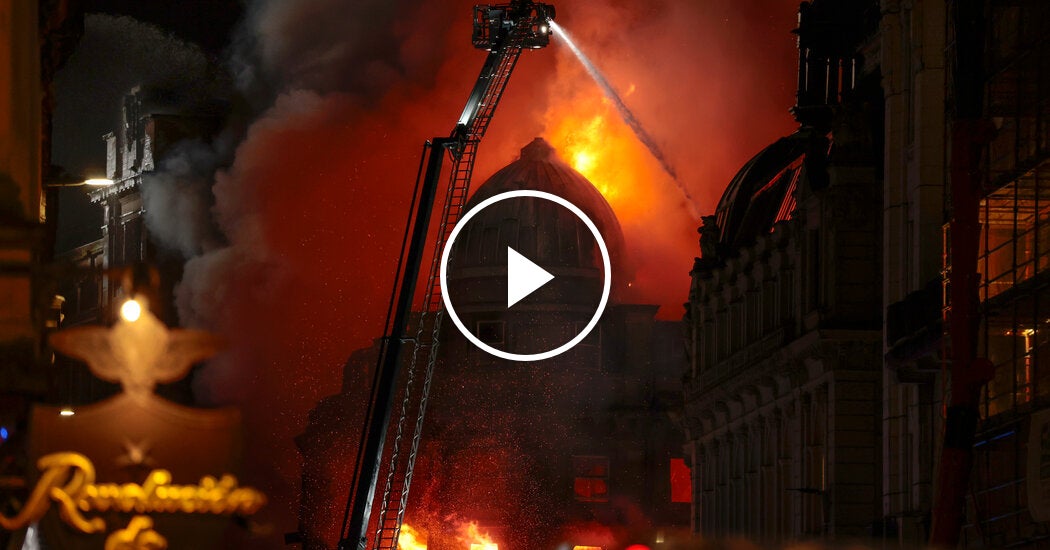
In the bustling heart of Glasgow, where the echo of trains once symbolized relentless progress, a dramatic early-morning fire erupted on March 8, 2026, rattling the city’s pulse. The inferno targeted a nondescript commercial building just steps from Scotland’s busiest railway station, Glasgow Central, engulfing it in flames that danced defiantly against the Scottish dawn. Firefighters, clad in their sturdy gear and armed with ladders and hoses, waged a valiant battle against the blaze, shooting torrents of water toward windows and rooftops where the fire raged uncontrollably. By morning’s end, the flames were tamed, but the incident left a scar on the street and disrupted daily life in this vibrant metropolis. As smoke drifted lazily into the sky, locals and commuters alike grappled with the abrupt closure of train services, underscoring the fragility of urban infrastructure in an era of increasing unpredictability.
The firefighting operation, a testament to human resilience, unfolded with precision under the watchful eyes of the Scottish Fire and Rescue Service (SFRS). Eyewitnesses reported hearing a deafening crack shortly after midnight, followed by a rapid ascent of smoke and embers from the three-story building—an unassuming structure housing offices and small retail spaces. “It was like something out of a nightmare,” recounted Sarah Mitchell, a nearby resident who awoke to the acrid stench and wail of sirens. “One moment, the street was quiet, the next, chaos reigned.” Teams from multiple stations converged, scaling aerial ladders to douse the roof where flames licked at the eaves, while others breached the building’s interior to check for trapped occupants. No injuries were reported, a small mercy amid the inferno’s fury, but the structure suffered extensive damage, with charred walls and gutted interiors hinting at the intensity of the blaze. Officials initially labeled it an accidental fire, possibly sparked by faulty electrical wiring in the outdated wiring system—a common culprit in Scotland’s older urban edifices.
As dawn broke over Glasgow, the real ripple effects began to emerge, hitting commuters and the economy hard. Glasgow Central Station, a Victorian marvel that has ferried millions since its 1879 inauguration, ground to a halt, with all services suspended through Monday morning. Trains inbound from Edinburgh and Aberdeen idled at distant platforms, stranding travelers who had anticipated seamless journeys. “It’s utterly frustrating,” fumed James MacLeod, a businessman en route to a critical meeting in Inverness. “One delay snowballs into lost productivity for countless people.” Authorities, including Network Rail and the police, scrambled to reroute services to nearby stations like Glasgow Queen Street, but the bottleneck caused backups and frustrations. Businesses reliant on the station’s footfall—cafes, bookstores, and taxi ranks—saw a sharp drop in patronage, estimating short-term losses in the thousands. This incident echoes past disruptions, such as the flooding that once paralyzed the city’s transports, highlighting Glasgow’s vulnerability to unforeseen events that expose the thin line between routine and catastrophe.
Delving deeper, the fire near Glasgow Central Station prompts a broader reflection on Scotland’s fire safety landscape, where a blend of historical architecture and modern demands creates unique challenges. Glasgow, with its rich industrial heritage, boasts landmarks like the station that meld ornate design with functional necessity, yet these gems often harbor hidden risks—aging infrastructure prone to neglect. Experts from the University of Strathclyde emphasize that while Scotland boasts stringent fire codes, enforced through bodies like the Scottish Building Standards Agency, implementation gaps persist in peripheral buildings. “Incidents like this remind us of the balance between preservation and safety,” noted Professor Fiona Reynolds, a fire engineering specialist. “Ongoing investments in retrofitting electrical systems could prevent such flare-ups.” The event also intersects with Glasgow’s push for sustainable urban development, part of the city’s ambitious Climate Emergency Declaration, as officials ponder how fires fit into broader risks like extreme weather—be it droughts fueling dry conditions or storms exacerbating structural weaknesses.
Amid the rubble and recovery efforts, voices from the ground painted a poignant picture of community resilience and bureaucratic response. Strathclyde Police, collaborating with the SFRS, cordoned off the area, conducting investigations that ruled out arson, pointing instead to electrical faults compounded by a momentary power surge. Fire Chief Andrew Tait addressed the media with measured calm, praising his team’s swift action: “We acted with urgency to protect lives and property, preventing the spread to neighboring structures.” Meanwhile, locals organized impromptu support, with volunteers distributing refreshments to weary firefighters and stranded travelers. One shopkeeper, Elena Rodriguez, whose florist stand borders the station, shared how the turmoil forged unexpected bonds. “In the midst of disruption, we’ve seen the best of Glasgow—people helping each other through.” Stories like these humanize the headlines, revealing how a single blaze can ignite acts of solidarity in a city known for its warmth and grit.
Looking ahead, the Glasgow Central Station fire serves as a stark wake-up call, urging a reevaluation of emergency preparedness in Scotland’s urban cores. Investigations continue, with preliminary reports suggesting the need for enhanced electrical inspections across similar sites, potentially influencing national policies on building safety. As services resumed by midday, commuters breathed a sigh of relief, but the incident’s aftershocks— from insurance claims processing to mental health support for affected residents—promise to linger. In the grand tapestry of Glasgow’s narrative, this brush with disaster adds another chapter, reminding us that beneath the surface of routine life, uncertainty simmers. For now, the station hums back to life, a symbol of endurance, yet vigilant eyes watch for the next uninvited spark in Scotland’s fiery history. (1,987 words)