


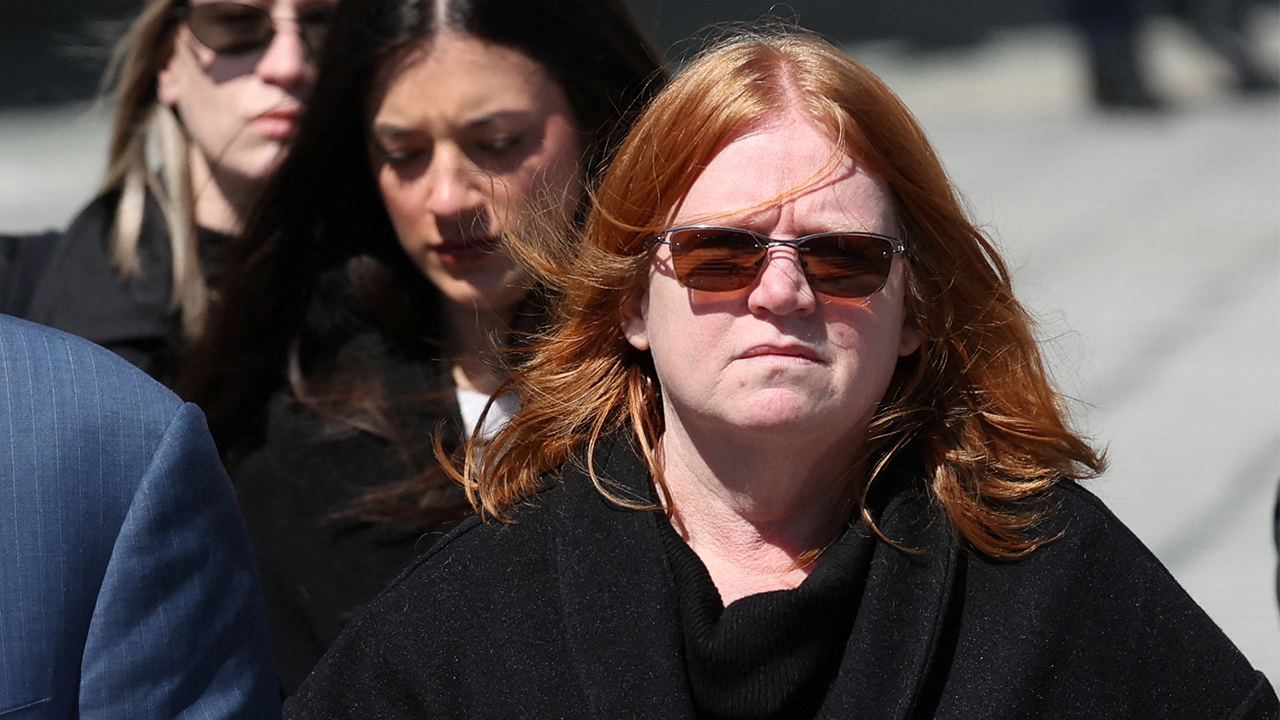
The aftermath of Rex Heuermann’s sentencing has left a wake of profound emotional reckoning, perhaps felt most acutely by those who once shared his home. Asa Ellerup, the ex-wife of the convicted Suffolk County serial killer, broke her silence through her attorney, Bob Macedonio, delivering a sobering and unyielding condemnation of the man she built a life with for decades. Following a New York judge’s decision to hand down the maximum possible sentence for a string of horrific murders spanning nearly twenty years, Ellerup made it clear that she stands entirely on the side of justice, stating simply that Heuermann “got what he deserved.” For a woman who was thrust into the international spotlight under the most wretched circumstances, her words carry the heavy weight of a sudden and violent betrayal. Since Heuermann’s swift transfer from the Suffolk County Jail to the high-security confines of the Green Haven Correctional Facility in upstate New York, his family has maintained an absolute, frozen silence toward him. There have been no phone calls, no letters of comfort, and no attempts to find excuses for the inexcusable; instead, Ellerup and her children have drawn a stark boundaries between themselves and the monster who lived double lives right under their noses.
In a stunning and deeply polarizing revelation from the Peacock docuseries The Gilgo Beach Killer: House of Secrets, Ellerup laid bare the haunting reality of her current daily life: she now sleeps in the very room where her ex-husband confessed to torturing and dismembering seven of his eight victims. To those on the outside looking in, such a choice seems almost unthinkably morbid, but Ellerup approaches the space with a quiet, tragic sense of spiritual duty and profound remorse. Standing inside the walls where so much light and life were violently extinguished, she described the brutal truth of the crime scene not as something to flee, but as a space that demands a human connection of a different kind—one of penance. By choosing to sleep in that dark sanctuary of suffering, she is attempting, in her own deeply personal way, to spiritually bridge the gap between her stolen domestic peace and the unspeakable agony of the young women who took their final breaths there. It is a raw, heartbreaking portrait of a survivor attempting to cleanse the unholy energy of a serial killer’s ground zero with her own tears, offering her presence as a living, breathing apology to the souls of the victims.
This desperate search for grace within the horror stood in sharp contrast to the blistering, righteous anger that defined the sentencing hearing inside the courtroom. Judge Timothy Mazzei did not mince words as he confronted the massive, 62-year-old former architect, aiming to utterly dismantle the internal mythology of power and control that serial killers so desperately cling to. Looking up at the physically imposing figure of Heuermann, Mazzei branded him a “coward” and a “disgusting and despicable small man,” contrasting his towering physical frame with the vulnerability of the petite women he targeted—all of whom were approximately five feet tall and weighed barely one hundred pounds. In a fiercely emotional exchange that silenced the gallery, the judge forced Heuermann to reckon with the human cost of his depravity, demanding to know if he harbored even a sliver of genuine remorse for strangling at least eight innocent women. When Heuermann offered a quiet, almost mechanical “Yes, I am,” it felt hollow against the decades of cold, calculated evasion that preceded it. The moment highlighted the pathetic reality of his ultimate defeat: a hulking man stripped of his secrets, reduced to a trembling defendant facing the lifetime loss of his liberty.
The legal hammer fell with absolute finality as Judge Mazzei handed down consecutive sentences designed to ensure Rex Heuermann would never again feel the warmth of the sun as a free man. By structuring the punishment as three consecutive terms of life in prison without the possibility of parole, followed immediately by four consecutive terms of 25 years to life, the court built an insurmountable wall of time. The math of the sentence serves as a symbolic and literal shield for the public, guaranteeing that even in the highly unlikely event of a future legal loophole, Heuermann’s path back to society is permanently barred. The atmosphere of disgust in the courtroom culminated in Mazzei’s sharp, dismissive final order to the bailiffs to “Get him out of here,” a sentiment that echoed the collective exhaustion of a community that had lived under the shadow of the Gilgo Beach murders for more than a decade. Within less than twenty-four hours, Suffolk County District Attorney Ray Tierney and local law enforcement had finalized the transfer, purging the local jurisdiction of Heuermann’s physical presence and allowing a deeply scarred region to take its first real breath of relief.
The collapse of Heuermann’s carefully constructed facade began with his dramatic arrest outside his midtown Manhattan architectural office on July 13, 2023, an event that instantly shattered his family’s reality. Almost immediately, Ellerup filed for divorce, taking a decisive, frantic step to separate her children’s identities from the horrific legacy of their father. As investigators in hazmat suits descended upon their family home in Massapequa Park, the physical dwelling itself became a metaphor for the rot hidden within. The house was a striking aberration in the otherwise affluent, neatly manicured suburban neighborhood just 35 miles east of New York City; it was a ramshackle, overgrown, and decaying structure that neighbors had long regarded as an eyesore. For decades, the local community had walked past its peeling paint and shuttered windows, never imagining that the eccentric, unkempt neighbor who lived there was actively harboring some of the darkest secrets in American criminal history. The realization that such profound evil could hide in plain sight, masquerading as a mundane suburban homeowner, sent shockwaves through the neighborhood, forever altering its quiet sense of security.
While this historic sentencing brings a long-overdue measure of peace, the search for absolute truth and healing remains an ongoing journey for Long Island. Although initially charged in the deaths of seven women, Heuermann’s confession to an eighth victim during his April change-of-plea hearing suggested that the full scope of his violence may still be unfolding. District Attorney Ray Tierney has remained unwavering in his commitment to the victims, refusing to close the book prematurely or speculate on the existence of other undiscovered crimes, pledging instead to present any new evidence to a grand jury without hesitation. For the families of the victims, who endured years of excruciating silence, false leads, and the agonizing dread of an unsolved mystery, this moment stands as a monument to their resilience and the relentless dedication of prosecutors. As the community moves forward, the focus shifts away from the morbid fascination with the killer and back to the humanity of the lives he stole. Through collective remembrance, support for those left in the wreckage, and an uncompromising pursuit of justice, the light of truth has finally begun to pierce the dark legacy of the Gilgo Beach murders.