




To comprehend the full gravity of the immense tragedy that recently unfolded in Douglas County, Georgia, one must first look far beyond the sensationalized, cold headlines of crime and punishment to understand the vibrant, luminous soul of Jamal Rashad Parker. At thirty-seven years old, Jamal was a man who lived his life as an open, beautiful canvas, constantly painting it with the brilliant, warm colors of his varied passions, his infectious laughter, and his boundless generosity. Known to his many friends and loving family as a gentle, profoundly creative spirit, Jamal was a gifted musical artist, a deeply expressive visual creator, and a consummate professional behind the bar at Ms. Icey’s Kitchen & Bar in the heart of Atlanta. To those who frequented the lively establishment, he was far more than just the man who mixed their drinks; he was an alchemist of comfort and hospitality, someone who possessed a rare, effortless ability to transform a stranger’s ordinary, lonely evening into a memorable experience filled with warmth, genuine conversation, and laughter. Jamal did not simply exist in the world; he engaged with it wholeheartedly, viewing every person he met along his daily journey as a beautiful opportunity to build a connection, share a smile, or offer a moment of joy. He harbored a profound, infectious love for life itself, dedicating his days to the pursuit of artistic expression and the cultivation of a community that absolutely adored him. His family and close-knit circle of friends describe his core essence as a “beautiful soul and spirit,” a rare, guiding beacon of positive energy in a world that can often feel dark, cruel, and indifferent. Yet, this bright light was abruptly and violently extinguished in the spring, leaving an irreplaceable, aching void in the lives of everyone who had the privilege of knowing him, and plunging those who loved him into a waking nightmare from which they may never fully recover.
The agonizing descent into this nightmare began in early May, when what should have been a tranquil morning at the Dog River Reservoir—a scenic, peaceful destination located thirty miles outside the bustling metropolis of Atlanta—was shattered by a horrific and gruesome discovery. Investigators with the Douglas County Sheriff’s Office were called to the scene, where they recovered deeply dismembered human remains discarded in the reservoir. For several agonizing days, the identity of the victim remained a nameless mystery, suspended in the sterile, unresponsive bureaucracy of forensic science, until a father’s deep love and excruciating intuition bridged the gap. Charles Parker, Jamal’s father, had been frantically searching for his missing son, his heart heavy with a growing, suffocating dread as the silence stretched on. When he caught wind of the unidentified remains found in the reservoir, his mind raced to the unique and beautiful canvas of tattoos that adorned his son’s skin—inked markers of Jamal’s individuality, his personal history, and his artistic identity. Contacting the authorities with a heavy heart, Charles described the distinct tattoos in detail, a description that tragically and perfectly matched the physical markings on the recovered remains. Using advanced DNA comparison technology, forensic specialists officially confirmed what Charles’s deepest fears had already whispered to him: the body in the reservoir was indeed his beloved son, Jamal. The sudden, brutal revelation that this gentle artist, who had spent his life creating beauty and comfort for others, had met such a horrific and undignified end was a devastating blow that completely shattered his family’s reality, transforming a frantic search into a chilling, active criminal investigation of the most brutal and incomprehensible order. It was a reality no parent should ever have to face, a moment of profound despair that echoed through the hearts of everyone who loved the young artist, cementing a grief that would linger forever.
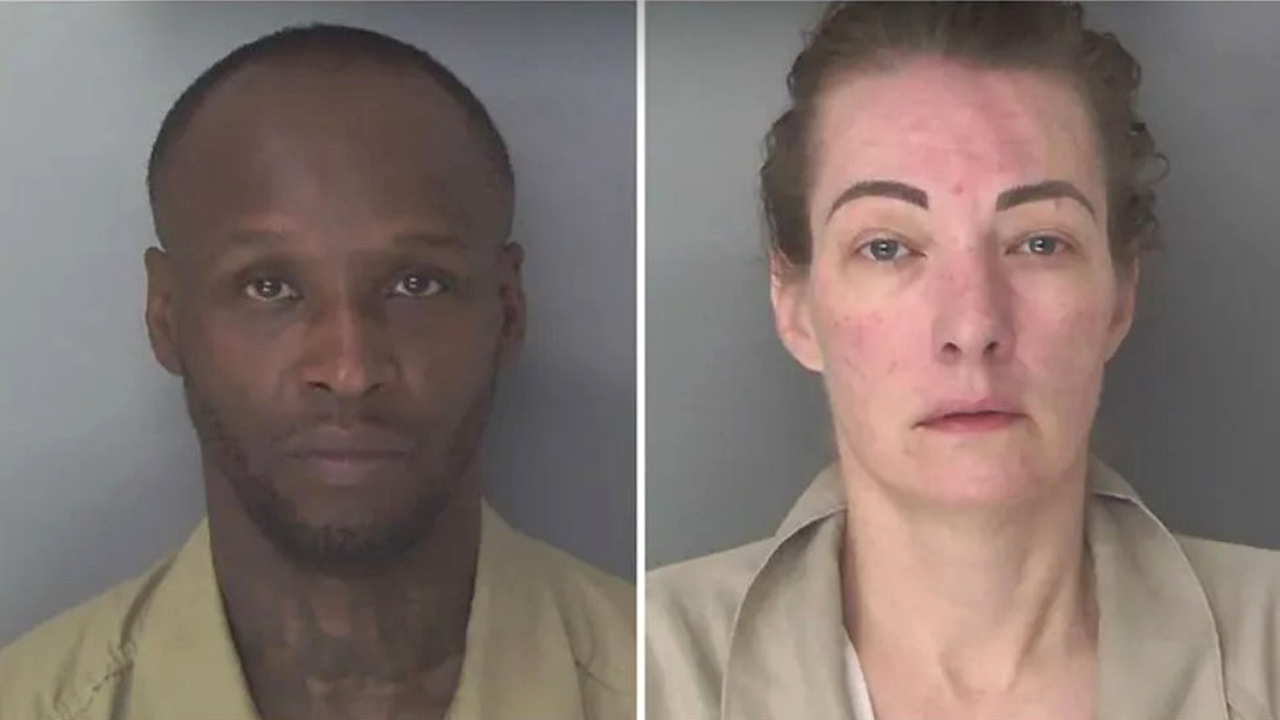
As the shock of the identification rippled through the community, the relentless, searching gears of the justice system began to turn, leading investigators to a quiet residential neighborhood in Douglasville, just outside of Atlanta. It was there, inside a home occupied by forty-two-year-old Brittany Amber Baker, that authorities believe Jamal’s vibrant life was violently and mercilessly stolen from him. On a fateful Monday, deputies located and arrested Baker alongside forty-six-year-old Mario Andre Barber, charging both individuals with malice murder in connection with Jamal’s death. The details that emerged from the investigation were nothing short of chilling, painting a picture of calculated cruelty that stood in stark contrast to the victim’s peaceful, loving nature. Late last month, neighbors and local news reporters watched in stunned silence as forensic investigators emerged from the Douglasville residence carrying physical evidence of the nightmare that had occurred within those walls—including a reciprocating saw, heavy-duty cleaning supplies, and other materials suggesting a desperate, failed attempt to completely erase the physical evidence of a horrific crime. The idea that a home in a quiet, unassuming community could hide such gruesome acts left neighbors questioning their own safety, while police meticulously pieced together the final, terrifying moments of Jamal’s life. What makes this tragedy infinitely more painful for Jamal’s surviving family is the agonizing, heart-wrenching revelation of deep betrayal. While official police reports have remained tight-lipped regarding the exact nature of the relationship between Jamal and his accused killers, a heartbreaking GoFundMe campaign organized by his family revealed that the suspects were not random strangers, but rather “people he knew and trusted.” This sickening breach of trust suggests that Jamal’s final moments were spent in the company of individuals to whom he had extended his characteristically warm hand of friendship, only to be met with an unimaginable, stomach-churning betrayal of his safety, his life, and his basic humanity.
The legal proceedings began to unfold on a tense Tuesday inside a Douglas County courtroom, where Mario Andre Barber and Brittany Amber Baker stood before a judge to face the gravity of the horrific charges against them. Clad in jail wear and guarded closely by security, both suspects entered formal pleas of not guilty, refusing to take responsibility for the violent acts they are accused of committing. The judge ordered both Barber and Baker to be held behind bars without the possibility of bond, a decision reflecting the extreme danger they present to society and the heinous, flight-prone nature of the crimes alleged. As investigators and reporters dug deeper into the backgrounds of the accused pair, a troubling pattern of behavior began to emerge, revealing that both suspects possessed extensive criminal records spanning years, if not decades. This history of lawlessness suggested that their paths had long been winding through the dark underbelly of the justice system, culminating in this ultimate, devastating act of violence against an innocent young man. For the family of Jamal Parker, sitting in the quiet courtroom gallery and looking upon the faces of the people accused of butchering their beloved son was an exercise in pure, excruciating agony. Those present observed that neither Barber nor Baker displayed any outward signs of remorse, empathy, or grief for the brilliant life that had been lost, their cold, vacant countenances only deepening the profound wound inflicted upon the mourning family. It left those in attendance wondering how anyone could remain so completely detached while being confronted with the destruction of a human life and the shattering of a family’s heart. This painful display in court highlighted the stark, irreconcilable difference between the vibrant warmth of the victim and the icy, uncaring indifference of those accused of planning and executing his demise, underscoring the long, arduous road to justice that lies ahead for his grieving relatives.
Outside the sterile courthouse, the raw, unfiltered pain of a father’s grief laid bare the true, immense human cost of this brutal tragedy. Charles Parker stood before a crowd of local reporters, his voice trembling with a potent mixture of profound sorrow and righteous anger as he attempted to articulate the unimaginable reality of burying his own child under such monstrous, unnatural circumstances. “I want them to be punished. And I don’t even think a life sentence is good enough,” Charles stated, his words hanging in the Georgia air. His eyes reflected the sheer exhaustion of a man who had spent countless sleepless nights mourning the loss of his son’s future, his laughter, his music, and his physical presence. He spoke of the surreal nature of the tragedy, noting with a sense of utter disbelief that this was “the kind of stuff you see on TV,” a horror movie plot that one never actually expects to land on their own doorstep, destroying their own family. The most haunting aspect for Charles, however, was the lack of humanity displayed by those who allegedly killed and desecrated his son, noting with quiet, heartbreaking devastation that “they had no remorse” for the unspeakable acts they committed. His words painted a picture of a family suspended in time, unable to move forward while the memories of Jamal’s horrific end continue to overshadow their thoughts. No amount of legal retribution, Charles knew, could ever bring back the son who filled their lives with melody and color, yet he stood firm in his demand for accountability, seeking some semblance of peace in a world that had suddenly become unrecognizable. In his grieving eyes, the legal system’s maximum penalties felt woefully inadequate when measured against the infinite value of Jamal’s stolen life, leaving a father to struggle not only with his loss but also with the frustrating, cold limitations of human justice.
In the wake of this unspeakable tragedy, the community that Jamal so deeply loved has rallied together to ensure that the final chapter of his story is defined not by the violence of his death, but by the beautiful legacy of his life. A GoFundMe fundraiser, established by devastated family members to help cover the unexpected costs of a proper burial and memorial service, has quickly become a digital sanctuary where friends, patrons, and strangers alike can share their grief and pay tribute to a life well-lived. The words on the fundraising page serve as a poignant, living eulogy to a man who brought so much creativity and joy to the world, stating, “He loved life and the people he met along his journey in life. He was a musical artist, visual artist, and a professional bartender who enjoyed creating new drinks. This has totally devastated our family and friends and has left us heartbroken.” As his loved ones navigate this unimaginable path toward healing, they carry with them the indelible, comforting memory of Jamal’s artistry, his laughter, and his “beautiful soul and spirit.” Though his voice has been silenced and his hands will no longer paint canvases or mix creative drinks, the light of Jamal Rashad Parker’s life refuses to be extinguished by the darkness of his passing. It lives on in the music he composed, the art he created, and the hearts of the countless people he touched along his journey—a powerful, enduring testament to a gentle man whose warmth, love, and humanity will forever outshine the cruel actions of those who sought to take him away from the world that needed him so. In remembering him, his community chooses to celebrate the joy he gifted to others, turning their collective heartbreak into a monument of love that no act of violence can ever tear down. Jamal’s memory remains intact in the safe keeping of those who loved him, a reminder that love, art, and human connection are ultimately more powerful than the transient darkness of evil.