




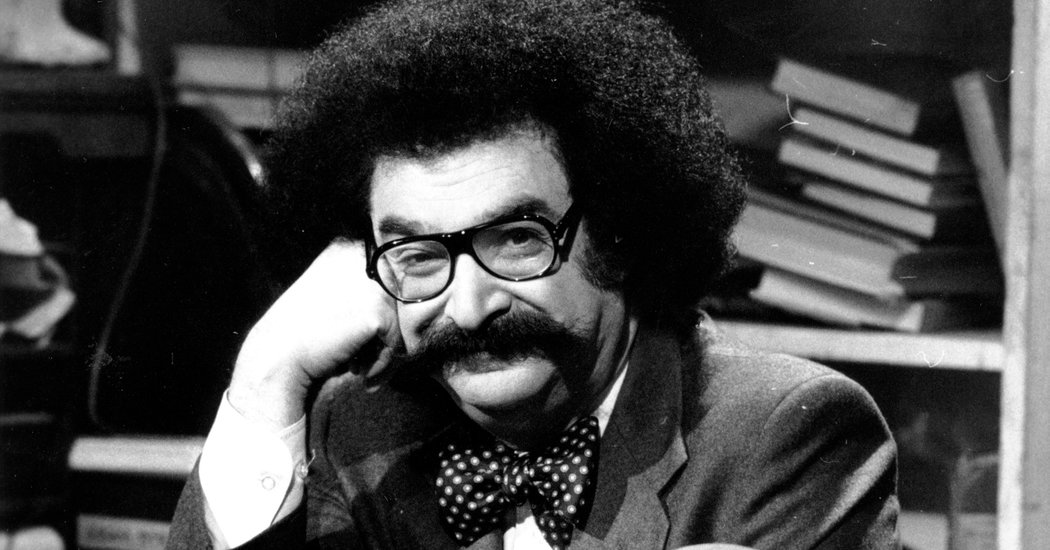
Gene Shalit’s signature look—an iconic, gravity-defying cloud of frizzy hair, a grand walrus mustache, and a seemingly endless collection of vibrant, oversized bowties—made him an instant, unforgettable pop-culture caricature, but it was his irrepressible warmth and sparkling intellect that truly humanized him to generations of television viewers. For decades, Shalit was not simply a voice of cultural authority; he was a cozy, whimsical morning companion who stepped into millions of American living rooms each day, transforming the often elitist arena of arts criticism into an inviting, shared celebration of human creativity. Whether he was dissecting a high-concept Broadway production, recommending an obscure literary memoir, or championing a Hollywood blockbuster, he approached his calling with an infectious, pun-loving enthusiasm that demystified the arts for everyday audiences. Beyond his witty reviews, Shalit possessed a rare, disarming gift as an interviewer, sitting down with some of the entertainment world’s most formidable, elusive, and notoriously private legends. He engaged superstars like Barbra Streisand, Warren Beatty, Robert De Niro, and Sophia Loren in conversations that felt remarkably intimate and unscripted, bypassing the typical press-junket formalities through his genuine interest in their creative processes. This unique blend of approachability and cultural savvy allowed him to transcend the role of a traditional media critic. He became a beloved cultural institution in his own right, frequently popping up in self-deprecating cameos on popular television programs and films, delighting audiences as a frequent guest on game shows and late-night talk shows, and dedicating his celebrity to countless charity fundraisers, proving that appreciation for the arts could be profoundly intellectual while remaining wonderfully lighthearted.
The landscape of morning television is notoriously volatile—a high-stakes, pressure-cooker environment governed by fluctuating ratings, intense behind-the-scenes politics, and an endless carousel of on-camera personalities trying to find their footing. To survive in such an demanding medium for a few seasons is a major feat; to remain a beloved, indispensable cornerstone of a network’s identity for over four decades is nothing short of miraculous, yet that is precisely what Shalit achieved on NBC’s flagship morning program, “Today.” Throughout his historic tenure, as the show adapted to seismic cultural shifts and navigated turbulent personnel changes, Shalit served as the program’s ultimate anchor of continuity, a reassuring and comforting presence for viewers waking up in a rapidly changing world. The parade of legendary co-hosts and contributors with whom he shared the studio over the decades reads like a definitive registry of American broadcast journalism history. Shalit worked alongside pioneering giants and household names, including the trailblazing Barbara Walters, the steady Jim Hartz, the legendary Tom Brokaw, the authoritative John Chancellor, the affable Hugh Downs, and the multi-talented athlete-turned-broadcaster Joe Garagiola. As the program transitioned into newer eras of television, he seamlessly integrated with a new generation of morning icons, sharing the screen with Deborah Norville, the beloved Jane Pauley, the effervescent Katie Couric, the polished Bryant Gumbel, the warm Al Roker, the legendary forecaster Willard Scott, the long-tenured Matt Lauer, and the dedicated Ann Curry. While anchors and correspondents cycled through the revolving doors of the network, reflecting the changing strategies of television executives, Shalit remained perched at his desk, his wild hair and sharp-witted puns offering a steady sense of stability to an audience that literally grew up in his constant company.
The remarkable professional trajectory of Shalit’s career at “Today” began quietly in 1968, when he was first brought on as a part-time book reviewer, offering literary critiques with a distinctive flair and a playful vocabulary that quickly caught the attention of both network executives and morning audiences. His natural screen presence, defined by an effortless transition between highbrow literature and lowbrow pop culture, made his promotion to a regular program contributor by 1970 a natural evolution, setting the stage for his appointment as the show’s official, full-time culture critic in 1973. From that pivotal moment until his well-earned retirement in 2010, Shalit did not merely report on the arts; he revolutionized how the average American family engaged with culture, literature, and cinema. He championed small, thought-provoking independent films that might have otherwise gone unnoticed by mainstream audiences, gave honest yet fair assessments of massive summer blockbusters, and introduced viewers to debut novelists and avant-garde theater acts, all while maintaining a signature conversational style filled with clever wordplay, alliteration, and bad puns that became his beloved trademark. Under his watch, the culture segment of the “Today” show became a vibrant, democratic space, proving that intellectual curiosity and popular entertainment could co-exist beautifully without pretension. His retirement in 2010 marked the end of an unprecedented epoch in broadcasting history, leaving behind a lasting legacy where the critic was not a distant, cynical judge pointing down from an ivory tower, but rather a trusted, enthusiastic friend pointing excitedly toward a screen, inviting the world to join him in his appreciation.
This enduring legacy of joy and artistic wonder is perhaps best captured in a quiet, illuminating moment shared between Shalit and his long-time producer, Guy Ludwig, toward the very end of Shalit’s legendary broadcasting career in 2010. Reflecting on their decades of collaboration in the darkened screening rooms of New York City, Ludwig recalled a scene that beautifully encapsulates the critic’s unbroken, youthful spirit: watching the octogenarian Shalit navigate his way into yet another early-morning movie screening, carrying a look of pure, unmistakable glee on his face. Marvelling at his colleague’s seemingly inexhaustible enthusiasm after all those decades of consuming media, Ludwig could not help but ask, in a tone of affectionate disbelief, how Shalit could possibly still look forward to a film with such genuine, wide-eyed excitement. “My God, how could you?” Ludwig asked him, pointing out the sheer scale of Shalit’s cinematic consumption over the course of his lifetime. “You’ve seen two million movies!” Without missing a beat, Shalit looked back at his producer and replied with a simple, profound truth: “Yeah, but I’ve never seen this one!” This brief, off-the-cuff exchange cuts straight to the heart of what made Shalit such an extraordinary broadcaster and human being. In a profession that so often breeds cynicism, where critics can easily become jaded, weary of formulaic storylines, and exhausted by the demands of the entertainment industry, Shalit maintained a childlike sense of wonder that remained completely immune to the passage of time, showing that his legendary career was fueled not by the demands of a high-paying television contract, but by a deep, authentic, and lifelong love affair with the magic of storytelling.
To fully understand the roots of this insatiable curiosity, humility, and resilience, one must look back to the modest, hardworking beginnings of the man born Eugene Theodore Shalit (a surname he famously noted rhymes with “PAL-it”) on March 25, 1926, in the vibrant immigrant enclave of New York City. The son of Latvian immigrants, Isadore and Anna (Michelovich) Shalit, young Eugene was raised in an environment shaped by the profound hope, ambition, and work ethic characteristic of the early 20th-century immigrant experience. Seeking a stable foundation for their family, the Shalits eventually relocated to New Jersey, settling first in Newark and later in the scenic, historic town of Morristown, where Isadore operated a local neighborhood drugstore. Growing up in and around his father’s pharmacy, young Eugene was immersed in a community-centric world where conversation, personal connection, and the eclectic stories of everyday customers were a daily reality. This early exposure to the diverse tapestry of suburban life, coupled with the nurturing environment of a family that valued literature, education, and cultural integration, laid the essential groundwork for his future career as a master communicator. After completing his primary education in New Jersey, Shalit set his sights on higher education, moving to the Midwest to attend the University of Illinois, from which he graduated in 1949. His collegiate years sharpened his intellect, broadened his cultural horizons, and crystallized his passion for writing and public discourse, providing him with the rigorous academic foundation that would later support his wonderfully accessible, off-the-cuff on-air analyses, showing that his path to fame was paved with genuine scholarship and a deep respect for his family’s roots.
Today, the image of Gene Shalit remains frozen in the collective memory of the American public as a symbol of a kinder, gentler, and infinitely more joyful era of television history. In a contemporary media landscape often defined by snark, divisive reviews, and highly polarized aesthetic commentary, Shalit’s legacy serves as a vibrant, necessary reminder that criticism can be both deeply insightful and extraordinarily generous. He did not seek to tear down the hard work of others to build up his own reputation; rather, he viewed himself as a welcoming bridge, connecting the creative efforts of artists, actors, and writers with the hearts and minds of a vast, appreciative audience. His life story—from the son of Latvian immigrants running a New Jersey drugstore to the most recognized culture critic in the nation—is an inspiring testament to the power of staying true to oneself, embracing one’s unique eccentricities, and nurturing an unyielding passion for life’s creative offerings. When he finally stepped away from the “Today” show lights in 2010, he left behind a void that has never quite been filled, but his infectious philosophy remains more relevant than ever. Gene Shalit taught us that no matter how many books we have read, how many plays we have attended, or how many millions of movies we have already seen, the true joy of living is found in our willingness to look forward to the next story with open eyes, an open heart, and that same spark of childhood glee, eager to see what magic might unfold on the screen.