


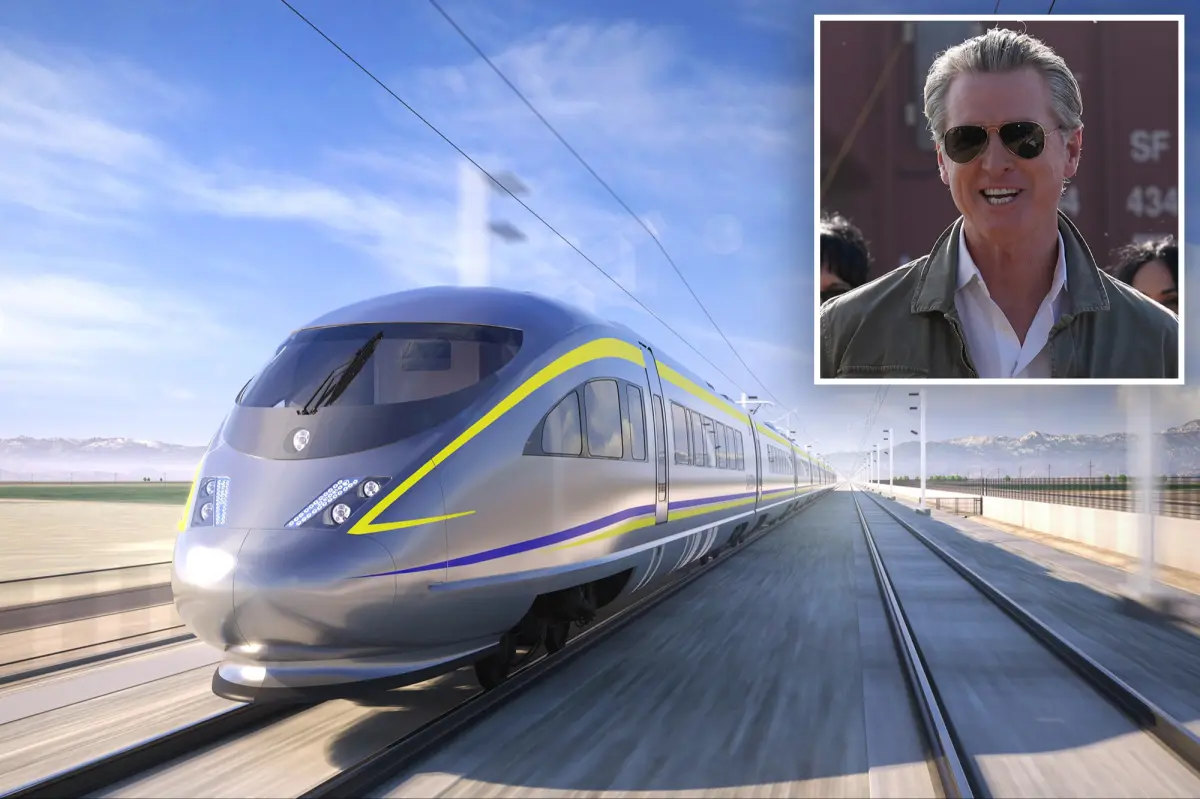
Imagine you’re sitting in a quiet coffee shop in Los Angeles, scrolling through the news on your phone, when you stumble upon this headline about California’s High-Speed Rail. It’s one of those projects that was supposed to zoom you from San Francisco to LA in under three hours, cutting down on traffic jams and making the state a transportation marvel. Gavin Newsom, the governor, loves to talk numbers—big, bold figures that scream progress and innovation. But as you dive into the details, a sinking feeling hits you. He’s poured billions into this dream, yet the reality feels like a wild goose chase through empty fields and concrete jungles. It’s not just about the money; it’s about trust, jobs, and whether this visionary idea is turning into a taxpayer-funded mirage. You start to wonder: if the man who calls himself a “big numbers guy” can’t make this add up, who can? And why do so many people in the Central Valley, where much of the work is happening, feel left in the dust instead of lifted up?
The numbers are staggering when you lay them out. Over the past decade, the state’s High-Speed Rail Authority has funneled a whopping $15 billion into five counties in the Central Valley, an area often romanticized as California’s heartland but increasingly seen as the testing ground for bureaucratic excesses. When people like you think of high-speed rail, visions of sleek trains whisking passengers at 200 mph come to mind. Instead, imagine vast swaths of farmland pockmarked by hulking concrete structures—58 of them in total, including 33 grade separations, 13 viaducts, five underpasses, three overpasses, two bridges, two undercrossings, and even a highway realignment. Photos obtained by The California Post show completed segments that look more like forgotten relics than stepping stones to the future: desolate stretches of asphalt and rebar baking under the relentless sun. Some of these “achievements” were ribbon-cut with fanfare nearly a decade ago, like the Tuolumne Street Bridge unveiled eight-and-a-half years back. It’s hard not to feel a pang of frustration when you realize that, despite all this concrete pouring, there’s still no train track laid that you could hop on for a quick trip.
Put yourself in the shoes of someone in the Central Valley, where the High-Speed Rail project promises economic boom but delivers mostly isolation. We’re not talking about bustling metropolises here; it’s rural farmland, dotted with small towns that rely on agriculture and tight-knit communities. Lawmakers from the area admit they’re scratching their heads, trying to justify how billions vanish into what feels like infrastructure limbo. State Sen. Tony Strickland, a Republican sharply critical of the whole endeavor, calls it a “three-card Monte”—you know, that street game where the shell game tricks you out of your cash? He was skeptical from the start, and now he says, “I ended up being right.” Visitors from outside might gawk at the overpasses and underpasses that snake through picturesque but empty landscapes, but locals see road repairs that offer little long-term value. Newsom proudly trumpets these as economic investments, claiming they’ve created jobs and acquired nearly 2,300 parcels of land. Yet, even boosters struggle to connect the dots to tangible benefits, leaving residents wondering about that promised trickle-down magic.
Rewind a bit to understand the project’s evolution, because it’s like watching a dream get watered down into a nightmare. Originally pitched as a transformative link between San Francisco and Los Angeles, it imagined trains zipping through tunnels and across bridges at blinding speeds. But political winds shifted, and now the focus is on a mere 100-mile stretch between Merced and Bakersfield—a glorified train ride that’s still years away. Newsom insists this phased approach is smart, avoiding the criticisms lobbed by naysayers who claim the state’s just talking down to Valley communities. But for everyday folks, the scale-back feels like a bait-and-switch. Picture attending a town hall where representatives defend the project despite its hurdles: inconsistent political backing, red tape galore, and funding droughts. You’d hear phrases like “unprecedented challenges,” but that doesn’t erase the fatigue of waiting. One standout piece, the Wasco Viaduct, stands as Newsom’s “crown jewel,” a symbol of ambition in a sea of practicality. Assemblymember David Tangipa from Fresno sums up the absurdity: “What are people supposed to do when they take high-speed rail to Wasco—call an Uber? There’s no public transportation.” It’s connecting dots that don’t really go anywhere, at least not for commuters dreaming of efficiencies.
Now, let’s talk money, because that’s where the human impact hits hardest. The project was slated for anestimated total cost of $36.75 billion just for that short Merced-Bakersfield segment, with service not kicking off until 2032 or 2033—decades after initial hype. That’s your tax dollars at work, and not just state funds; federal dollars were supposed to kick in, but a $4 billion chunk got entangled in disputes, yanked away amid audits and infighting. Newsom pushes forward, proposing that a revenue stream from cap-and-invest—a program taxing greenhouse gas emissions and funneling proceeds into environmental causes—could guarantee at least $1 billion annually through 2045. Critics like Senate Minority Leader Brian Jones fire back, calling it “cap-and-spend” instead of the greener alternative Newsom boasts. It’s a semantic spat, but it masks deeper concerns about sustainability. Families in California already grapple with high gas prices and soaring living costs; watching billions bleed into this without a clear payoff feels personal, like a betrayal of public trust. You start to empathize with those who see the rail as a poster child for government overreach, where good intentions collide with execution flaws.
Looking ahead, the future of this high-speed rail saga feels uncertain, hanging by a thread. Potential governors tip-toeing around the topic pop up in debates, with only outsiders like former Fox News host Steve Hilton boldly advocating to abandon the wreck. Strickland predicts it won’t get federal support without a miracle—like Newsom ascending to the presidency. It’s a sobering thought for dreamers and skeptics alike. As you close the article, you can’t help but humanize the story: it’s not just infrastructure; it’s about communities yearning for connection, workers hoping for stable jobs, and taxpayers demanding accountability. Newsom might tout progress as a “true high-speed rail project in North America under active construction,” but for many, it’s a bittersweet reminder of California’s complex dance between ambition and reality. In the end, sitting in that coffee shop, you wonder if tales like this are par for the course in big-government plans or if there’s a lesson in tempering grand visions with grounded pragmatism. Gavin Newsom, the numbers guy, might keep the spreadsheets coming, but the people’s ledger tells a different story—one of concrete dreams that haven’t quite taken off.