

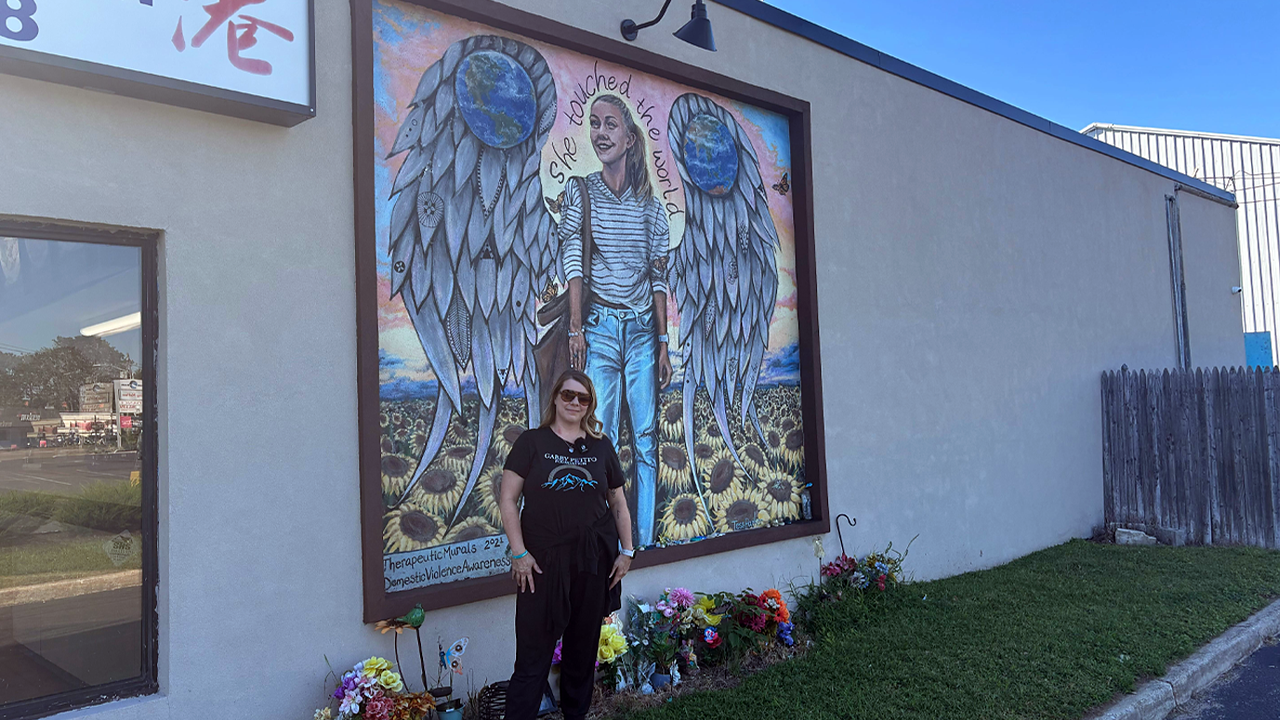
Five years have passed since searchers found Gabby Petito’s remains in a remote corner of Wyoming, but for her mother, time has not closed the wound. It has only transformed it into a quiet, urgent mission. Nichole Schmidt’s plea to the public is simple, and it comes from a place of deep experience: when a missing-person flyer appears in your social media feed, do not just keep scrolling. Pause. Actually look. Read the comments. Check whether there are new developments. Verify that the source is legitimate. And if it seems real, share it. That single, seemingly small action, she says, can set off a ripple effect that leads to someone being found. “Missing people have been found by regular people just sharing flyers,” Schmidt told Fox News Digital. In the years since her daughter became a symbol of a tragedy that captured the world’s attention, Schmidt has learned what it means to hope for a miracle, and what it feels like to watch a family desperate for news while the world moves on. She does not want other families to face that isolation. So she is asking us to slow down in a digital culture that teaches us to scroll fast, to be more human in the face of other people’s pain, and to understand that a single share can carry a missing person’s face into the hands of someone who knows something. It is not a guarantee, but it is a thread of possibility. And sometimes, that thread is all a family has left.
Gabby Petito’s story began as a dream of adventure. She and her fiancé Brian Laundrie were living the “van life,” traveling across the American West and sharing images of mountains and sunsets on social media. But behind the curated posts, their relationship was unraveling. In the summer of 2021, police in Utah stopped the couple after a witness reported a domestic dispute. No charges were filed, and the couple was allowed to continue. Less than a month later, Gabby’s family reported her missing when she failed to return to her home in New York. Her disappearance ignited a nationwide search, fueled by a public hungry for answers. On September 19, 2021, her remains were found in a remote campground north of Jackson, Wyoming. She was believed to have been killed by Laundrie, who had driven her Ford Transit van back to his parents’ home in Florida before taking his own life in a nearby nature preserve. His remains were not found until a month later, after a massive search and floodwaters receded, and his parents led detectives to a clearing he had loved. The case ended without a trial, a confession, or a courtroom conviction. But in the raw ache of that unresolved ending, Gabby’s family found a new sense of purpose. They began to speak out about domestic violence, about the warning signs they wished they had recognized, and about the thousands of other families whose loved ones disappear without cameras following their every move.
In the years since Gabby’s death, her parents and stepparents have worked to turn grief into action. They created a foundation in her name, focused on combating domestic violence and raising awareness for missing-person cases. They have lobbied for new laws in several states, including Florida, Utah, and New York, and they have pushed for changes at the federal level as well. Their goal is not only to protect potential victims, but to make sure that law enforcement and the public take every missing-person report seriously. They know that Gabby’s case became a sensation for reasons that had little to do with justice: the beauty of her photographs, the mystery of the van, the drama of a young couple’s unraveling. But they also know that other families are not so fortunate. Many missing people never receive a fraction of the attention Gabby received. Their faces appear on flyers that flutter on telephone poles and get lost in social media feeds. Their names are spoken only by the people who love them. Schmidt has made it her mission to reach out to those families, to tell them they are not forgotten, and to ask the rest of us to look more carefully at every flyer that crosses our paths. She understands better than most that a missing-person case is not just a law-enforcement matter; it is a community failure when we do not see, and a community triumph when we do.
The heart of Schmidt’s message is a rejection of passive sympathy. It is not enough to feel sad and then move on. She is asking for attention. When a missing-person flyer appears on Facebook, Instagram, X, or any other platform, she wants us to stop and consider the face in the photograph. Is this a recent photo? Does the location seem familiar? Have there been updates from family members in the comments? Are there links to verified news stories or official law-enforcement posts? If so, that flyer deserves more than a swipe. It deserves a share. “Don’t just share it quickly,” Schmidt said. She wants people to be thoughtful, to avoid spreading outdated or false information, but also to recognize that in the age of viral media, ordinary people have become an extraordinary source of help. A share can reach a person who was in the right place at the right time. A share can jog a memory. A share can give a family hope that their loved one’s case is not invisible. “You never know who might see that with your share, and it causes a ripple effect,” she said. That ripple effect is real. Social media has enabled successful searches, generated tips, and reunited families. And in cases that have not ended as those families pray, it has at least made them feel that the world was watching with them.
As the fifth anniversary of Gabby’s discovery approaches, her mother is not just remembering a daughter; she is issuing a challenge to all of us. Are we paying attention? Are we willing to stop, even for one minute, to look at a stranger’s face and consider that they belong to someone who loves them? She knows that the onslaught of online posts can be overwhelming, and that no one can share every cause. But she asks us to be intentional. If a flyer seems legitimate, take the extra moment to share it. You may never know what comes of it, but the family will. You may never hear their gratitude, but it will be there. For Schmidt, the fight is personal. She has felt the crushing weight of not knowing where her child was. She has experienced the terror of waiting for news, the grief of a phone call she will never forget, and then the strange, relentless work of rebuilding a life around a memory. In that rebuilding, she has chosen to focus on others. She has chosen to believe that the pain her family endured can help prevent the same pain for someone else. She has chosen to trust that even the smallest gesture—a share, a comment, a tip—can be part of a pattern that leads a missing person home.
Gabby Petito’s remains were found in a place of stunning natural beauty, far from the safety of her family, and her story came to an end that no one could have predicted. But her name has become more than a hashtag. It has become a reminder that behind every missing-person flyer is a human being with dreams, habits, secrets, and people who love them. It has become a call to be the kind of society that does not look away, that does not assume someone else will share, and that believes every life deserves attention. Five years later, Gabby is still gone, and the mystery of her death remains a painful wound. But her mother’s voice is still here, asking us to see each other more fully. “Stop and take a look,” she said. “Don’t just share it quickly.” It is a small request, but it carries the weight of everything she has lost and everything she hopes to give. If you or someone you know is the victim of domestic abuse, please call the National Domestic Violence Hotline at 800-799-7233. And the next time a missing-person flyer crosses your screen, remember Nichole Schmidt’s words. Look at the face. Read the comments. Verify the source. Then share it. You might be the reason someone is found. You might be the ripple that becomes a wave.