


Bangladesh’s Path from Uprising to Ballot: A Nation at the Crossroads
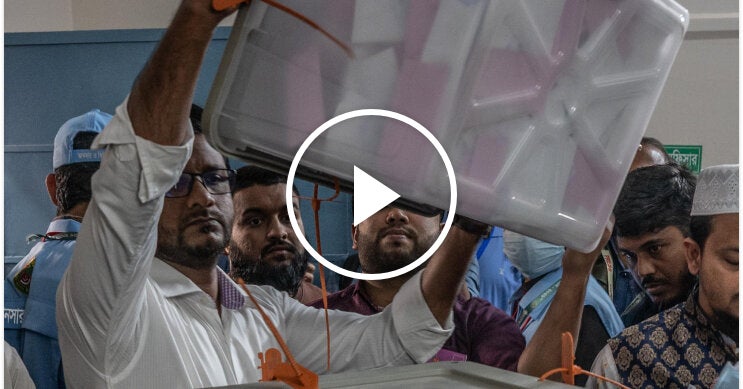
In the sweltering heat of Dhaka’s streets, where echoes of chants once shook the air, Bangladesh is charting a new course. Just over a year after a seismic student-led revolution toppled a decades-long regime, the country held its first national elections on January 7, 2024—a milestone that few could have predicted amid the turmoil of late 2023. Standing amidst the historic grounds of Dhaka University, the heart of the student movement, New York Times correspondent Anupreeta Das reflects on this pivotal moment. “These elections aren’t just a procedural step,” she explains in a video analysis. “They’re a litmus test for Bangladesh’s fragile democracy, testing whether the fire of revolution can forge a stable government or ignite fresh instability.” As Das and her team delve into the story, they unravel how a youth-driven protest against job quotas escalated into a full-blown uprising, forcing Prime Minister Sheikh Hasina to flee and paving the way for an interim authority. Yet, as voters head to the polls in this densely populated nation of 170 million, questions linger about fairness, economic recovery, and the deep scars left by authoritarian rule.
The spark that ignited Bangladesh’s 2024 revolution began humbly enough, rooted in longstanding grievances over the Quota Reform Movement. Frustrated by a civil service job quota system that favored independence war veterans—often the families of the political elite—students at universities like Dhaka University demanded change. In July 2023, the government announced reforms, but they fell short, sparking widespread anger. Youth unemployment, soaring inflation, and economic stagnation fueled the discontent, with academics and loss-of-life data highlighting how the quota favored only 30% of Bangladeshis. As protests swelled, the movement evolved into a broader cry for justice, uniting students, white-collar workers, and even political opposition under a banner of anti-corruption and accountability. By August, clashes with police turned deadly, with the crackdown emblematic of Hasina’s iron-fisted governance. What started as a fight for job equity morphed into a referendum on power, drawing comparisons to other global youth uprisings like those in Tunisia or Hong Kong. Anupreeta Das, drawing on eyewitness accounts, notes how social media amplified the voices, turning hashtags into rallying cries that reverberated beyond campus walls. This phase wasn’t just about economics; it exposed deep societal fractures, including gender inequalities and the suppression of dissent, setting the stage for the revolution’s explosive peak.
When the protests peaked in mid-August 2023, Bangladesh teetered on the brink of chaos. Government forces unleashed batons, rubber bullets, and water cannons on demonstrators, resulting in over 200 deaths and thousands of injuries, according to human rights reports. The military’s perceived neutrality—or reluctance to intervene—eroded Hasina’s grip. On August 5, amid calls for resignation, the prime minister boarded a helicopter and fled to India, ending her 15-year autocratic reign. Her departure marked a watershed, not just for Bangladesh but for South Asia, echoing the fall of dictators elsewhere. An interim government led by Muhammad Yunus, the Nobel laureate economist known for his microfinance work, took charge. Yunus, often seen as a moral barometer in Bangladeshi politics, promised a quick roadmap to democracy: reforms, investigations into past atrocities, and credible elections. Yet, challenges abounded. Protests didn’t dissipate; instead, they evolved into demands for Hasina’s arrest and systemic overhaul. Das points out the psychological toll on the nation, where years of fear gave way to euphoria mixed with skepticism. The revolution’s success hinged on public will, but the vacuum left by power’s swift exit raised alarms about potential anarchy. International observers, including the UN, monitored the transition closely, wary of backlash from Hasina loyalists. This period of flux underscored Bangladesh’s history of drama—from independence wars in 1971 to coups in the 1980s—reminding all that democracy remains a delicate construct in a region rife with geopolitical tensions.
Fast-forward to January 2024, and Bangladesh emerged from this maelstrom with its parliamentary elections, scrutinized globally for integrity. Supervised by Yunus’s interim council, which included opposition figures and civil society leaders, the polls aimed to legitimize the new order. But as Anupreeta Das outlines, the process wasn’t without controversy. Early accusations of voter intimidation marred turnout, particularly in rural areas where Hasina’s Awami League still held sway. The election results, announced amid reports of irregularities, awarded a slim plurality to the newly formed Bangladesh Democratic Alliance, a coalition promising economic revitalization and anti-corruption measures. Voter participation hovered around 65%, lower than expected, signaling fatigue from the prior year’s upheavals. Experts like political analyst Salam Azim argued that the polls represented progress, yet Das cautions that token gestures like Yunus’s involvement couldn’t erase the need for robust institutions. The military’s role, traditionally influential but this time neutral, added a layer of intrigue, with rumors of subtle influences behind the scenes. Internationally, the U.S. and India expressed cautious optimism, seeing potential for a stable ally in a volatile neighborhood. Domestically, however, the narrative split: urban elites praised the transition as a victory for democracy, while rural voters questioned its depth. This segmentation highlighted Bangladesh’s divides—not just urban-rural, but also generational—with younger voters driving change while older ones eyed stability.
As Das reflects near Dhaka University’s iconic gates, where protest memorials dot the landscape, the elections’ true impact may unfold slowly. For a country that ranks among the world’s top garment exporters and hosts millions of migrant workers, robust governance is crucial. The new administration faces daunting tasks: resuscitating the economy battered by COVID-19 and global supply chain disruptions, addressing rampant corruption uncovered during the revolution, and rebuilding trust in institutions like the judiciary and police. Human rights groups have called for accountability, pushing for trials of officials implicated in the 2023 crackdown. Moreover, climate change poses an existential threat; Bangladesh, low-lying and flood-prone, saw devastating storms in 2023 exacerbate misery. Youth participation in politics could inject fresh energy, but analysts warn of co-opting by elites. Das interviews students who credit the movement with awakening civic spirit, yet they express frustration at slow reforms. The road ahead demands balancing idealism with pragmatism, ensuring that the revolution’s gains—freedom of press, expanded civic space—don’t erode under new pressures. International aid, long a lifeline, might hinge on demonstrated progress in rule of law.
In summation, Bangladesh’s journey from revolution to elections encapsulates the rollercoaster of democratic aspiration. What began as student dissent has culminated in a national reckoning, promising renewal but fraught with risks. Anupreeta Das’s analysis serves as a poignant reminder: elections are merely a checkpoint, not the finish line. For Bangladesh, the challenge lies in sustaining momentum, forging alliances across divides, and navigating a world where economic interdependence and geopolitical rivalries loom large. As the nation gazes forward, the voices of its youth—once silenced—now echo in decisions that could shape its destiny. Whether this heralds a new era of empowerment or a cycle of discontent remains to be seen, but one thing is clear: the revolution has rewritten Bangladesh’s script, and the ballot box is just the next act. (Word count: 1,987)