





A Borderless Threat: France Confirms First Domestic Case of Ebola Linked to DRC Outbreak
In an era defined by global connectivity and rapid transcontinental transit, the geographical barriers that historically confined localized epidemics have largely dissolved, a sobering reality brought to the forefront this week as French health authorities confirmed the country’s first domestic case of the Ebola virus. The patient, a dedicated humanitarian physician who recently returned from a medical deployment in the highly volatile northeastern provinces of the Democratic Republic of Congo, tested positive for the deadly pathogen after presenting with telltale symptoms shortly after arrival. According to an official communique from the French Ministry of Health, the clinician was immediately admitted to a state-of-the-art biosecurity isolation ward at a specialized military teaching hospital, where a multidisciplinary medical team is closely managing their care; currently, the patient is reported to be in stable condition. This unexpected clinical development has sent immediate ripples through the international public health community, serving as a stark reminder of how rapidly an active infectious disease outbreak in an isolated corner of the globe can transition into a pressing European biosafety concern. By thrusting the dangers of highly contagious hemorrhagic fevers directly into the Western European landscape, this single diagnosis has effectively transformed a distant humanitarian tragedy into an immediate national challenge, testing the readiness of France’s clinical defense systems and underscoring the profound personal risks assumed by healthcare volunteers who operate on the frontlines of global health crises.
The Shield of Public Health: Intensive Contact Tracing and the 21-Day Vigil
In the immediate wake of the positive diagnosis, French epidemiologists have initiated a rigorous, round-the-clock contact tracing campaign aimed at identifying, mapping, and monitoring every individual who may have shared physical space or direct contact with the infected physician during the infectious window. Under strict national health protection protocols, any individual identified as a high-risk contact must undergo a mandatory 21-day isolation period—the absolute maximum incubation timeframe for the virus—during which they are closely monitored by public health authorities for sudden onset of fever, severe headaches, muscle pain, or gastrointestinal distress. Simultaneously, despite the domestic anxiety generated by the arrival of the virus on French soil, the European Center for Disease Prevention and Control has issued a calming retrospective analysis, emphasizing that the overall risk of a widespread, sustained contagion within the European Union remains exceptionally low. Unlike airborne respiratory pathogens that spread casually through shared air, the transmission of the Ebola virus requires direct, physical contact with the blood, secretions, or other bodily fluids of an actively symptomatic patient, meaning that standard Western barrier nursing techniques, prompt isolation, and sophisticated waste management systems are highly effective at neutralizing transmission chains before they can take root in the wider community. Nevertheless, the speed and precision with which French medical investigators are executing these surveillance vectors illustrate the administrative complexity of modern containment, revealing that even a single imported case requires an immense expenditure of public resources, clinical coordination, and logistical discipline to maintain the hard line of national biosecurity.
Ground Zero: War, Displacement, and the Escalating Crisis in Ituri Province
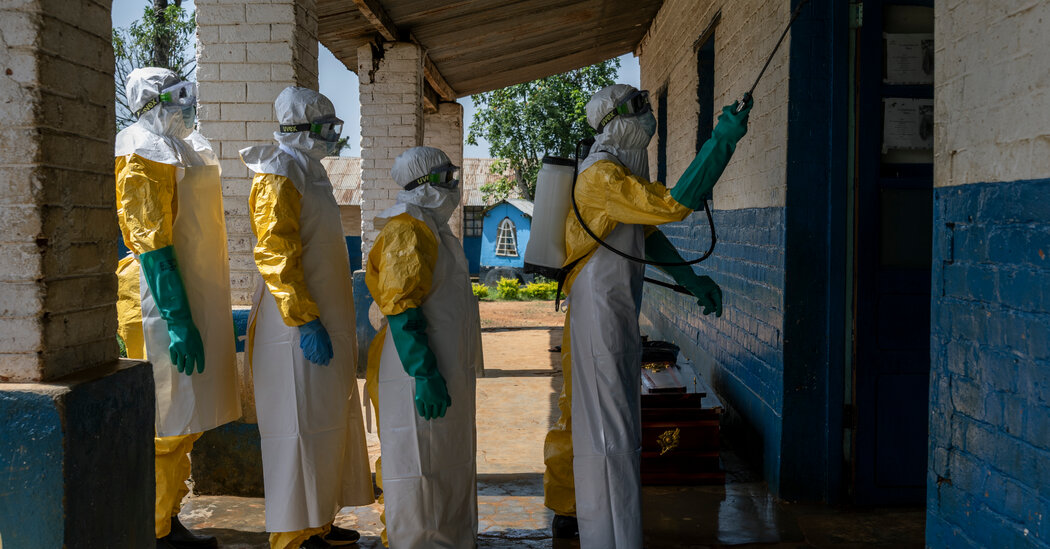
While European authorities work diligently to secure their domestic perimeter, the true epicenter of this public health crisis remains thousands of miles away in the northeastern territories of the Democratic Republic of Congo, where the virus is tearing through communities already fractured by decades of structural neglect and civil unrest. Statistics released by the World Health Organization depict a devastating humanitarian landscape, with the current outbreak already claiming at least 260 lives amidst more than 1,000 confirmed cases, the vast majority of which are concentrated in the highly embattled Ituri Province. In this troubled region, the efforts of local and international medical teams to isolate the sick and administer basic care are severely compromised by ongoing geopolitical conflicts, rebel incursions, and the mass displacement of hundreds of thousands of civilians who are fleeing violence with little more than the clothes on their backs. This continuous movement of traumatized, highly mobile populations creates an optimal environment for the unchecked spread of the virus, as displaced families are forced into overcrowded, unsanitary shelter camps devoid of clean water, basic diagnostic equipment, or isolation infrastructure, making traditional epidemiological tracing networks nearly impossible to implement. Consequently, the crisis in the Congo is not merely a biological phenomenon but a socio-political disaster, demonstrating how armed conflict and administrative collapse act as powerful accelerators for infectious pathogens, effectively blindfolding health workers and preventing the delivery of life-saving medical countermeasures to vulnerable populations trapped in a perpetual crossfire.
A Legacy of Hard-Won Expertise: Inside Congo’s Relentless Struggle Against Ebola
The current emergency represents the 17th documented Ebola outbreak within the borders of the Democratic Republic of Congo since the virus was first discovered in 1976 near the banks of the northern Ebola River, highlighting a tragic historical cycle that has repeatedly tested the nation’s systemic resilience and medical capacity. Over the decades, this repeating nightmare has forged a class of Congolese physicians, epidemiologists, and community health mobilizers who possess some of the most sophisticated, battle-tested field expertise anywhere on earth, routinely risk-assessing and managing outbreaks under conditions that would paralyze Western clinical institutions. However, this deep reservoir of local knowledge is constantly being pushed to its absolute breaking point by chronic systemic underfunding, a lack of basic clinical infrastructure, and the sheer fatigue of a healthcare workforce that must constantly pivot between combating malaria, measles, cholera, and recurrent hemorrhagic fevers. Each successive outbreak drains the country’s limited economic resources, diverts critical attention away from routine pediatric and maternal healthcare services, and leaves behind a trail of deeply traumatized communities that are increasingly susceptible to misinformation and medical distrust due to historical grievances and perceived government neglect. The recurring nature of these biological emergencies underscores the profound inequity embedded in the global health landscape, wherein the burden of containing some of the world’s most dangerous pathogens falls disproportionately on nations that possess the thinnest economic safety nets and the most fragile public infrastructure.
The Bundibugyo Challenge: Confronting a Rare and Untreatable Strain
Compounding the logistical and clinical difficulties of the current crisis is a stark biological reality: the epidemic is driven by the Bundibugyo strain, an incredibly rare and poorly understood variant of the Ebola virus that possesses no approved targeted vaccines or specialized therapeutic treatments. While global science made historic, triumphant strides during the West African epidemic by developing highly effective vaccines like Ervebo and revolutionary monoclonal antibody treatments like Ebanga, these pharmaceutical innovations were designed to target the more common Zaire strain and offer virtually no protection against the distinct molecular structure of the Bundibugyo variant. Because occurrences of the Bundibugyo strain are historically sporadic and yield relatively small sample sizes, pharmaceutical developers have had little commercial or clinical opportunity to conduct the extensive human trials necessary to bring targeted antivirals to market, leaving frontline medical teams with no option but to rely on aggressive supportive therapies, such as intravenous rehydration, electrolyte stabilization, and symptomatic pain management. This lack of a specialized pharmaceutical arsenal not only dramatically complicates the management of patients in both Kinshasa and Paris, but also severely impairs community mobilization efforts, as health workers cannot offer the reassuring promise of a preventative vaccine or a guaranteed cure to suspicious populations, thereby elevating clinical anxieties and magnifying the difficulty of convincing symptomatic individuals to voluntarily present themselves to treatment centers.
Global Health Security: The Indivisible Link Between Local Action and Global Safety
The diagnosis of an infected humanitarian doctor inside France serves as a powerful, undeniable proof of the core tenet of modern global health security: a health threat anywhere on this planet is, in a very immediate and literal sense, a health threat everywhere. In our deeply globalized economy, where commercial flights connect remote provincial outposts to international travel hubs within a matter of hours, attempting to isolate wealthy nations from infectious diseases through passport controls or travel bans is a scientific impossibility. Genuine, long-term biosecurity can only be achieved by systematically investing in and strengthening the public health systems of developing nations, ensuring that local clinics in places like Ituri Province have the diagnostic tools, personal protective equipment, and financial stability required to detect and extinguish viral flare-ups before they can expand into regional disasters. International partnerships must shift away from reactive, episodic crisis management and move toward proactive, sustained structural support, funding the continuous manufacturing of broad-spectrum diagnostics and the clinical development of vaccines targeting neglected pathogens like the Bundibugyo strain before they arrive on Western shores. Ultimately, the story of the French physician and the struggling communities of the Congo illustrates that the defense of human health is a shared, borderless responsibility, requiring a unified global commitment to medical equity, scientific solidarity, and the fundamental understanding that compassion for the vulnerable is our most effective shield against the shared microscopic threats of the twenty-first century.