





In recent years, the modern American educational landscape has undergone a profound, highly turbulent, and deeply unsettling transformation, shifting from a sanctuary of academic learning into the central battleground of a deeply polarizing cultural war. What was once universally celebrated as a widely accepted, cooperative effort between families, local communities, and educational institutions to raise well-rounded, literate, and civic-minded citizens has fractured into a highly politicized conflict over values, identity, and authority. Everyday families find themselves navigating an increasingly complex and hostile environment where traditional beliefs are frequently challenged, and where the foundational structures of parental rights are being actively questioned by institutional forces. This shift is not merely a collection of isolated disputes over curricula or library books; it represents a systemic crisis of trust that touches every level of schooling, from early childhood classrooms to the most prestigious universities in the nation. As these institutions align themselves with increasingly radical ideological frameworks, the average citizen is left feeling alienated and defensive, watching the schools they fund with their hard-earned tax dollars turn into centers of social engineering. This cultural friction is characterized by a growing disconnect between the values taught at home and those promoted by educators, creating an atmosphere of chronic anxiety for parents who want nothing more than to protect their children’s innocence, safeguard their emotional well-being, and guide their moral development. The human cost of this ideological divide is staggering, as it breeds mutual suspicion among neighbors, turns school board meetings into arenas of vitriolic debate, and leaves children caught in the middle of adult political struggles. To fully comprehend this national crisis, we must look beyond the sensationalized headlines and empathize with the real people—the worried mothers, the conflicted teachers, and the disillusioned students—who are forced to live through this institutional breakdown on a daily basis. Ultimately, the current state of American education forces us to confront a fundamental question about the future of our democracy: who possesses the ultimate authority to shape the minds, morals, and hearts of the next generation?
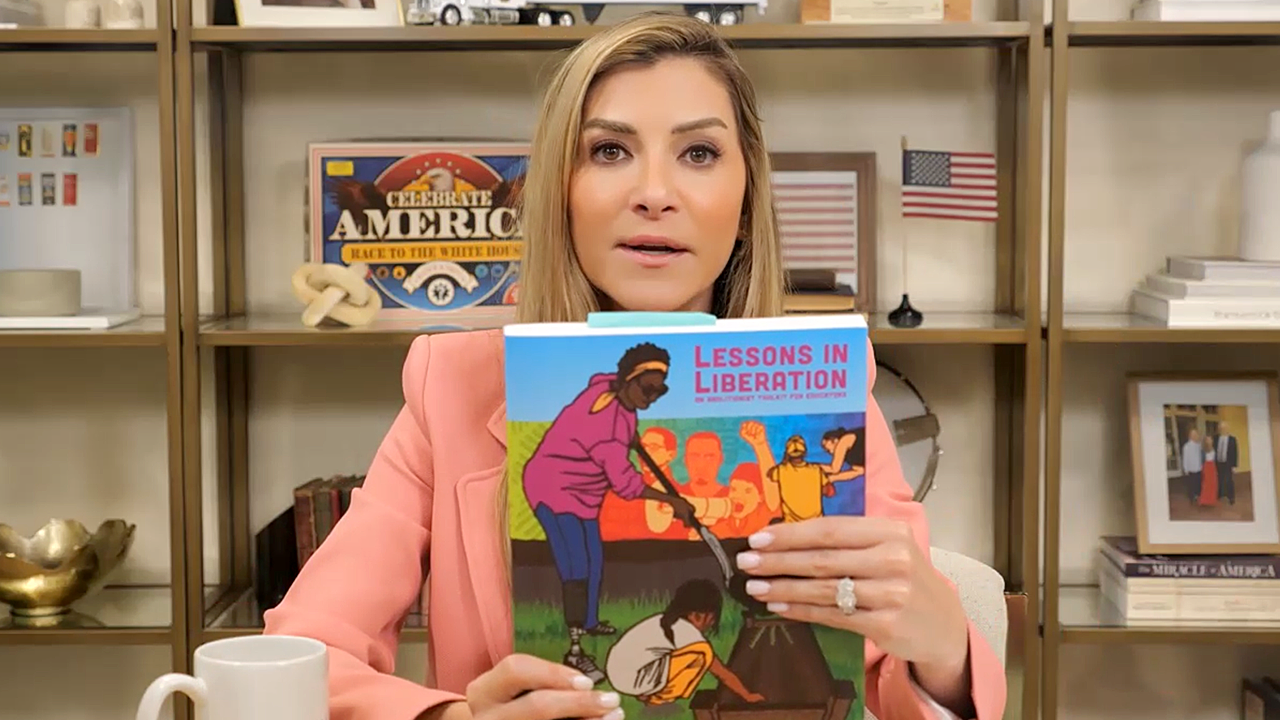
At the core of this institutional conflict is a concerted effort to redefine the relationship between the state, the school, and the nuclear family, often by characterizing traditional parental oversight as an antiquated obstacle to social progress. A glaring and highly controversial manifestation of this trend is found in professional teacher training programs that explicitly target traditional parental authority, framing it not as a natural and protective right, but as a systemic form of oppression that must be dismantled by progressive educators. This adversarial ideological framework encourages teachers to view themselves as progressive liberators who must rescue children from the perceived bigotry or outdated beliefs of their own households, driving a wedge of secrecy and distrust between parents and their offspring. This unsettling dynamic was thrust into the national spotlight when a heartbroken mother in the state of Washington felt compelled to pull her children out of public school after discovering that a Pride-themed lesson had been integrated into a routine music class without any prior notice, discussion, or opportunity for parental consent. For this devastated mother, the difficult decision to withdraw her beloved children was not born out of malice or bigotry, but out of a deep sense of betrayal; she realized that the school had deliberately bypassed her authority to introduce sensitive, value-laden concepts to her young children in a setting where they were supposed to be learning basic music theory. When public schools adopt a policy of non-disclosure and view parental involvement as a threat to be managed rather than a partnership to be cherished, they destroy the fragile social contract that sustains public education. This systemic erasure of parental boundaries forces families into the agonizing position of choosing between the convenience of public schooling and the preservation of their deeply held moral and religious convictions, transforming the simple act of sending a child to school into an exercise in vigilance and defense.
As these ideological currents sweep through local school systems, individual classrooms are increasingly being transformed into high-stakes legal and ethical battlegrounds where teachers are forced to choose between personal conscience, school board mandates, and federal law. In the state of Kansas, this escalating tension reached a critical boiling point when a public school teacher publicly declared her defiance of district policies regarding the mandatory use of students’ preferred pronouns, asserting that she would continue to use them despite the district facing a rigorous federal investigation over its policies. This act of defiance illustrates how deeply politicized the daily vocabulary of the classroom has become, where language is no longer just a tool for communication but a weaponized test of ideological loyalty. On the opposite end of the spectrum, the potential for pedagogical and administrative overreach has prompted aggressive intervention from the highest levels of the federal government. The United States Department of Education, under the Trump administration, launched a highly publicized and formal civil rights investigation into a school district following shocking allegations that a teacher had coerced same-sex students into kissing one another during a classroom activity. Such deeply disturbing incidents, whether representing extreme systemic outliers or symptoms of a broader, underlying educational failure, highlight the dangerous consequences that occur when the professional boundaries between teacher and student are completely obliterated in the name of social experimentation. Teachers who enter the profession to teach math, science, and reading are increasingly pressured to act as amateur psychologists and social workers, navigating a complex web of gender theory, racial politics, and federal mandates that leave little room for traditional academic instruction. This hostile environment not only burns out dedicated, neutral educators who wish to avoid political controversies, but it also deprives students of a stable, objective learning environment free from adult ideological anxieties.
The institutional radicalization observed in primary and secondary schools is widely recognized as a direct export of the ideological monoculture cultivated within America’s elite higher education institutions. For decades, prestigious universities were viewed as the guardians of intellectual diversity, scientific inquiry, and national progress; today, however, critics argue they have transformed into highly funded indoctrination centers designed to produce radical activists rather than critical thinkers. Political commentators like Liz Peek have argued that the most effective way to address this systemic issue is to “starve the machine” of public resources by aggressively cutting off the federal funding, tax exemptions, and public subsidies that sustain these institutions and enable them to manufacture socialist ideologies. This strategy recognizes that the cultural shift in local school boards is directly tied to the ideological output of university education departments, which train the very administrators and teachers who implement controversial curricula in K-12 schools. This academic machine is further complicated by massive financial influences from foreign adversaries, raising serious concerns about national security and institutional integrity. United States Senator Tom Cotton recently demanded a thorough federal investigation into Harvard University, which currently leads the nation in foreign financial contributions, with a specific focus on the massive influx of funding originating from foreign nations and adversaries like China. When elite academic institutions accept hundreds of millions of dollars from foreign regimes that do not share American values, it raises profound questions about whether their educational priorities and research agendas are being manipulated by global adversaries. The alarming convergence of radical domestic ideology and unchecked foreign financial influence at the highest levels of academia suggests that the battle for the American mind is not just a localized culture war, but a geopolitical struggle for the future of national sovereignty and intellectual freedom.
Perhaps the most tragic and visible consequence of this systemic institutional decay is the profound erosion of basic human empathy, decency, and moral clarity among the individuals who emerge from these academic environments. When modern education prioritizes political grievance, division, and identity politics over classical ethics and mutual respect, it inevitably produces a generation capable of justifying extreme cruelty and bigotry under the banner of social justice. This moral rot was vividly and shockingly demonstrated in a tense, nationally televised confrontation where broadcaster Piers Morgan eviscerated an Ivy League university student who openly refused to work for or alongside any employer who was Jewish, a position Morgan rightly condemned as brazen and unabashed antisemitism. That a student attending one of the most selective and expensive universities in the world could feel entirely comfortable publicly defending such blatant, deep-seated prejudice reveals how deeply elite academic spaces have normalized ancient hatreds by wrapping them in modern ideological jargon. Similarly, the collapse of basic civil decency was put on full display in a Washington state school district, which was forced to launch an internal review after a school employee made celebratory public remarks regarding the rumored or desired death of conservative activist and commentator Charlie Kirk. The fact that an educator or staff member—someone entrusted with the care and moral guidance of young people—could find public joy in the hypothetical death of a political opponent demonstrates how thoroughly political tribalism has dehumanized us. When our educational institutions fail to instill the core values of compassion, respect for human life, and the ability to disagree civilly, they create a fractured society where political opponents are no longer viewed as neighbors with different ideas, but as existential enemies whose destruction is to be celebrated.
Healing the deep wounds that currently divide the American educational system and the broader public square requires a courageous, collective return to the foundational principles of transparency, mutual respect, and the preservation of human dignity. We must collectively reject the destructive notion that schools should operate in secret or view parents as adversaries in the upbringing of their own children; instead, we must rebuild a collaborative, trust-based partnership where parents are universally respected as the primary educators of their children. School districts must commit to total curriculum transparency, ensuring that families are never blind-sided by sensitive, ideological lessons that violate their core moral or religious convictions. Simultaneously, we must demand that our institutions of higher learning reclaim their historic commitment to academic excellence, genuine viewpoint diversity, and financial accountability, rejecting both foreign influence and the divisive ideologies that seek to fracture our society. Educators must be empowered to focus on rigorous academic instruction, free from the pressure to act as political activists or social engineering agents, while students must be guaranteed a safe, neutral space to develop critical thinking skills without fear of ideological coercion. Ultimately, the path forward cannot be paved with political retaliation or mutual hatred; it must be built on a shared commitment to treating every individual with respect, empathy, and decency, regardless of their political or cultural background. By restoring the natural boundary between the state and the family, and by placing the well-being and academic growth of children above the demands of political ideologues, we can begin to rebuild the trust that has been lost and secure a brighter, far more unified, and stable future for the generations to come.