


The modern American university campus, once envisioned as an ivory tower of detached scholarship and rational debate, has morphed into a volatile echo chamber of cultural warfare, financial scandal, and deeply personal crises. The latest headlines emanating from institutions of higher learning paint a stark and unsettling portrait of a system in upheaval, where the sanctity of academic pursuit is routinely eclipsed by ideological fervor, legal battles, and outright betrayal. From the hallowed halls of Harvard Medical School to the sprawling public grounds of the University of Texas at Austin, the classroom and the quad have become arenas for the broader cultural conflicts tearing at the nation’s fabric. Students, who arrive on campus seeking knowledge, skills, and a pathway to a brighter future, often find themselves swept up in controversies that have little to do with their coursework. Parents, burdened by the crushing weight of tuition debt, look on in bewilderment as their investment is diverted into ideological pet projects or eroded by administrative scandals. The barrage of incidents—ranging from a medical school’s bizarre tribute to a violent criminal suspect, to a lecturer’s explosive meltdown over a student’s innocent query, to a veteran mother fighting for her children’s educational rights—collectively reveal a system that has lost its moral compass and its fundamental sense of purpose. This is no longer a debate about curriculum design or grading policies; it is a profound reckoning over who controls the narrative, who is allowed to speak, and who ultimately holds the power to shape the minds of the next generation. As these stories unfold, the human cost becomes increasingly apparent, with students and faculty alike caught in the crossfire of a war over the very soul of education.
The absurdity of the current campus climate was never more vividly illustrated than at Harvard Medical School, where an artist-in-residence reportedly used a “fat liberation” panel to call for the freedom of Luigi Mangione, the man accused in the shocking murder of a healthcare CEO. The scene is surreal to imagine: a prestigious medical institution, dedicated to healing the sick and advancing the sciences, providing a platform for someone to champion a suspect in a cold-blooded killing while ostensibly discussing body positivity. The juxtaposition is jarring, exposing how disconnected certain academic circles have become from the grim realities of violence and justice. For the students in attendance, many of whom will go on to treat victims of gun violence and disease, such rhetoric trivializes the sanctity of life and the rule of law. It raises a chilling question: what are we teaching our future doctors when grotesque ideologies are allowed to overshadow basic human decency? This incident is emblematic of a broader trend where extreme progressive activism has infiltrated even the most rigorous scientific disciplines, prioritizing woke signaling over clinical competence and empathy. Meanwhile, across the country in California, a lecturer at a community college was removed from their position after erupting at a student who merely asked a question about Native Americans. The specific details of the explosion remain murky, but the underlying pattern is clear: a student attempted to engage in intellectual curiosity, only to be met with vitriol and aggression from an educator who apparently could not tolerate a question that challenged their predetermined narrative. This lecturer’s lack of emotional control and professional integrity turned a learning moment into a hostile confrontation, silencing the very curiosity that education is supposed to foster. For the student, this was likely a terrifying experience—being berated by an authority figure for simply wanting to learn. For the institution, it represents a failure of oversight and a capitulation to fear, where instructors believe they hold unchecked power to silence and intimidate.
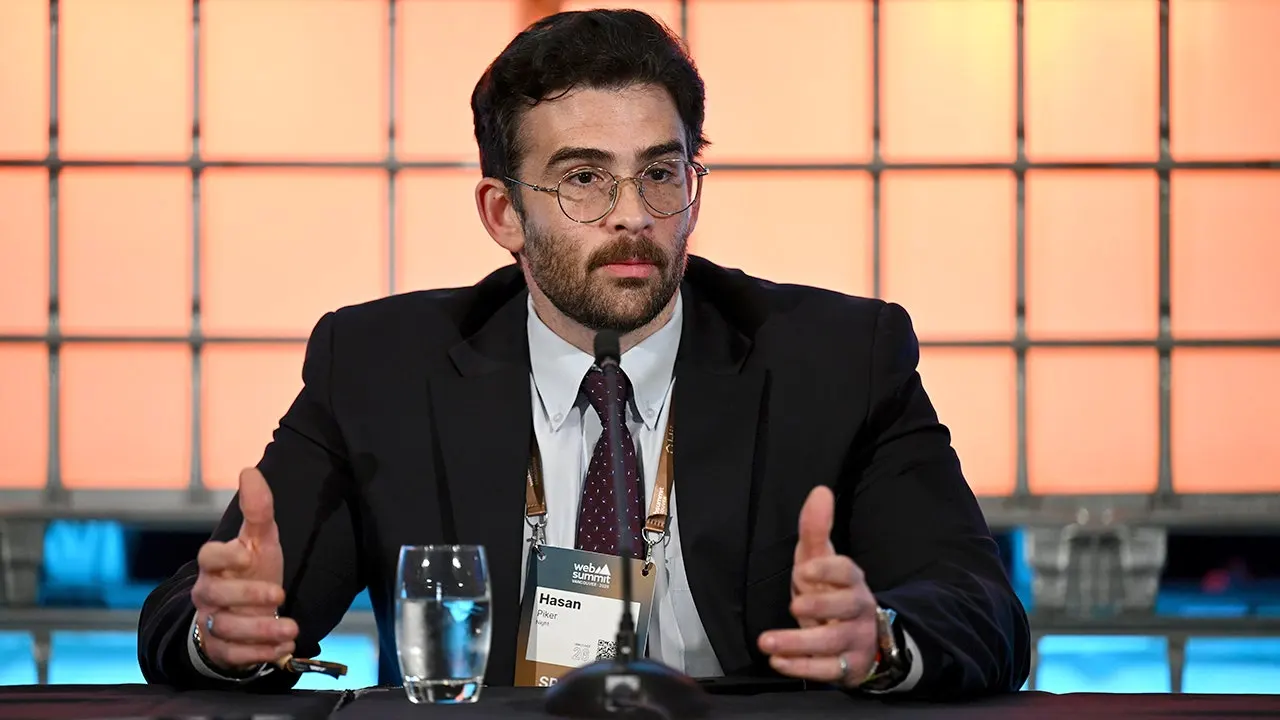
The political dimension of this campus chaos exploded into the open at the University of Texas at Austin, where the controversial left-wing streamer Hasan Piker addressed a crowd of students, sparking immediate backlash from state lawmakers. Piker, known for his incendiary commentary on everything from capitalism to violence, represents a flashpoint in the ongoing free speech dilemma. On one hand, proponents argue that inviting diverse voices—even those that are deeply controversial—is a hallmark of academic freedom. Students attending his talk were exercising their right to hear a perspective that is not often represented in mainstream policy, and the event itself can be seen as a legitimate exercise of the First Amendment. However, the Texas lawmakers who reacted with fury are not unreasonable in their concern; they see a public institution subsidizing a figure whose rhetoric often veers into calls for retribution against the wealthy and the political opposition. The human dynamic here is tragically polarizing. University administrators find themselves squeezed between students clamoring for provocative guest speakers and a state legislature that controls the purse strings. The students who attended might have genuinely wanted to engage with alternative political theories, while the taxpayers funding UT Austin might feel their hard-earned money is being used to legitimize radical propaganda. The event has become a proxy war for the larger national debate over the role of state universities in shaping political consciousness. It puts the average student in an impossible position—pigeonholed as either a radical if they attend, or a conformist if they stay away. What gets lost in the shouting is the essential need for dialogue that is respectful, rigorous, and grounded in facts rather than hyperbole. Instead, the campus becomes a public theater for partisan brawling, where the educational value is overshadowed by the spectacle, and genuine learning is sacrificed for viral moments.
Beyond the ideological battles, a quieter but equally damaging war is being waged over faith and family rights in the educational sphere. A Marine veteran turned homeschooling mother has taken legal action against an Oregon school district after her request for reimbursement for a Christian curriculum was denied. This case strikes at the heart of parental autonomy and religious liberty. This woman is not asking for a handout; she served her country, and she has taken on the monumental responsibility of educating her children herself. Her curriculum is rooted in her deeply held Christian beliefs, which are not merely an accessory to her children’s education but the very foundation of it. When the district refuses to reimburse her for that curriculum while presumably funding other educational programs, she feels—quite rightly—that her religious beliefs are being treated as inferior or illegitimate. The humanizing detail is the struggle of a mother who wants the best for her kids, only to be told by a bureaucratic entity that her choices do not count as valid “education.” Simultaneously, at Virginia State University, a public historically Black institution, accusations have surfaced that Christian student ministries are being suppressed while Muslim groups are given exemptions and accommodations. If these accusations hold true, they represent a grotesque double standard. Universities are meant to be neutral arbiters of student life, providing equal footing for all recognized organizations. When a Christian group faces hurdles to meet, reserve rooms, or access funding while a Muslim group moves forward without issue, it sends a visceral signal to students of faith: your religion is less welcome here. For Christian students, this can feel isolating and discriminatory, breeding resentment and a sense of second-class citizenship. For Muslim students, such favoritism can actually be a poisoned chalice, entangling their legitimate religious practices into a political tug-of-war. Both of these stories highlight a fundamental breakdown in how institutions handle the intersection of faith and public funding, often favoring one cultural group over another based on the prevailing political winds rather than a commitment to universal civil rights.
While these cultural clashes dominate the headlines, a more insidious threat lurks beneath the surface: financial and criminal exploitation. The so-called “Scam U” phenomenon, a hidden scam plaguing campuses that has racked up a multimillion-dollar price tag, reveals how vulnerable students are to sophisticated fraud. Whether these scams involve fake financial aid offers, phishing attacks on student loan accounts, or fraudulent tuition collection schemes, the victims are often the most desperate students—those already struggling to afford the exorbitant cost of attendance. Imagine a first-generation college student who receives an official-looking email “from the bursar’s office” asking for a small payment to secure a housing grant, only to lose their entire semester’s savings. The emotional devastation is immeasurable, compounding the stress of coursework with the humiliation of being duped. Universities are often slow to alert their populations to these threats, or worse, have internal vulnerabilities that allow the scams to flourish. Alongside these financial predators, a more horrifying case emerged where a college professor was accused of sending explicit Snapchat messages in a child solicitation case, according to the sheriff’s office. This is not a case of misbehavior; it is an alleged crime against a minor. The sheer breach of trust is staggering. Parents send their children to college expecting them to be mentored by thoughtful, ethical adults. When a professor uses their position of authority to prey on the young, it shatters the foundational trust of the entire educational enterprise. It also exposes the deep inadequacy of background checks and ongoing monitoring in many institutions. The faculty member is presumed innocent until proven guilty, but the accusation alone torments the campus community, forcing students to question who exactly is guiding their lectures and grading their papers. These two stories—the financial scam and the criminal accusation—share a common thread: they represent a profound betrayal of the social contract between the university, its students, and their families.
Synthesizing these disparate incidents—the Harvard “Free Luigi” debacle, the California lecturer’s meltdown, the UT Austin political theater, the Oregon religious lawsuit, the Virginia State double standard, the multimillion-dollar scam, and the predatory professor—reveals a unified crisis of institutional trust. The common denominator is a breakdown in the core promise of higher education: that it is a safe, honest, and enriching environment, insulated from the worst impulses of society and dedicated to the pursuit of truth. Instead, campuses have become mere extensions of the culture war, where extremism in any direction is rewarded with attention, where legal battles are fought over the most mundane aspects of faith, and where financial and personal safety are no longer guaranteed. For the students navigating this maze, the journey is exhausting. They are expected to learn calculus and chemistry while also deciphering the political allegiances of their professors and the hidden dangers of their email inboxes. Parents, who often sacrifice retirement savings or take out second mortgages to pay for this experience, deserve far better than a system that prioritizes performative activism over pedagogy and safety. The human toll is immeasurable—anxiety, disillusionment, and a growing cynicism about whether a degree is worth the emotional and financial price. It is imperative that university administrations, and indeed all stakeholders, take a firm step back to reevaluate their priorities. They must re-center on the basic mission: fostering critical thinking, ensuring physical and psychological safety, respecting the diverse faiths and backgrounds of their students equally, and conducting financial affairs with impeccable transparency. The path forward is not through silencing speech or capitulating to the loudest voices, but through humility, accountability, and a resolute return to the values that once made the American university the envy of the world. For those paying close attention, following these developments through reliable news sources remains essential, as the outcome of these battles will determine the intellectual and moral landscape of the nation for decades to come.