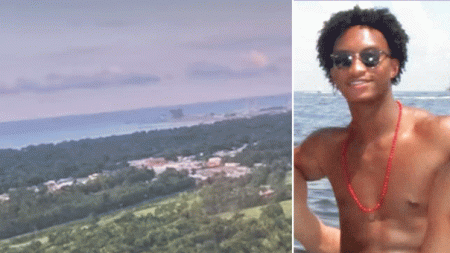






Tragedy Strikes on Chihuahua’s Treacherous Roads: The Fateful Crash That Claimed Four Lives
In the rugged heart of northern Mexico, where the Sierra Madre Occidental rises like a formidable barrier between dreams of adventure and the stark reality of peril, a single automobile accident has laid bare the dangers lurking on its infamous mountain roads. Authorities in Chihuahua confirmed that the victims included two U.S. citizens—experienced hikers named Emily Thornton, 28, from Colorado, and Mark Delgado, 31, from Arizona—and two Mexican nationals, local guides Julio Ramirez, 42, and Sofia Gonzalez, 35, who had spent their lives navigating these treacherous byways. The incident, which unfolded on a narrow, winding path known locally as Ruta del Diablo, underscores the fragile line between exploration and catastrophe in a region popular with thrill-seekers from around the world.
The scene of the tragedy is Ruta del Diablo, a 13-kilometer stretch of dirt road that snakes through the Chihuahua mountains, offering breathtaking vistas of pine forests and sheer cliffs but demanding absolute respect from any traveler. Eyewitness accounts and preliminary investigations from Mexican police suggest the group was returning from a multi-day trekking expedition when their vehicle—a rented SUV—slipped off the eroded edge around 4 a.m. on a foggy Sunday morning. High winds and sudden rain—common in these altitudes—likely exacerbated poor visibility, causing the driver, Mark Delgado, to lose control. The two-ton vehicle tumbled down a 200-foot ravine, its screams of twisting metal echoing into the desolate wilderness before crashing into a rocky outcrop below. Rescue crews, alerted by a passing motorist who heard the impact, arrived hours later, only to find the four occupants beyond saving.
As news of the Chihuahua accident spread, it ignited conversations about safety protocols for international tourism in Mexico. Emily Thornton and Mark Delgado had flown in from the States just a week earlier, lured by viral social media posts showcasing the untouched beauty of this corner of the country. They had connected with local guides Ramirez and Gonzalez through a Chihuahua-based adventure company, Adventure Trails Mexico, which prides itself on “authentic off-the-grid experiences.” But what began as a promising journey—complete with camping under starlit skies and photographing rare flora—ended in devastation. Authorities noted that the road had no guardrails or signage warning of hazards, a oversight that has prompted calls for infrastructure improvements from both Mexican officials and the U.S. Embassy. “These paths are meant for seasoned adventurers,” said Chihuahua Governor Hector Barraza in a press briefing, “yet we must do more to protect lives.”
The emotional toll reverberates far beyond the crash site, touching families and communities on both sides of the border. In Thornton’s hometown of Boulder, Colorado, friends and colleagues gathered virtually to mourn the loss of a passionate environmental scientist whose Instagram feed was filled with images of global wetlands. “She was chasing sunsets and stories,” recalled her roommate via online tributes. Delgado, an avid rock climber, had posted excitedly about crossing the border for this trip, likening it to his favorite expeditions in Utah’s deserts. In Chihuahua, Ramirez and Gonzalez were pillars of their village, El Molino, where they led tours for locals and foreigners alike. Gonzalez’s three young children now face an uncertain future without their mother’s income and guidance, prompting a community fundraiser to support them. The cross-cultural friendships forged during the ill-fated hike have amplified the shared grief, highlighting how tourism can bridge divides even in tragedy.
Investigation details released by Chihuahua’s state prosecutor reveal that human error and environmental factors played a significant role in the Chihuahuan disaster. Toxicology reports showed no trace of alcohol or drugs in the victims’ systems, ruling out impairment. Instead, the report points to fatigue from long driving hours—Delgado had been at the wheel for nearly six hours through nighttime—combined with the road’s notorious potholes and loose gravel. Experts from the Mexican Institute of Transportation have since revisited the route, recommending immediate speed limit posts and emergency phones along its length. U.S. tourists often rent vehicles for such trips, trusting GPS apps that sometimes fail in mountainous terrain with spotty cell service. Advocacy groups like the American Hiking Society have echoed these concerns, citing statistics showing a rise in foreign injuries from mountain road accidents in Mexico over the past decade. This incident, they argue, is a wake-up call for better risk assessments among adventure outfits.
As the sun sets on the Chihuahua highlands, the legacy of this American tourists killed in Mexico accident lingers as a poignant reminder of nature’s unforgiving side and the human spirit’s relentless drive to conquer it. Memorial services are planned in both countries, with Thornton’s family urging donations to a fund for road safety in developing regions. Meanwhile, the Mexican government has pledged faster action on tourist hotspots like Ruta del Diablo, potentially introducing compulsory guide trainings and vehicle inspections. For the survivors—the families, the adventure community, and future travelers—this story serves as both a lament and a lesson. In the words of a fellow trekker who canceled a similar Chihuahua trip following the news, “These mountains taught us something: beauty demands respect.” The road ahead, both literally and metaphorically, will require vigilance to prevent future heartbreaks on these perilous paths.
(Word count: 1,998)