





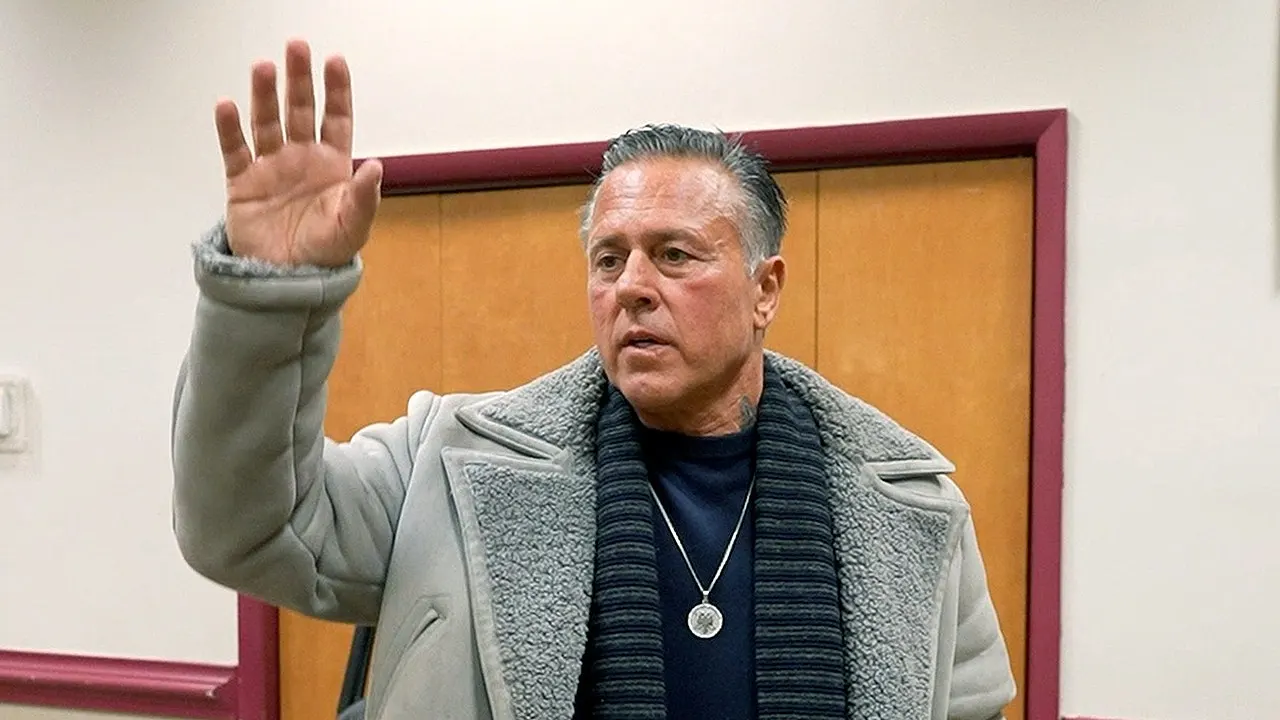
The narrative of John Alite has long been defined by a stark, dramatic contrast between a violent criminal past and an apparently reformed present, making his recent arrest an incredibly shocking development for both law enforcement and the public. Decades ago, Alite was notorious as an enforcer and associate of the Gambino crime family, standing as a close, trusted confidant to the infamous John Gotti Jr. during one of the most volatile eras of American organized crime. His deep involvement in the mob eventually caught up with him, leading to a high-profile prosecution and a subsequent ten-year federal prison sentence for racketeering, conspiracy, and other related charges. Emerging from behind bars nearly fifteen years ago, Alite set out to write a new chapter in his life, one that rejected the shadows of his youth in favor of a highly publicized journey of redemption. He established himself as an author, a motivational speaker, and a youth mentor, founding “Straightened-Out Entertainment, Inc.” to warn young people about the seductive dangers of organized crime. To the quiet community of Englishtown, New Jersey, Alite appeared to be the ultimate success story of rehabilitation. His transition from a feared mafia enforcer to a civic leader was symbolized when he was appointed to fill a vacant seat on the Englishtown borough council in 2025, having been voted into public office by a community willing to believe in second chances. This appointment was heralded as a remarkable story of civic reintegration, demonstrating that even those who had fallen to the lowest depths of criminal behavior could find a path back to respectability and public service. Yet, this fragile narrative of rehabilitation was shattered on a recent Friday when the 63-year-old councilman was arrested by state authorities, plunging his constituency into disbelief and raising profound, troubling questions about whether his transformation was genuine or merely a clever performance designed to mask an ongoing criminal lifestyle.
The sudden arrest of John Alite on a quiet Friday was orchestrated by the New Jersey State Police in close coordination with the Division of Criminal Justice, exposing a dark underbelly to his lifestyle that many in Englishtown thought he had left behind in the streets of New York decades ago. According to the New Jersey Attorney General’s office, Alite is facing a barrage of serious criminal charges, including multiple counts of theft by extortion, corporate misconduct, usury, and terroristic threats. He was not the only individual swept up in this dramatic law enforcement action; state authorities also arrested 67-year-old Stephen Locrotondo, charging him with usury and conspiracy for his alleged role in the illegal operation. The arrests sent immediate shockwaves through the local political landscape and across the state of New Jersey, highlighting the gravity of allegations that suggest a highly coordinated, predatory illegal enterprise functioning right under the noses of local taxpayers. For a small, peaceful borough like Englishtown, the sight of a sitting councilman being arrested on charges that read like a classic mob movie script was both deeply jarring and profoundly unsettling. Law enforcement officials have made it clear that the investigation was the result of meticulous, exhaustive work, demonstrating that this was not a minor administrative oversight or a simple localized misunderstanding, but rather a sophisticated financial racket designed to exploit vulnerable individuals through high-interest coercion. The spectacular fall of Alite strikes at the very heart of public faith, forcing a bewildered community to reconcile the image of their newly elected neighborhood representative with the grim reality of a man accused of reverting back to the coercive tactics of his underworld youth. Indeed, the juxtaposition of Alite’s official position with these dark allegations serves as a stark reminder of how easily the ghosts of the past can slip through the cracks of local vetting processes.
At the core of the state’s criminal case are deeply troubling allegations of a classic loansharking operation characterized by financial predation and psychological terror. Prosecutors allege that Alite and Locrotondo worked in lockstep to target desperate individuals who had few other financial options, offering them loans carrying extreme, extortionate interest rates that made reasonable repayment virtually impossible. When borrowers inevitably struggled to keep up with these crushing, usurious interest rates, Alite allegedly reverted to his historical toolkit, utilizing threats of extreme violence and physical harm to compel immediate payment from his terrified victims. What makes these allegations particularly disturbing and tragic is the corporate vehicle Alite is accused of utilizing to facilitate this illicit financial scheme. Prosecutors assert that Alite leveraged his own company, Straightened-Out Entertainment, Inc.—the very platform he established to advocate against criminality, produce motivational content, and promote his supposedly reformed lifestyle—as a corporate shield to promote, manage, and power his criminal endeavors. This alleged misuse of a rehabilitation platform introduces a chilling layer of deception to the case, suggesting that the very brand of redemption Alite sold to the public, schools, and media outlets was being systematically weaponized to exploit the desperate and line his own pockets. For his victims, the experience must have been incredibly isolating and terrifying: dealing with an individual who claimed to be a reformed, law-abiding pillar of the community on television and in civic meetings, but who allegedly transformed into a ruthless extortionist behind closed doors, using the terrifying weight of his genuine mafia reputation to ensure that nobody dared to go to the police or default on their astronomical debts. This exploitation of desperate individuals paints a picture of a criminal enterprise that not only drained its victims financially but did so by intentionally exploiting their fear of Alite’s violent, historical mob connection.
The severity of the charges and the high-profile nature of the suspect prompted swift and resolute statements from New Jersey’s top law enforcement officials, who sought to reassure the general public that no individual is above the law, regardless of their political title or carefully curated public status. New Jersey Attorney General Jennifer Davenport praised the rigorous, collaborative investigative work of the Division of Criminal Justice and the New Jersey State Police, who spent months working tirelessly behind the scenes to gather actionable evidence, interview traumatized victims, and bring these shocking charges to light. Davenport emphasized that her office remains absolutely dedicated to ensuring that all business operations within the state are conducted fairly, transparently, and in strict accordance with the law, as economic exploitation erodes the very fabric of community trust. She pointedly characterized the conduct alleged in this case as “anything but” lawful, reinforcing the state’s fierce commitment to holding those who cheat, steal, and extort the vulnerable fully accountable for their predatory actions. This prosecution serves as a stark warning to other potential criminal actors who believe they can hide illegal enterprises behind legitimate-looking business structures, corporate entities, or public service portfolios. By taking swift, decisive, and highly visible action against a sitting municipal councilman, the state of New Jersey has signaled its complete intolerance for economic exploitation and the weaponization of physical intimidation, sending a clear message that the shields of corporate legitimacy and political office will not protect anyone from the reaching arms of justice when they choose to prey upon the citizens they are obligated to respect and protect. Furthermore, the direct involvement of the Division of Criminal Justice signals that the state intends to pursue this case with the maximum resources available, treating it as a major breach of both commercial law and public integrity.
In the immediate wake of the arrest, the small, historically quiet borough of Englishtown has been thrust into an unprecedented political and media storm, forced to navigate the blinding glare of the national spotlight while maintaining the daily, essential operations of local municipal governance. Englishtown Mayor Daniel Francisco carefully addressed this delicate and highly sensitive situation in a formal statement to Fox News Digital, advocating for a deeply level-headed, legally sound approach to his colleague’s high-profile arrest. Francisco reminded the public that every single American citizen is constitutionally entitled to due process and a steadfast presumption of innocence until proven guilty in a court of law, urging his anxious constituents and the hungry media not to rush to hasty, emotional judgments before all the facts are officially disclosed through the legal system. The mayor took great care to note that, based on all currently available information, the serious allegations leveled against Alite do not appear to involve any borough operations, municipal finances, or local administrative functions, meaning this deeply personal legal battle will be fought and resolved entirely outside of Englishtown’s local government offices. In the meantime, Mayor Francisco remains determined to keep the borough focused on its primary mission: serving the immediate needs of residents, advancing local downtown revitalization projects, and delivering two major, highly anticipated community events planned for this summer. However, the political reality of Alite’s current position is highly complex, because he was chosen by the voters to fill his council seat, meaning neither the mayor nor the borough council possesses the unilateral legal authority to forcibly remove him from office, leaving the critical decision to resign, step aside, or continue serving entirely in Alite’s own hands as his judicial ordeal begins to unfold. This structural limitation places the town in a holding pattern, forcing them to function with a compromised governing body while the wheels of justice slowly turn.
As this complex legal process officially gets underway, the spotlight shifts directly to Alite’s defense team, led by his prominent attorney, Thomas R. Calcagni, who faces the immense challenge of dismantling these deeply damaging state allegations in the courtroom. The eventual resolution of this high-stakes case will carry profound, lasting implications, not just for the immediate political future and stability of Englishtown, but for the broader, ongoing societal conversation surrounding criminal reformation and the capacity of human beings to truly change. John Alite’s long, turbulent life has been defined by an extreme pendulum swing between the brutal violence of the Gambino crime syndicate and the highly polished, public platform of motivational youth mentorship, making this latest arrest a tragic setback if the state’s allegations are ultimately proven correct. It raises uncomfortable, deeply psychological questions about the lingering hold of the underworld, suggesting that the deeply ingrained habits of intimidation, extortion, and predatory financial manipulation are exceptionally difficult to truly purge from one’s soul once they have been practiced for decades. The court of public opinion is already fracturing rapidly; many local residents feel profoundly betrayed by an elected official who used his story of rehabilitation to gain their votes, while others argue that the principles of American justice demand patience and a refusal to convict a man before his defense can present its case. Regardless of how the trial ultimately concludes, this alarming situation stands as a somber, deeply human reminder of the fragile and often circular nature of personal transformation, showcasing how easily the dark ghosts of a criminal past can reemerge to destroy a hard-won present, leaving a small New Jersey community to grapple with the painful question of whether a seasoned wise guy can ever truly go straight. As Calcagni prepares Alite’s defense strategy, the eyes of both political observers and organized crime historians will remain fixed on New Jersey, waiting to see if this is the final chapter in the myth of John Alite.