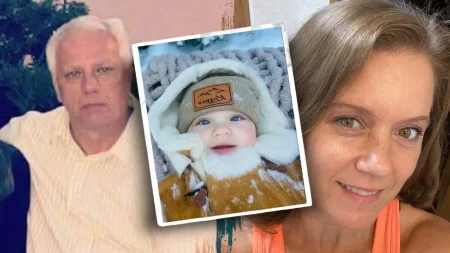



On a cold January night, a young man who should have had decades of birthdays, road trips, late-night conversations, and ordinary quiet mornings ahead of him drank far too much alcohol as part of a ritual designed to bind him to his brothers. His name was Colin Daniel Martinez, and he was a pledge at Northern Arizona University, hoping to earn his place in Delta Tau Delta fraternity. Instead, Colin died on Jan. 31, at an off-campus house, from acute alcohol poisoning. His blood-alcohol concentration was 0.45% — a level that is not merely “over the limit,” but a level that shuts down the body’s most basic functions. Five times the legal driving limit in most states, it is the kind of number emergency-room doctors know is dangerous, often fatal. For Colin’s family, the loss is unspeakable. For the people who were in that room, a night meant to prove friendship instead became a memorial. It is hard to hold both truths at once: that Colin was a beloved son and friend, and that he was placed in mortal danger by a code that treats endurance and drinking as evidence of loyalty. His death was not an accident in the sense of a sudden, random thunderstorm. It was the foreseeable result of a deliberate hazing ritual that involved four pledges drinking two bottles of vodka to make themselves vomit. The word “hazing” can sound like harmless college mischief, but in this case, it was a violent act against a young body that could not withstand it.
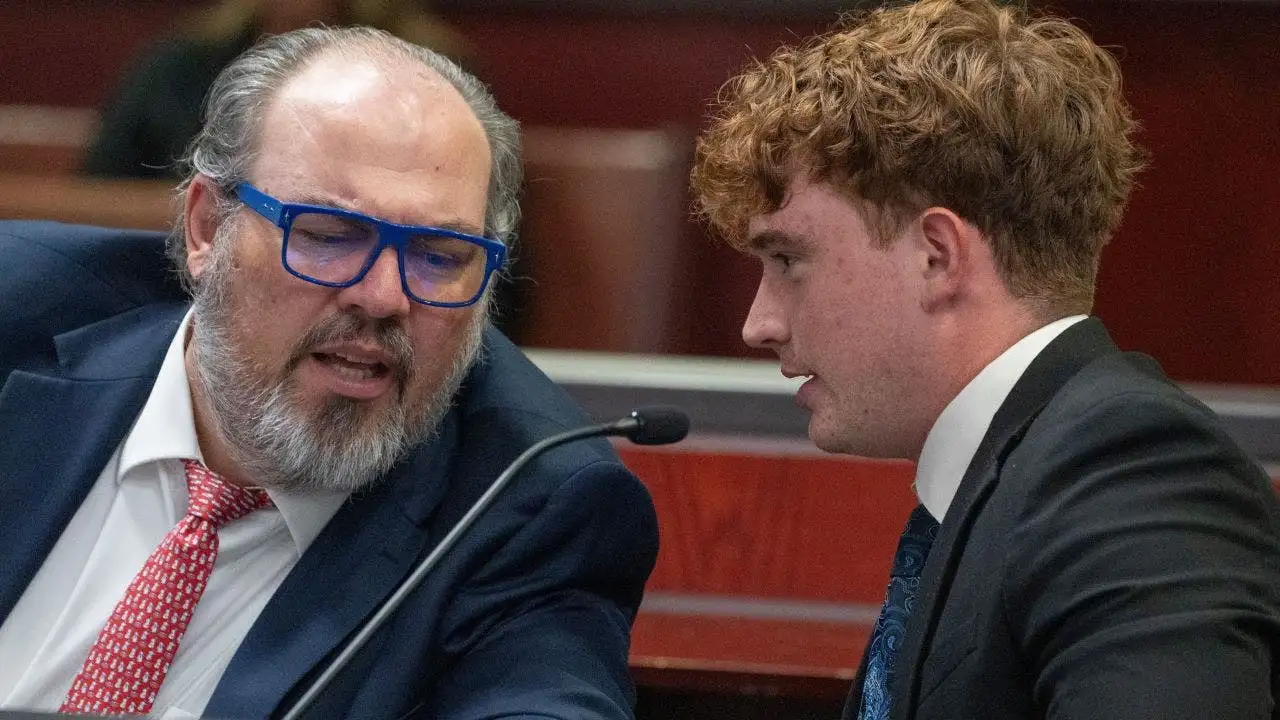
When the legal system finally opened the door to accountability, a former fraternity leader named Carter Eslick stood before a judge in Coconino County Superior Court. He was just 20 years old, barely older than the student whose life was cut short. Eslick was the pledge master for Delta Tau Delta at the time of the incident, meaning he had been given direct authority over the newest members of the chapter. That title did not make him an adult with medical training; it made him the person responsible for overseeing a ritual that turned into a death scene. On Wednesday, he was sentenced to two months in jail after pleading guilty to a felony hazing charge. In court, with Colin’s parents sitting nearby, Eslick said he takes “full responsibility for the hand I played in that ritual.” Those words are rare in hazing cases. Many similar deaths never lead to charges, or they are swept aside in settlement agreements that protect institutions rather than young lives. Yet even with this admission, no sentence can be proportionate to the grief that Colin’s family now carries. Two months of incarceration will never bring him back. It will not place his elbows on a dinner table during the holidays, or answer his phone when a friend calls to share good news. What the sentence can do is acknowledge, in the narrow language of the law, that caring for a group of students includes the responsibility to say no when a so-called tradition becomes dangerous. That is a small form of justice in an otherwise tragic case. The witnesses at the house said they tried to monitor Colin as he slept, adjusting his sleeping position multiple times. They may have believed they were being careful. But monitoring a sleeping, intoxicated person is not medical care. It is watching a problem get worse while pretending not to see it.
Colin’s story is heartbreaking, but it is not unique. Headlines from other campuses keep reminding us that the issue is larger than one fraternity or one Arizona town. At Ole Miss, two students died in the same week, one of them a fraternity brother at Phi Delta Theta. Robert Strang was found at an off-campus home, and another student, Aidan Hamilton, was also discovered dead. Authorities found packages of kratom, a commercial supplement sometimes called “gas station heroin,” at the sites of both deaths. It was not immediately clear what role, if any, the substance played in their deaths, and Phi Delta Theta was not accused of wrongdoing. Still, the fraternity acknowledged the “profound tragedy” of losing two young men, and released a statement encouraging people to hold onto a collective commitment to health, safety, and well-being on college campuses. Nearby, at Penn State, testimony described an alleged fraternity cocaine distribution operation that had grown to kilogram amounts, with pledges helping package drugs. In Louisiana, reports described pledges being allegedly waterboarded and forced to chug milk as part of hazing rituals. The common thread is not just alcohol and drugs. It is the willingness of college students — often brilliant, driven, and eager to belong — to participate in behavior that injures others and can end lives. The problem is structural. It is cultural. It has been passed down for generations as if binge drinking and humiliation were the price of friendship. But the real price has become too high. Across the country, families are burying sons and daughters who simply wanted a place to belong.
Why do young people accept such abuse? It is not because they are weak. It is because the desire for community is one of the strongest forces in human life. When a fraternity presents membership as something to be earned through pain, a pledge may convince himself that the discomfort is temporary, that the people asking him to chug vodka or endure rituals are friends, that he is proving something important about himself. The reality is darker. Hazing creates an arbitrary gate by which power is cemented and obedience is tested. It is a counterfeit form of intimacy: a group that binds itself by shared danger rather than shared trust. The students who administered these rituals often convince themselves they are being loyal to tradition. But tradition is not a defense against death. A courtroom cannot accept “we’ve always done it this way” as a reason for losing a life. The sorority and fraternity world has been slowly confronting this issue for years, but progress is uneven. Every time a student dies, universities offer condolences and committees are formed. Then, too often, the cycle repeats. Young people need to be taught not only what not to do, but how to create genuine belonging without coercion. They need to understand that no letter on a sweatshirt is worth a funeral. They need adult leaders who are willing to step beyond public relations and actually change the rules.
The medical facts alone should be enough to stop every fraternity hazing ritual in the country. A blood-alcohol level of 0.45% is a lethal concentration. At that point, the brain is no longer simply “drunk.” It is struggling to regulate breathing, heart rate, and body temperature. The gag reflex can switch off, which means a sleeping person can drown in their own vomit. They can aspirate fluid into their lungs. They can experience seizures. Their body temperature can drop to dangerous levels. They can stop breathing entirely. This is how drinking games become tragedies. It happens in stages, and too often, no one recognizes the signs until it is too late. The witnesses in Colin’s case reported monitoring him and adjusting his sleeping position, as if that would be enough. Perhaps they thought that if he was breathing, he was fine. But someone who is deeply alcohol-poisoned may appear to be resting calmly while their body is in full medical crisis. The window for intervention is measured in minutes and hours, not the time it takes to debate whether to call authorities for fear of discipline. This fear is real. Students constantly worry that calling 911 will get them and their friends in trouble. Many universities have passed amnesty policies to protect student helpers, but even with these, the fear remains. It was likely present in that house at Northern Arizona University this past January. And it cost Colin Martinez his life. The only way to prevent such deaths is to make it easier for students to do the right thing in the moment, to separate temporary legal consequences from a permanent loss.
As we lay the stories of Colin Martinez, Robert Strang, and many others beside each other, it becomes clear that the true enemy is not any single fraternity, but a culture that equates risk-taking with loyalty. No college student should have to drink two bottles of vodka in order to become part of a group. No pledge should ever be waterboarded, forced to chug milk until their body rejects it, or asked to package drugs as part of their initiation. No family should receive a phone call saying their child is dead because someone thought they were “watching him.” Colin Daniel Martinez was much more than a statistic in a report about hazing. He was a person with a future, with quirks and dreams, with people who loved him and will miss him for the rest of their lives. His death deserves to be remembered not as a shameful footnote, but as a warning. It is also an invitation: to every fraternity president, every advisor, every university administrator, every student who has ever suspected that something was wrong but stood silent. There are alternatives to hazing. There are ways to build brotherhood that involve service, mentorship, shared adventure, and genuine conversation. There are ways to create belonging that do not ask someone to risk their life. The memory of Colin and all of the other young people lost to this menace should push us toward that better path. Carter Eslick’s sentence may be short, but his guilty plea and his open admission of responsibility create a crack in the wall of silence. We should walk through that crack, as families demand better laws, as universities rethink Greek life, and as students themselves decide that true friendship is not about what you can survive, but about who stands beside you when you need help. Before another bottle is opened, before another new member is told to prove themselves, let us remember the young man with the high blood-alcohol number and the bright future cut short. We owe it to him — and to ourselves — to make sure this does not happen again.