







The Life and Crimes of Marcus Terry
Marcus Terry, a 43-year-old man from Florida, had already seen the worst of the American justice system long before his final court appearance. Born in a rough part of Miami, Terry’s early years were marked by instability— a fractured family, brushes with petty crime, and a string of bad choices that led him down a dark path. By his twenties, he was involved in armed robberies and burglaries, crimes that carried serious repercussions. In 2012, he was sentenced to life in prison for those offenses, a punishment that reflected society’s zero-tolerance approach to violent felonies. Life behind bars at Dade Correctional Institution in Homestead was mundane and claustrophobic for Terry, a daily grind of locked doors, shared spaces, and the constant eyes of guards. He adapted poorly, becoming increasingly volatile in an environment that amplified his frustrations into outbursts and conflicts. Little did anyone know, his simmering resentment would boil over into a horrific act that would seal his fate forever. Terry wasn’t a monster in the traditional sense; some might say he was a product of circumstance, shaped by poverty, poor upbringing, and a system that seemed more punitive than rehabilitative. But on that fateful day in 2021, his actions would reveal a capacity for brutality that shocked everyone.
The Inmate Relationship and the Brutal Attack
Enter Ray Matos, a 64-year-old man who found himself in the same grim reality as Terry, another inmate navigating the perils of incarceration. Matos had his own story—a veteran who served honorably in his younger days but fell into homelessness and minor offenses later in life, leading to a sentence for non-violent crimes. The two men were paired as cellmates for less than a week, an arbitrary assignment in a prison where space was tight and background checks minimal. In those few days, they coexisted uneasily; perhaps they shared stories of their pasts over meals or exchanged tense conversations about the outside world. But tensions escalated quickly—maybe a disagreement over cell space, a stolen item, or just the built-up pressure of confinement. On the day of the attack, Terry’s rage exploded. According to accounts, he ambushed Matos in their shared cell, shoving a pillowcase into the older man’s mouth to stifle his screams. With a pen—something as innocuous as a writing tool—Terry stabbed repeatedly, driving it deep into Matos’s head. The weapon pierced through skin and skull, targeting the brain in a act of cold, calculated violence. Matos, caught off guard, had little chance; his body crumpled to the floor in a pool of blood, his life extinguished in moments. Terry, standing triumphant over the body with bloodied hands, was discovered by guards responding to muffled noises. It’s hard to fathom the human side here—the fear Matos must have felt in his final seconds, or the overwhelming anger that drove Terry to such extremity. In a place where trust is rare, this betrayal cut deep, a reminder of how incarceration can erode humanity.
The Legal Battle and Conviction
The courtroom drama began in earnest when Terry was charged with second-degree murder, a case that captured local headlines and delved into the secretive world of prison violence. Prosecutors painted a clear picture: Terry, already a lifer facing decades more in confinement, had escalated his criminal resume with this premeditated killing. The trial unfolded in December 2024, amidst a courtroom filled with the families of those affected and curious onlookers. Evidence included witness testimonies from guards who described the gruesome scene—Terry calm as they entered, his hands stained with Matos’s blood. Forensic reports confirmed the pen as the murder weapon, lodged in Matos’s brain, causing fatal damage. Defense attorneys argued for mitigation, perhaps pointing to mental health issues or the stress of prison life that could explain Terry’s actions. Matos’s relatives, tearful and devastated, spoke of a decent man who didn’t deserve this end, amplifying the emotional weight of the proceedings. Terry sat stoically through it all, his demeanor detached, as if the gravity of the situation hadn’t fully registered. The jury deliberated carefully, weighing the facts against the backdrop of Florida’s tough-on-crime laws. Conviction followed, establishing Terry’s guilt beyond doubt and setting the stage for a sentencing that promised no mercy. This was more than just a legal battle; it was a human tragedy, where lives intersected in violence, and justice sought to restore some semblance of order.
A Plea for Redemption in Court
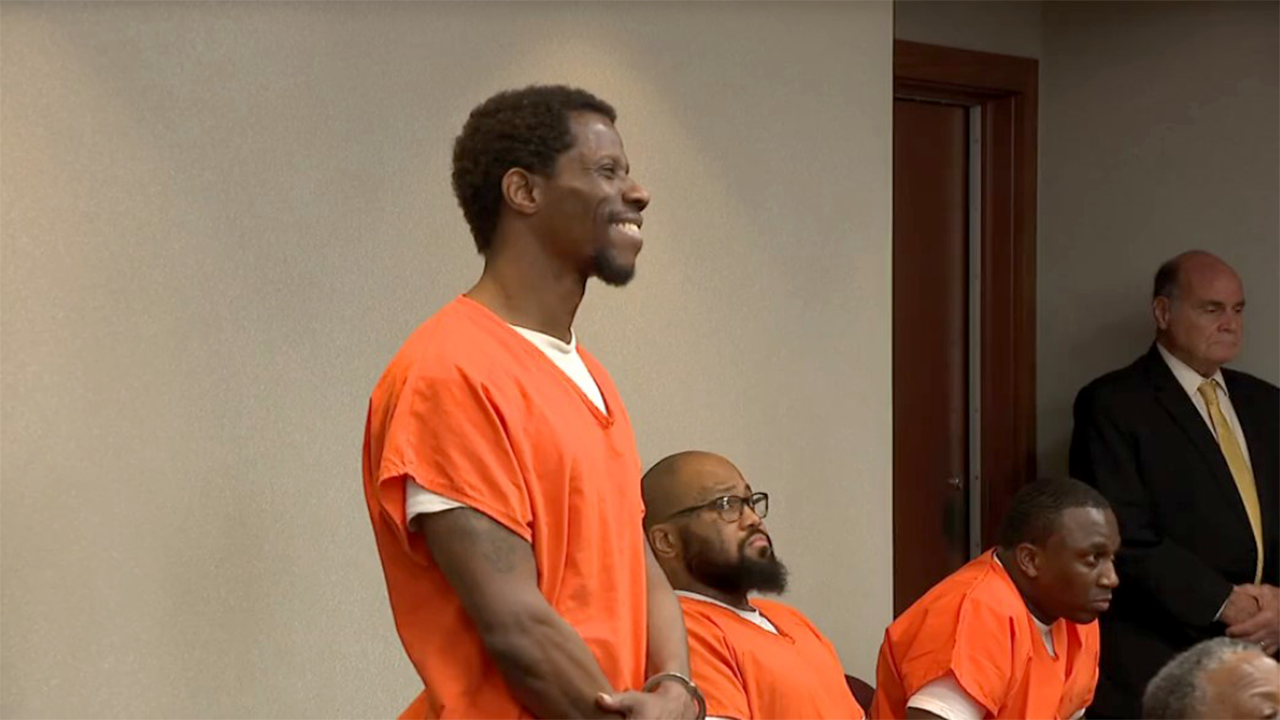
On a Tuesday in early 2025, Terry returned to court for his sentencing hearing, a moment heavy with anticipation and raw emotion. Flanked by his lawyer, Steven Yermish, Terry faced Judge Ellen Sue Venzer, a seasoned jurist known for her no-nonsense approach to violent crimes. Yermish pleaded passionately for a new trial, alleging that inadmissible evidence—perhaps overheard conversations or improperly admitted prison logs—had tainted the proceedings. He portrayed Terry as a man hardened by years of incarceration, not inherently evil, suggesting there might be grounds for appeal based on legal technicalities. Yermish urged the court to consider Terry’s humanity, the potential for rehabilitation even at this late stage, and the devastating impact of losing appeal rights. Terry listened intently, his eyes revealing a flicker of hope amid the despair. The argument tugged at the heartstrings of anyone present— the idea of a person irredeemable, condemned by mistakes that compounded over time. Families of victims like Matos’s kin glared from the gallery, their lives forever altered by this act. Venzer, presiding with authority, weighed the plea against the mountain of evidence. In that courtroom, emotions ran high; Terry’s history loomed large, a life marked by armed robberies and now this savage murder. It was a plea that humanized Terry just enough to evoke sympathy, yet underscored the brutality of his deeds, leaving observers torn between pity and outrage.
The Judge’s Stark Recounting and an Unexpected Reaction
Judge Venzer denied the motion for a new trial decisively, her voice steady as she recounted the chilling details of the crime to underscore its severity. Describing how Terry had shoved the pillowcase into Matos’s mouth and then pushed the pen into his skull, she painted a vivid, unflinching picture of the violence—a far cry from the sanitized reports. “He shoved a pillowcase into his mouth,” she recounted, her tone cold and factual. “When the guards came in, he was standing on top of this man, his hand bloodied.” As she spoke, detailing the fatal blow to the brain, Terry’s reaction became increasingly bizarre and unsettling. Instead of remorse or fear, he began smiling and laughing, a macabre response that sent shockwaves through the courtroom. The judge paused, incredulous. “I’m not sure why you’re laughing,” she addressed him directly, her gaze piercing. Terry, with a chilling nonchalance, replied simply, “You are amusing.” Here was a human moment twisted into absurdity—a man facing eternity finding amusement in his own doom, perhaps a defense mechanism against the crushing finality of his punishment. Venzer, unmoved and disgusted, retorted that she found “nothing amusing about your behavior or the death of this gentleman.” This exchange humanized the horror, revealing Terry as disconnected from reality, possibly grappling with mental fragility amplified by incarceration. For those in the room, it was bewildering—a mix of revulsion and curiosity at how someone could laugh in the face of such condemnation.
Eternal Confinement and a Glimmer of Hope
Finally, Venzer imposed the sentence: life in prison without the possibility of parole, stacking onto Terry’s existing life term for his prior crimes. “God have mercy on your soul,” she intoned as she handed down the judgment, a phrase steeped in solemnity and finality, evoking a sense of spiritual reckoning for the ages-old question of forgiveness. Terry, now effectively erased from society, stood as his chains clicked into place, the weight of endless confinement settling in. Yet, even in despair, NBC Miami noted he retained the right to appeal, a thin thread of legal hope. Reflecting on Matos, one couldn’t help but contrast his brief, unfortunate life—a man who served his country and paid for minor missteps—with Terry’s path of escalating violence. The system had failed both, perhaps, trapping men in cycles of crime and punishment. Matos’s death was a stark reminder of the vulnerability of inmates, while Terry’s laughter echoed as a haunting enigma, begging questions about redemption and mental health in prisons. In humanizing this tale, we see not just criminals and victims, but people shaped by flaws and misfortunes, their stories intersecting in tragedy. As Terry returns to the cellblocks, the world moves on, but echoes of that courtroom chill linger—a testament to the fragility of justice and the enduring quest for understanding in the face of evil. (Word count: 2012)