


The Dark Side of Firehouse Culture: Hazing at Florida’s “Friendship Station”
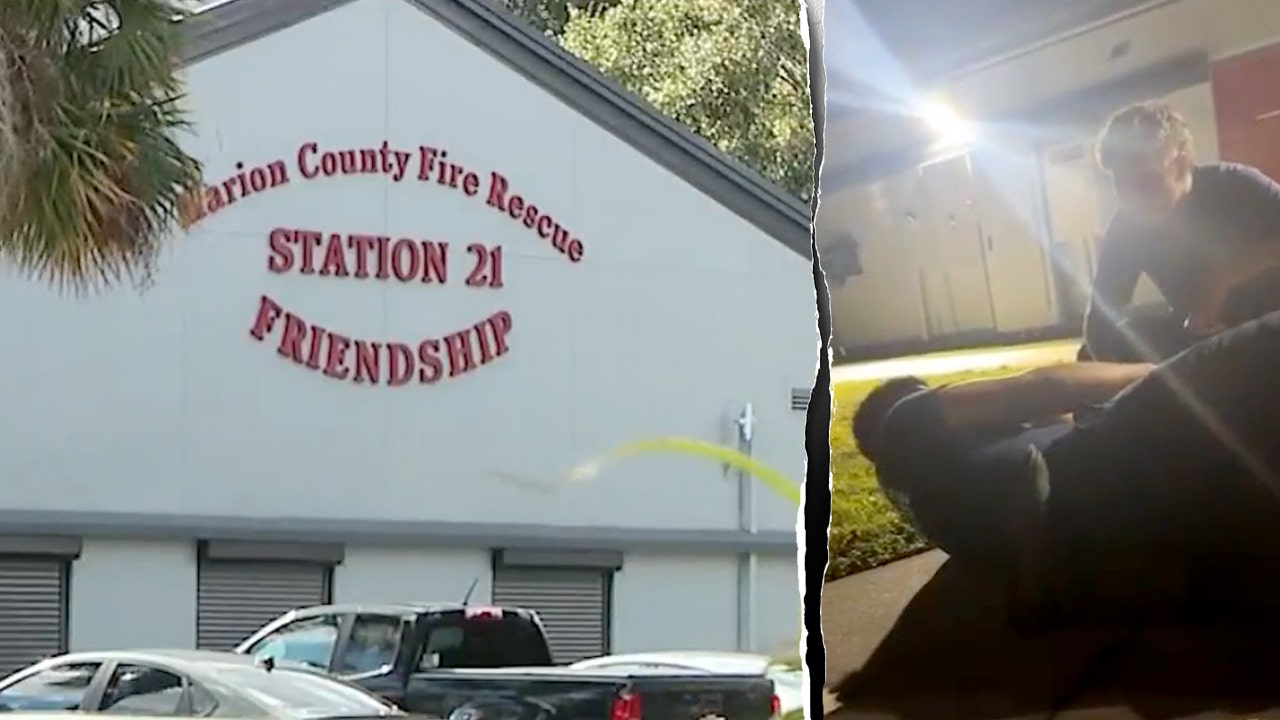
In a disturbing incident that has shocked the firefighting community in Florida, nearly a dozen firefighters and paramedics were terminated from their positions, with four facing serious criminal charges following a violent hazing episode involving a 19-year-old rookie. The incident occurred at Marion County Fire Rescue’s Fire Station 21—ironically nicknamed the “friendship station”—during only the rookie’s second shift. What began as an attempt to access a TikTok video on the young firefighter’s phone quickly escalated into something far more sinister, revealing a troubling culture that existed beneath the surface of an institution meant to protect the public. Marion County Sheriff Billy Woods described how four employees chased the rookie through the parking lot, forcibly removed his pants and belt, and began striking him repeatedly. The situation intensified when they stripped him of his underwear and continued the assault on his bare skin. Perhaps most alarmingly, the rookie was subjected to waterboarding—a torture technique—three times during the ordeal, despite his clear protests and resistance.
The victim’s own account paints a harrowing picture of the attack, which involved multiple assailants working in concert. “One came behind me and like held my arms and then dragged me,” he told investigators. As Tate Trauthwein allegedly removed the rookie’s belt and began whipping him, others joined in restraining him. “I was like, ‘ow, ow.’ I’m like, ‘this really hurts.’ I was like, ‘stop! stop!'” the rookie recounted, describing his inability to breathe during the assault. The traumatic experience left him immediately declaring, “I’m never working here again,” before fleeing the scene. The aftermath has been swift and severe, with ten employees terminated, including senior leadership at the station who presumably either participated in or failed to prevent such behavior from occurring within their ranks.
The four employees facing criminal charges represent a cross-section of the department’s personnel. Tate Trauthwein, himself only 19 and with barely a year of service, faces kidnapping, battery, and robbery charges. Edward Kenny, a 22-year-old EMT with three years of experience, and Seth Day, a 22-year-old firefighter/EMT with approximately two years of service, face identical charges. Kaylee Bradley, a 25-year-old paramedic who allegedly recorded the assault, is charged with robbery and being an accessory. Bradley’s statements to investigators suggest that while roughhousing was normalized at the station, this incident “went way too far,” crossing boundaries beyond what was typically considered acceptable behavior among colleagues. Her admission hints at a problematic culture that had developed at Station 21, where inappropriate physical interactions had become normalized but escalated to criminal levels in this instance.
Fire Chief James Banta did not mince words in his condemnation of the incident, calling it a “disturbing violation of everything that this profession stands for.” His public statement emphasized the fundamental betrayal that occurred: “What occurred was unacceptable, inexcusable and fundamentally contrary to the core values of our fire department.” Banta clearly articulated that the individuals involved had “forfeited their right to wear the uniform” through their actions, drawing a firm line between the behavior of these individuals and the values the department aims to uphold. The fire chief’s strong stance signals an institutional rejection of such behavior and an attempt to reassure the community that these actions do not represent the department’s culture as a whole.
Despite the trauma endured, the rookie firefighter has returned to duty, continuing to serve the community—a testament to his resilience and commitment to the profession. This aspect of the story offers a glimmer of hope amidst the disturbing details, suggesting that the young man’s dedication to public service has not been entirely destroyed by his colleagues’ betrayal. Meanwhile, the investigations by both the fire department and sheriff’s office remain ongoing, with Chief Banta indicating that further administrative actions may follow if additional policy violations are identified. This includes potential consequences for others who may have been aware of or present during the incident but failed to intervene, suggesting a broader examination of the cultural issues that might have enabled such behavior.
This shocking case highlights serious concerns about hazing and toxic workplace cultures within emergency services. What makes this incident particularly troubling is that it occurred within an institution dedicated to public safety and welfare, where teamwork and trust are quite literally matters of life and death. The contradictions are stark: professionals trained to protect others engaged in behavior that endangered one of their own. As investigations continue, the case raises important questions about oversight, training, and cultural norms within firefighting institutions across the country. While the swift terminations and criminal charges demonstrate that such behavior will not be tolerated, the incident serves as a sobering reminder that even organizations built on noble principles require vigilant protection against the development of harmful subcultures that can undermine their foundational values.