


On a seemingly ordinary Monday afternoon in Daytona Beach Shores, Florida, the gentle rhythm of the Atlantic waters and the serene coastal breeze were violently shattered by an unimaginable tragedy that claimed the life of a beloved community member. Tammy Jo Baker, a gentle and warm-hearted soul who was just a few short weeks away from celebrating her sixty-third birthday, was settling into her routine shift at the Dunlawton Avenue beach access ramp. For many years, Baker had been a familiar, deeply comforting presence throughout Volusia County, having recently transitioned her decades of dedicated public service to work directly for the local beach parking contractor. To those who knew her, she was far more than just an employee tasked with collecting parking fees; she was an essential, welcoming ambassador to the shoreline, offering friendly smiles and kind words to tourists and locals alike as they sought peaceful refuge in the Florida sun. On this particular Monday, around 12:40 p.m., the vibrant beachside atmosphere was irrevocably fractured. Inside her small, sunlit toll booth—a fragile structure designed merely to shield her from the elements rather than protect her from physical harm—Baker stood at the crossroads of a sudden and devastating event. Her immediate absence has left an irreplaceable void in the hearts of her family, friends, and the tight-knit community she served so faithfully for decades. The sheer randomness of the event underscores the profound fragility of human life, reminding us how a routine, peaceful workday can instantly transform into a scene of unimaginable sorrow. As her shell-shocked loved ones now prepare to mourn a woman who should have been celebrating a milestone birthday, the entire community is left grappling with the painful reality of a life of service cut tragically short in a place associated with joy and leisure.
The tranquil peace of the beachside afternoon was abruptly disrupted when a heavy utility pickup truck, moving at an estimated and highly inappropriate speed of forty miles per hour, barreled directly toward the fragile wooden structure where Baker was stationed. Sheriff Mike Chitwood would later describe the horrific scene to reporters with palpable anger and sorrow, pointing out the absolute vulnerability of the toll taker’s booth. Constructed of basic, lightweight materials designed solely for temporary shelter from the coastal wind and sun, the booth stood absolutely no chance against the crushing force of a multi-ton vehicle traveling at such velocity. Upon impact, the booth was completely obliterated, crushed, and flipped entirely upside down, absorbing the full, concentrated kinetic energy of the collision. The sheriff somberly noted that the sheer physical trauma of the crash left Baker with virtually no avenue of escape, suggesting she likely perished almost instantly upon impact. Despite the terrifying chaos and danger of the crash site, nearby lifeguards acted with heroic urgency, immediately rushing to the mangled wreckage in a desperate, heartfelt bid to perform life-saving cardiopulmonary resuscitation. Tragically, their valiant efforts were performed under impossible circumstances, and the sixty-two-year-old was pronounced dead right there at the scene. The image of the flipped, shattered toll booth and the debris scattered across the warm pavement served as a grim, echoing testament to the violent forces at play, leaving onlookers, first responders, and passing families in a state of profound shock and disbelief at how quickly a peaceful, sunny afternoon could descend into a fatal, heart-wrenching disaster. The crash sent shockwaves through the immediate area, drawing people out of nearby retail shops and hotels, all staring in complete disbelief at the sudden wreckage of what had been a secure fixture of the beach entry point.
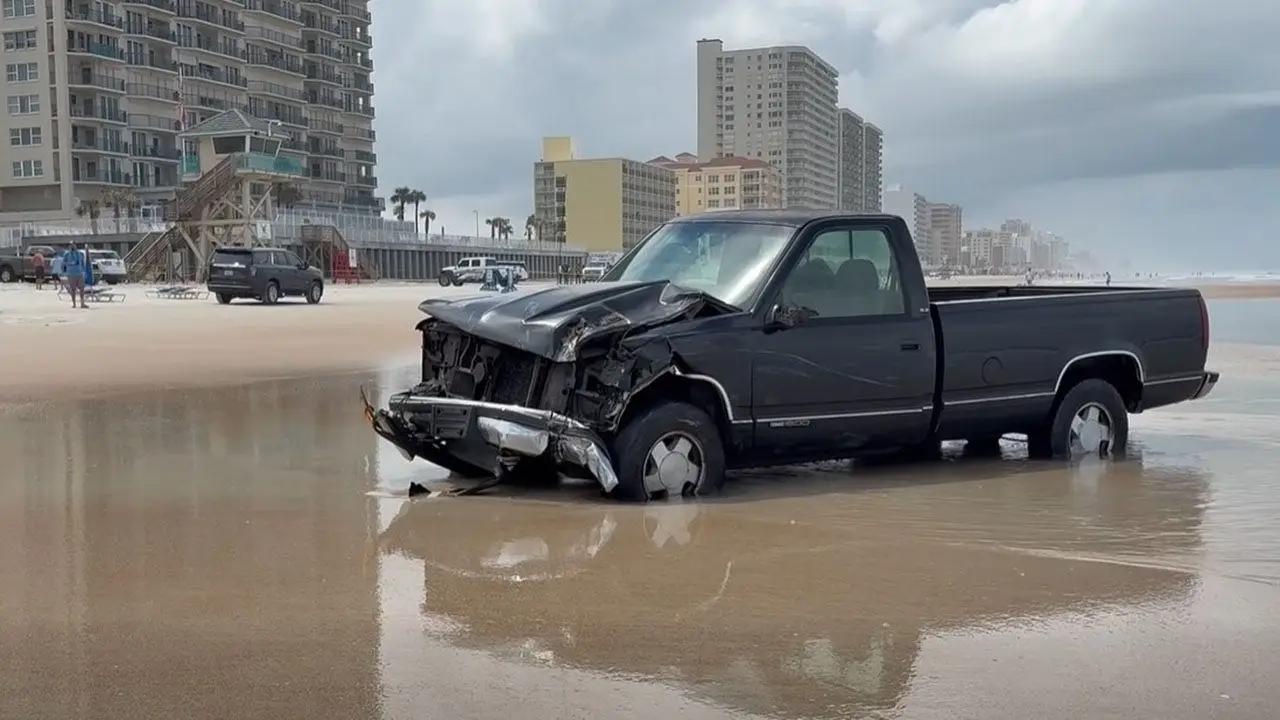
Rather than stopping immediately after the catastrophic collision, the driver of the pickup truck, identified by law enforcement as thirty-five-year-old Deanna Harrell, continued her erratic and highly dangerous trajectory down the access ramp and directly onto the active beach. Desperate to escape the consequences of her actions or perhaps thoroughly disoriented by the impact, Harrell drove the vehicle toward the water’s edge before attempting a sharp, frantic turn on the shoreline. However, the heavy machinery of the pickup truck proved to be no match for the soft, unforgiving Florida sand, and the vehicle quickly became hopelessly bogged down, spinning its tires in vain as the engines roared. The sight of the vehicle attempting to flee across the sandy expanse galvanized a crowd of stunned bystanders into immediate, courageous action. Demonstrating remarkable bravery in the midst of an active and thoroughly unpredictable emergency, everyday citizens ran toward the idling truck, surrounding the cabin and pulling Harrell from the vehicle before she could cause any further injuries to families enjoying their day on the beach. This collective act of civilian bravery highlighted the deep community instinct to stop injustice and protect fellow human beings, even as the horrific reality of what had occurred nearby began to weigh heavily on the minds of the witnesses. The sudden transition of these beachgoers from a state of relaxation to a chaotic, citizen-led intervention paints a highly vivid, heartbreaking picture of the community’s shared resilience in the face of sudden, senseless trauma, illustrating how everyday people stepped up to prevent further catastrophe when tragedy struck their beloved shoreline.
As deputies from the Volusia Sheriff’s Office arrived to secure the scene, a darker and deeply troubling dimension of the tragedy began to unfold. Upon approaching the suspect, deputies immediately noted a heavy, unmistakable odor of alcohol emanating from both Harrell and her vehicle, raising immediate suspicions of severe impairment. Sheriff Chitwood confirmed that investigators were conducting thorough field sobriety and chemical tests to determine the exact level of Harrell’s intoxication at the time of the crash, promising a meticulous investigation to ensure justice is served. The contrast between the two women involved in this incident is stark and profoundly tragic: on one hand, a mature public servant dedicated to her job, looking forward to her retirement years, and beloved by her family; on the other, a younger woman whose allegedly reckless decisions behind the wheel ended a life and shattered her own future in an instant. The devastating consequences of driving while impaired were laid bare on the blood-stained sand of Daytona Beach Shores, leaving a collective sense of frustration and anger among the law enforcement personnel who are far too familiar with the preventable nature of such crashes. The senselessness of the act was a recurring theme in the sheriff’s public address, capturing the deep indignation of a community forced to witness the fatal cost of systemic negligence and irresponsible behavior on their local roads and beaches, reminding all of the deadly cost of choosing to drive under the influence. This incident leaves a permanent scar on the local community, raising serious questions about how such egregious disregard for safety could manifest on a family-friendly beach ramp, and sparking a renewed local demand for stricter enforcement of traffic laws around areas of public recreation.
This heartbreaking incident also casts a glaring light on the systemic vulnerabilities faced by outdoor civil servants, parking attendants, and environmental workers who perform their duties in highly exposed settings. Toll booths and parking kiosks positioned at beach entry points are often located directly in the path of vehicular traffic, yet they are rarely reinforced with heavy barriers, steel bollards, or protective infrastructure that could withstand a high-speed collision. Tammy Jo Baker’s tragic death highlights the critical need to reevaluate safety protocols and structural protections for these frontline employees, who deserve to feel secure while performing their essential roles. Baker had spent a lifetime working within the Volusia County system, transitionally shifting to the private contractor handling beach parking as a way to remain active, connected, and supportive of her local community. It is a bitter irony that her commitment to serving the public in a beautiful, natural environment ultimately placed her in a position of extreme hazard without adequate physical defense. As safety advocates and county officials begin to discuss the broader implications of this tragedy, the conversation must center on protecting human lives and ensuring that no other family has to endure the pain of losing a loved one to a preventable workspace collision. We must recognize that behind every municipal booth, construction barricade, and roadside post is a human being with a story, a family, and a lease on life that should never be cut short due to a lack of protective design in our public infrastructure. The loss of Tammy Jo Baker should serve as an urgent catalyst for municipal governments across the country to reinforce these exposed structures, converting them from fragile glass boxes into secure sanctuaries for those who keep our parks and beaches running smoothly.
In the end, the story of Monday’s crash is not merely a chronicle of vehicular homicide or a sterile legal case file; it is the deeply human story of a life suddenly and unfairly extinguished. Tammy Jo Baker was a daughter, a colleague, a neighbor, and a friend whose warmth had touched countless lives throughout her decades of residency and employment in Volusia County. As her family navigates the agonizing reality of planning a funeral instead of a sixty-third birthday celebration, the local community has begun setting up makeshift memorials near the Dunlawton Avenue ramp, leaving flowers, written notes, and prayers in honor of the woman who greeted them every day with a friendly demeanor. Sheriff Chitwood’s raw, emotional assessment of the tragedy as “just senseless” echoes the widespread grief and exhaustion felt by first responders and residents alike who are weary of seeing innocent lives destroyed by preventable acts of negligence. This tragedy serves as a solemn, sobering reminder of our shared responsibility to protect one another on the road, to intervene when we suspect someone is unfit to drive, and to cherish the quiet, everyday moments with those we love. While the legal process will eventually run its course and bring accountability, the memory of Tammy Jo Baker’s kind spirit will endure, forever woven into the fabric of the beach community she loved and served so well until her very last breath. Let us honor her legacy by cultivating a culture of safety, mindfulness, and empathy, ensuring that her voice is never forgotten in the pursuit of justice, safety reform, and community healing.