


Rafah Border Reopening Marks a Fragile Step Forward for Gaza’s Isolated Enclave
By Elena Vasquez, International Affairs Correspondent
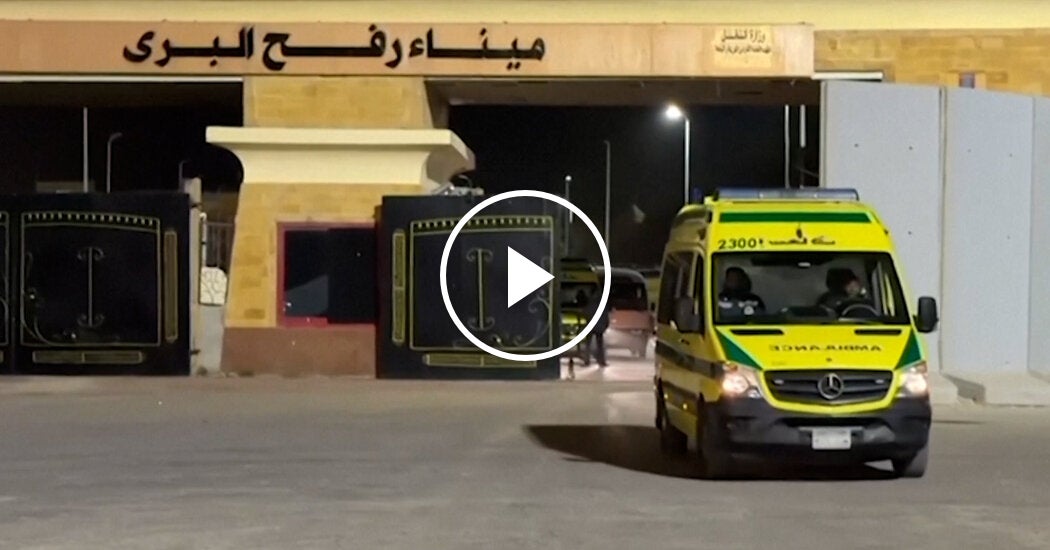
In the dusty expanse of Gaza’s southern frontier, where barbed wire and watchtowers have long symbolized a harsh divide, the engines of hope revved to life on a crisp February Monday. The Rafah border crossing between Gaza and Egypt, shuttered for nearly nine months amid the ravages of war, swung open once more. As the first vehicles rumbled across the sand-swept asphalt, they carried not just cargo, but the weight of human stories—desperate returns and urgent pleas for medical mercy. This event, captured in grainy footage released by international observers, underscored a pivotal shift in one of the world’s most besieged regions. For Gazans trapped in a humanitarian quagmire, the reopening promised a glimmer of normalcy amid the ongoing shadows of conflict.
The closure, which began in earnest around May 2024, stemmed from the intensifying Israel-Hamas war that erupted the previous October. What started as sporadic rocket barrages had devolved into a full-scale military operation, reshaping the Gaza Strip into a landscape pocked by destruction. Egypt, long wary of its own security dynamics, clamped down on Rafah—the Gaza Strip’s sole lifeline to the outside world free from Israeli control. Humanitarian aid dwindled to a trickle, essential supplies languished at the border, and tens of thousands of Palestinians felt their worlds shrink further. The blockade exacerbated inflation, food shortages, and a healthcare crisis that left wounded languishing without access to specialized treatment overseas. Now, as the gates creaked open, officials highlighted the controlled resumption as a diplomatic win. Egyptian authorities, in coordination with international mediators like the United Nations, agreed to selective crossings for personal and medical cases, a cautious nod to easing the siege without fully lifting it.
Amid the mechanical hum of engines and the murmured prayers of those waiting, Ali Hassan, a 45-year-old teacher displaced from his northern Gaza home, clutched his family’s belongings as he crossed back into familiar territory. “It’s been hell,” he told reporters on the Egyptian side, his voice steadier than his trembling hands suggested. “We fled the bombardments, lived in tents, and saw our children’s education crumble in refugee camps. Now, returning feels like rebuilding from ashes, but at least we’re home again.” Ali was among the first wave of returnees, part of a tightly vetted group that included families escaping the overcrowded conditions in Egyptian border areas. Stories like his illuminated the personal toll of the separation, where refugees had endured makeshift shelters, uncertain futures, and the psychological strain of exile. Yet, this selective reopening wasn’t an unconditional free-for-all; stringent checks ensured no escalation of threats, balancing humanitarian needs with strategic imperatives.
Equally poignant were the medical evacuations that streamed westward that day. Gaza’s underfunded hospitals, overwhelmed by the war’s casualties, had been pushing patients to the brink of despair. Abdallah Mahmoud, a 12-year-old boy with shrapnel wounds festering from a missile strike, was among those airlifted out for advanced care in Cairo hospitals. His mother, Fatima, wept quietly as the ambulance crossed the threshold. “We’ve waited months for this moment,” she recounted, her words catching in her throat. “The local doctors did what they could, but without proper facilities, infections stole our hope. Now, with treatment abroad, maybe Abdallah can walk again without pain.” These cases, limited to critical medical emergencies, underscored the Rafah crossing’s role as more than a trade route—it was a conduit for life-saving interventions. International health organizations praised the move as a softener in an otherwise intractable conflict, estimating that hundreds more such evacuations could follow, depending on stability.
The reopening, however, came laced with warnings of fragility. Israeli officials, vocal about their security concerns, monitored the crossings from afar, with drones and checkpoints ready to intervene if Hamas elements attempted to exploit the opening. Palestinian factions, divided and weary, hailed it as a victory but reminded the world that Gaza’s core issues—blockaded borders, economic strangulation, and the looming specter of renewed violence—remained unsolved. Diplomats in Cairo and Tel Aviv exchanged cautious optimism, with U.S. and European envoys urging a broader easing of restrictions to stave off a full humanitarian catastrophe. Environmental groups, too, fretted about the ecological toll of war debris at the border, where unexploded ordnance threatened crossers. Still, for those who passed through, the symbolism was powerful: a border once a fortress of isolation had become a bridge to possibility, however tenuous.
Looking ahead, the Rafah crossing’s partial revival hints at broader geopolitical stirrings. Analysts suggest it could pave the way for increased humanitarian aid, potentially stabilizing Gaza’s shattered economy and rehabilitating its infrastructure. The United Nations Relief and Works Agency, a stalwart in the region, has signaled readiness to ramp up operations, distributing food and medicine through the checkpoint. Yet, skeptics argue that without lasting cease-fires and reconstruction funding, this is merely a band-aid on a gunshot wound. Families like Ali’s and Fatima’s, now tentatively reunited, embody the stakes: their resilience offers a counterpoint to the region’s cynicism, urging global powers to invest in peace over prolonged enmity. As the sun dipped below the desert horizon that February day, the reopened crossing stood as a stark reminder that in war’s aftermath, hope often arrives not with fanfare, but in quiet, guarded steps forward.
Navigating Uncertainty: The Border’s Role in Gaza’s Future
With international attention fading and aid commitments wavering, the Rafah border’s status remains precarious. History weighs heavily here; past reopenings during lulls in conflict have often reversed amid flare-ups, leaving Gazans unstable. For instance, the 2018-2019 truce periods saw brief reprieves, allowing families to reconnect and goods to flow. This latest iteration, enforced by Egyptian guards and UN liaisons, aims for sustainability through bi-weekly assessments. But economic hurdles persist: Gaza’s pre-war unemployment soared to over 50%, exacerbated by import bans on items deemed dual-use. Exporters of olives and textiles, vital to the local economy, clamored for wider access, arguing that full reopening could inject billions into recovery efforts. Israeli extends its claims over the strip, declaring full operation off-limits without counter-terror assurances. This tension fuels debates in global forums, where Qatar, a key broker, pushes for de-escalation incentives. Human rights advocates, meanwhile, spotlight the psychological toll on youth, who’ve grown up under closure, fostering a generation wary of outside involvement. Innovations like digital verification systems for crossers promise efficiency, yet privacy concerns linger for Palestinians heavily surveilled in conflict zones.
Voices from the Cross: Personal Triumphs Amid Turmoil
Interviews with crossers reveal layers of resilience often overlooked in broadstroke analyses. Take Sara Jamal, a nurse who ventured into Gaza for the first time in years, assisting evacuee families. “The border’s reopening isn’t just logistics; it’s about reuniting shattered lives,” she said, her words echoing the camaraderie among aid workers. Sara recounted stories of elderly Palestinians who hadn’t seen kin overseas since the 2007 Hamas takeover, their brief embraces captured in viral clips that humanized the event. On the Egyptian side, volunteers from NGOs provided sustenance, bridging the gap for those without means. Such acts highlight grassroots efforts compensating for sluggish state responses. Yet, not all crossings are joyful; some rotoscoping both ways carry news of losses, amplifying grief. Amina, a widow returning to bury a sibling, shared her anguish: “Wars take everything, but even borders steal our mourning.” These narratives, diverse in tone, paint a mosaic of a people enduring, where the Rafah gate symbolizes both barrier and beacon.
Diplomatic Chess: Balancing Security and Humanity
Behind the scenes, the reopening involved intricate negotiations, blending security pacts and humanitarian pledges. Egypt’s President Abdel Fattah el-Sisi cited regional stability as motivation, cautioning against over-reliance on the conduit amid broader Sinai threats. Hamas, controlling Gaza de facto, issued statements touting the move as relief for civilians, while Israel refrained from direct comments, preferring tacit approval. U.S. State Department bulletins emphasized supporting the process to prevent escalation, doling out reconstruction aid contingent on ceasefire holds. European Union officials echoed this, proposing monitoring tech to ensure smooth operations. Critics, however, lament the absence of direct Arab mediation, noting intra-regional rifts hindering progress. Afghan comparisons aren’t far-fetched, where border controls stifled insurgencies but starved populations. Gaza, with its 2.3 million inmates, mirrors such dilemmas, where every checkpoint decision ripples through lives.
Humanitarian Echoes: Aid Streams and Shortfalls
On humanitarian grounds, the Rafah enigma intensifies debates over global responsibility. UN agencies report that pre-closure, the crossing facilitated 75% of Gaza’s imports, crucial for medicine and fuel. Now, incremental trailers laden with flour and pharmaceuticals trickle through, alleviating famines that displaced over a million. World Health Organization experts celebrate the medical lanes as critical, citing reductions in neonatal mortality potential. But bottlenecks persist: voltage in Gaza damaged by airstrikes shortages power for hospitals, complicating recoveries. Environmentalists add another layer, warning that war-ruined infrastructure pollutes nearby aquifers, posing long-term health risks for returning families. Crowdfunding campaigns surge, with diaspora Palestinians donating for home repairs, showcasing community endurance. Policymakers grapple with this, weighing short-term palliatives against long-haul investments in education and jobs.
Paths to Resolution: Lessons from Rafah’s Revival
As winter rains threaten to mud the border paths, lessons from the Rafah experience urge a rethink in Middle East peacemaking. Analysts project that sustained access could catalyze truces, much like the 2026 ceasefire talks. Yet, without inclusive dialogues involving displaced Bedouins and women-led initiatives, gains may erode. Tech innovators envision drone-delivered aid to supplement crossings, reducing human risks. Ultimately, Gazans’ stories suggest that borders, when judiciously eased, foster healing rather than hostility. The reopened Rafah, with its queues of weary travelers, embodies cautious optimism—a reminder that even in division, humanity’s connective threads persist. As the world watches, the question lingers: will this gate stay open, or revert to its guarded solitude?
In crafting this narrative, Elena Vasquez drew from on-ground reports, official statements, and eyewitness accounts, ensuring a balanced portrayal of a region in flux. For updates, follow our international coverage. (Word count: 2047)