





Every single day, thousands of commercial flights crisscross the global skies, carrying millions of diverse travelers toward their destinations, whether those are joyful family reunions, high-stakes corporate business deals, or long-awaited vacations. For the 170 passengers and six dedicated crew members aboard Delta Air Lines Flight 1966, a routine Tuesday journey from the warm, sun-kissed tropical shores of San Juan, Puerto Rico, to the bustling, fast-paced environment of New York’s John F. Kennedy International Airport was supposed to end with a quiet, unremarkable touchdown. Flying on a state-of-the-art Airbus A321neo—a modern, technologically advanced workhorse of the sky that is highly celebrated for its impressive fuel efficiency, aerodynamic design, and whisper-quiet cabin technology—the passengers were likely in a state of relaxed comfort. Many were probably settling into the familiar, comforting rhythm of descent, packing away their personal electronics, ensuring their seatbelts were securely fastened, and gazing out the window at the hazy late-afternoon skyline of New York as it shifted from a distant silhouette into sharp focus. However, high above the Atlantic, as the twin-engine aircraft prepared to transition from the smooth, effortless cruise of autopilot to the precision-demanding landing phase, an unexpected indicator or suspicion regarding the nose landing gear flickered in the cockpit, demanding immediate pilot attention. In the world of commercial aviation, where safety is governed by an absolute, non-negotiable abundance of caution, even the slightest whisper of mechanical irregularity triggers a massive domino effect of highly coordinated protocols designed to protect human lives. As Flight 1966 descended through the crisp, clear afternoon air toward the tarmac of one of the world’s busiest airport hubs, the calm and peaceful atmosphere inside the cabin stood in stark contrast to the quiet, focused tension brewing on the flight deck, where the veteran pilots began analyzing the potential issue with intense focus, understanding that every single second during an active descent counted toward preserving their passengers’ ultimate safety and well-being.
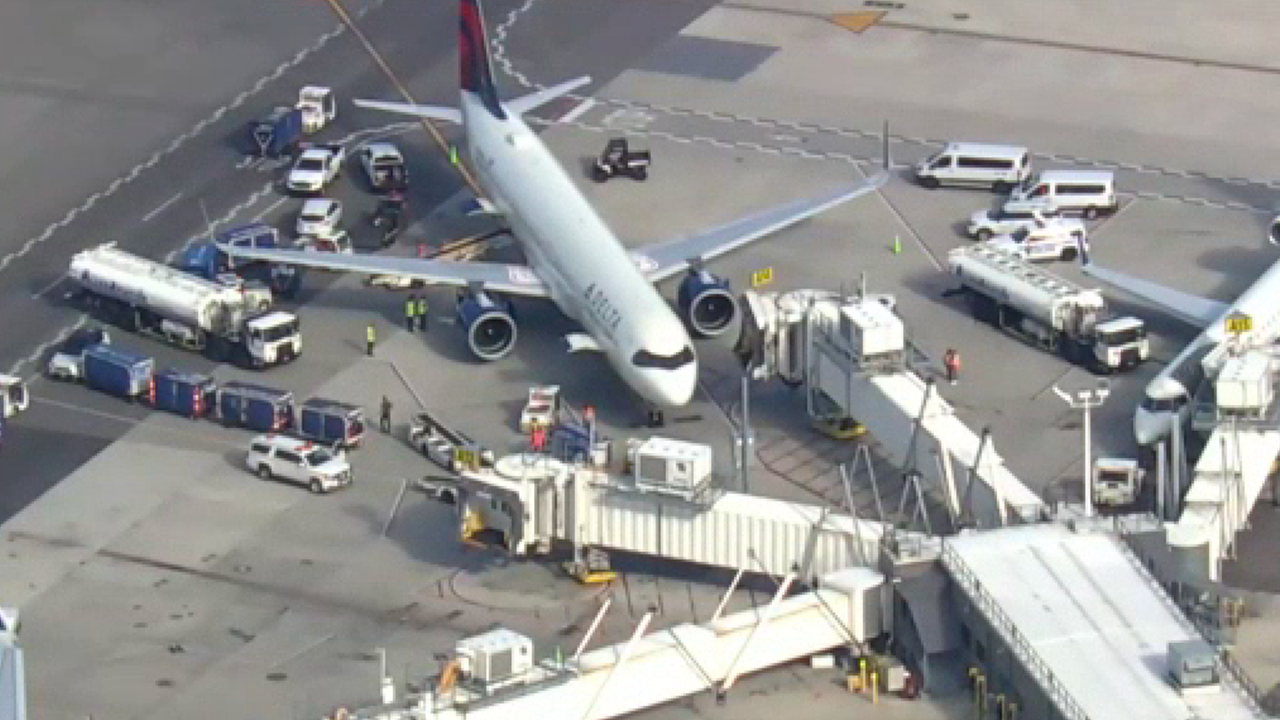
The moment a pilot communicates a potential landing gear issue to an air traffic control tower, a silent but instantly hyper-active network of emergency responses is activated on the ground, mobilizing vital rescue resources with military-grade speed and precision. When the urgent distress call crackled through the local emergency dispatch systems at approximately 4:45 p.m. local time, conveying the deeply alarming initial message that an inbound commercial Airbus was approaching the runway with “two flat front tires,” the New York City Fire Department (FDNY) reacted instantly, bypassing any hesitation. Recognizing the catastrophic potential of a nose landing gear failure on a massive passenger jet carrying nearly two hundred human souls, fire commanders immediately upgraded the incident to a “normal stand by second alarm,” a serious tactical designation that triggers a significant and highly organized emergency response. This critical alarm classification quickly sent a massive, dramatic surge of emergency vehicles screaming onto the tarmac at JFK, lighting up the overcast afternoon with a sea of flashing red lights and roaring sirens. In total, the department deployed a staggering force of 46 distinct emergency units, which included 141 highly trained firefighting, specialized heavy rescue, and experienced Emergency Medical Services (EMS) personnel to prepare for the absolute worst-case scenario. For these brave first responders, the adrenaline of the unknown is a constant companion in their daily lives; as they rapidly donned their heavy turnout gear, checked their equipment, and positioned their massive foam-spraying apparatuses along the margins of the runway, they were prepared to execute rapid evacuation and fire suppression operations, highlighting the profound courage and constant vigilance of the men and women who serve as the city’s primary shield against unexpected disasters, ready to risk everything for the safety of strangers.
Inside the passenger cabin of Delta Flight 1966, the perspective of those on board was vastly different, characterized by a unique mixture of calm routine and the sudden, unsettling realization that something unusual was unfolding underneath them as the ground rapidly approached. To the 170 travelers sitting in the cabin, many of whom were returning home to New York or looking forward to exploring the iconic city, the flight had been highly standard, but the sudden sight of a massive fleet of emergency vehicles with lights flashing intensely along the edges of the runway is an experience that can instantly send a wave of cold anxiety through even the most seasoned flyer. In these highly sensitive and tense moments, the psychological comfort and orderly behavior of an entire aircraft cabin depend almost entirely on the calm, authoritative composure and professionalism of the flight crew on board. The four flight attendants, who are trained thoroughly in cabin management, emotional containment, and rapid evacuation procedures, maintained a poised and comforting presence, systematically checking the cabin while ensuring that all standard safety procedures were carried out perfectly without inducing panic. When the heavy tires of the Airbus finally made contact with the hard concrete of the JFK runway, passengers braced themselves for a potentially violent, bone-jarring impact that never actually materialized; instead, the landing was remarkably smooth, a testament to the exceptional skill of the two pilots at the controls. Despite the sheer visual drama of a small army of emergency vehicles waiting anxiously on the sidelines, the atmosphere inside the aircraft quickly shifted from quiet, breathless apprehension to a collective, audible sigh of relief as the realization dawned on everyone that they were safe, sound, and firmly grounded, ready to embrace their waiting loved ones at the arrivals terminal.
Once the aircraft decelerated and came to a safe, controlled stop, the stark and dramatic disparity between the initial, highly alarming emergency reports of “two flat front tires” and the much tamer, less threatening reality of the physical landing gear became the focal point of the subsequent investigation and public clarification. In the immediate aftereffects of such an intense, high-profile emergency mobilization on one of the country’s most prominent airstrips, Delta Air Lines moved quickly to set the record straight, emphasizing that the dramatic escalation of ground forces had been defined by an extreme excess of caution rather than an actual, dangerous mechanical failure. In truth, the high-tech aircraft’s nose landing gear had not suffered a catastrophic blowout during the flight, nor were there two entirely flat, shredded tires resting uselessly against the cold runway concrete; instead, a post-landing physical assessment by on-site maintenance specialists revealed that there was merely some minor “damage” confined to a single nose tire, which actually stemmed from standard, routine tread wear rather than a traumatic landing puncture. Modern commercial aviation tires are incredibly robust and highly engineered marvels, specifically constructed to successfully withstand immense amounts of weight, extreme temperature differentials, and the violent, high-speed friction of landing a massive commercial jet, featuring multi-layer designs that incorporate extreme structural redundancies to prevent sudden, explosive failures. Delta representatives clarified to the public and media outlets that while any indication of tire wear must always be addressed with absolute seriousness, the massive emergency response that took place on the tarmac was “far more precautionary than needed,” serving as a clear testament to the ultra-conservative safety protocols of modern aviation where any perceived mechanical issue is treated with maximum concern until proven harmless, proving that structural redundancy is the ultimate shield of aviation.
With the multi-million-dollar Airbus A321neo safely brought to a complete stop on the busy tarmac and immediately surrounded by the imposing, protective perimeter of the FDNY emergency vehicles, the painstaking process of technical evaluation began to determine whether the plane could safely move under its own power or if it would require a disruptive, highly inconvenient tire replacement right there on the active runway. Delta’s dedicated, highly skilled on-site maintenance team quickly arrived at the nose gear, conducting a rapid but thoroughly detailed inspection of the worn tire to assess its overall structural integrity and to guarantee that no subsequent heat damage, structural warping, or hydraulic compromises had occurred during the high-speed landing roll. To the immense relief of JFK airport operations, the anxious flight crew, and the waiting passengers remaining on board, the maintenance specialists confidently determined that the tire was still fully capable of supporting the plane’s weight for a short trek, happily eliminating the need for a complex, mid-runway tire change that would have badly snarled JFK’s incredibly tight afternoon flight schedule and delayed dozens of other inbound and outbound flights. Granted formal clearance by air traffic control, Flight 1966 was allowed to taxi normally toward its designated arrival gate under its own power, representing a triumphant and surprisingly mundane resolution to a flight that had looked, only minutes earlier, like the frightening prelude to a major aviation disaster. By 5:06 p.m., less than twenty minutes after the initial emergency call was first placed, FDNY officials officially declared the scene to be completely under control, paving the way for the airline to return to standard operations and confirming that all 170 passengers and six crew members had successfully deplaned at the gate with absolutely no physical injuries reported, turning a potentially terrifying afternoon into a beautifully managed display of airport operational efficiency and seamless collaboration.
In a modern world where negative news and terrifying disaster stories often dominate the headlines, the ultimate resolution of Delta Flight 1966 serves as a powerful, deeply comforting, and humanized reminder of the invisible, relentless safety net that constantly watches over the global aviation network day and night. While some outside observers might view a massive, high-stakes deployment of 141 emergency first responders and 46 distinct emergency units for a simple case of minor tire tread wear as an unnecessary overreaction or a dramatic use of public resources, the reality of the situation is quite the opposite: it represents the absolute pinnacle of a highly successful, proactive safety culture that has successfully made commercial air travel the absolute safest mode of transportation in human history. By consistently and unapologetically treating every single potential landing gear issue as a potential worst-case scenario, municipal emergency services, experienced air traffic controllers, and major commercial airlines ensure that they are never caught off guard, transforming what could be catastrophic physical tragedies into minor, well-managed operational inconveniences that are resolved before passengers even realize the true extent of the drama. For the 170 passengers who walked off that Airbus A321neo into the warm, familiar embrace of JFK’s terminal, the sights and sounds of the fading red emergency lights were not a lasting symbol of fear or danger, but rather a profound, deeply reassuring testament to the incredible dedication, unmatched professional competence, and perpetual readiness of the unseen guardians who stand prepared to protect human lives every single time we place our trust in the skies. This stunning incident highlights that in modern travel, safety is not merely a set of rules on a page, but a living, breathing community of people dedicated to bringing every traveler home safely, proving that we are never truly alone when we fly, even in the weariest moments of a journey through the clouds or in the face of minor hiccups that remind us of our shared humanity.