



The Brewing Storm of Defamation in Washington D.C.
In the high-stakes world of Washington politics, where reputations are built and shattered in the blink of an eye, FBI Director Kash Patel found himself at the center of a storm this week. A story in The Atlantic, penned by journalist Sarah Fitzpatrick, painted a damning picture of Patel’s leadership at the bureau, claiming that bouts of excessive drinking had led to conspicuous inebriations and unexplained absences that alarmed officials both inside the FBI and at the Justice Department. Patel, a fiery figure known for his loyalty to former President Donald Trump and his controversial tenure in various intelligence roles, didn’t take kindly to the accusations. He lashed out publicly, declaring the article “categorically false and defamatory” and threatening to sue. With his now-infamous quip—”Print it, all false, I’ll see you in court — bring your checkbook”—Patel set the stage for what could become a high-profile legal battle, reminiscent of other media clashes involving powerful figures in D.C. Like any person thrust into the spotlight, Patel’s response seemed deeply personal, a mix of outrage and self-defense, highlighting the human toll of public scrutiny. He portrayed himself as a victim of biased reporting, drawing parallels to how other conservative voices had been unfairly targeted. This incident wasn’t just about allegations of personal failings; it underscored the increasingly polarized media landscape, where outlets are pitted against government officials in a game of credibility. For Patel, a man whose career has been defined by defiance against bureaucracy, this felt like another unfair assault on his character.
The article itself delved into specifics that, if true, would have been career-ending for anyone in Patel’s position. It alleged that his drinking had become so pronounced that it disrupted bureau operations, leading to concerns among colleagues who described his absences as erratic and his behavior in meetings as erratic. One particularly sensational claim stood out: in an instance after a night of heavy drinking, Patel’s security detail reportedly struggled to reach him inside a locked room, even going so far as to request “breaching equipment”—specialized tools to force entry without cause for public alarm. This wasn’t just idle gossip; such an event would imply significant security risks, potentially compromising national safety if an FBI director was incapacitated. Readers of the piece might imagine Patel in a hazy, solitary room, oblivious to the world around him, while his team scrambled outside, a scene straight out of a thriller novel. The Atlantic, under editor Jeffrey Goldberg, framed these anecdotes as evidence of leadership instability, sourced from “people familiar with the matter” and internal discussions. For those outside the D.C. bubble, this might evoke images of the pressures of high office—late-night decisions, constant travel, and the temptation to seek solace in vices. Patel, a self-described outsider who rose through the ranks battling what he saw as deep-state resistance, would likely argue that such claims ignored his transformational changes at the FBI, where he’d reportedly pushed for transparency and accountability. Yet, the article’s tone suggested a narrative of personal downfall, humanizing Patel’s struggles but in a way that painted them as insurmountable flaws rather than relatable burdens.
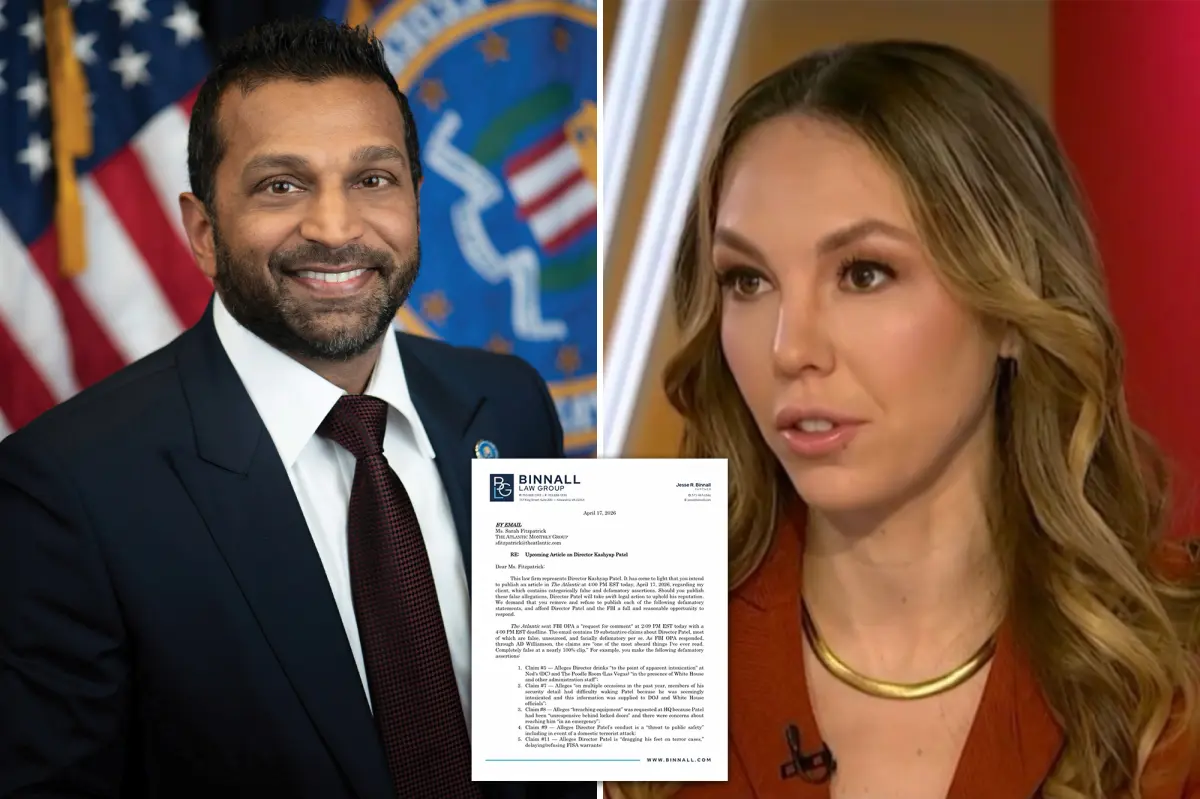
Enter Jesse Binnall, Patel’s sharp-witted attorney, who escalated tensions by sharing a damning letter on X (formerly Twitter) that he had sent to Fitzpatrick before publication. The letter accused The Atlantic of recycling “vague, unattributed sourcing” and warned that most substantive claims were “false, unsourced, and facially defamatory.” This pre-publication notice added a layer of intentionality to the outlet’s decision, making it easier for a defamation suit to succeed if facts emerged proving the inaccuracies. Binnall’s missive felt like a gauntlet thrown down, challenging the media to reconsider their rush to print in an era of clickbait journalism. He called out the reliance on phrases like “some have characterized” or “officials have expressed concern,” which lacked concrete evidence. In human terms, this mirrored the frustration many feel when journalists overlook basic fact-checking in favor of narrative-driven stories. Binnall himself is a seasoned litigator, known for defending conservative figures against perceived liberal bias, and his appearance here was almost theatrical—a defender stepping into the fray to protect his client’s dignity. It painted a picture of Patel as a principled man wronged by a system that rewards sensationalism over truth, reinforcing the idea that media outlets sometimes operate as unchecked arbiters of fate. For observers, this exchange highlighted the blurred lines between journalism and activism, where stories can become weapons in broader cultural wars.
Diving deeper into the disputed claims, Binnall singled out the breaching equipment anecdote as particularly egregious, arguing it lacked any corroborating public record and seemed “fabricated or drawn from a single hostile and unreliable source.” He suggested that a minimal investigative step, like querying the FBI for documentary proof, would have debunked it swiftly. This claim, if false, conjured visions of exaggerated drama—security agents donning gear, preparing to ram a door, only for what? A leader who might have been unwell or simply fatigued after exhaustive days. In a way, it humanized Patel by portraying him as fallible, grappling with the unrelenting demands of his job. The lawyer’s critique extended to broader allegations of intoxication, noting the absence of named witnesses or tangible proof. Such scandals remind us of the fragility of public personas; imagine the weight of leading an agency tasked with protecting the nation from threats like cybercrime and terrorism, only to be undercut by whispers of personal weakness. Yet, Binnall’s argument subtly acknowledged the emotional underbelly: these stories could demoralize not just Patel but his team, fostering doubt in an already skeptical workforce. It also raised questions about journalistic ethics, prompting reflections on how anonymous sources can perpetuate unverified narratives that harm real people. For those in the know, this wasn’t Patel’s first scrap with critics—he’d faced similar scrutiny during his time in Trump’s orbit—so this felt like another chapter in his ongoing struggle against perceived enemies.
Patel’s communications strategist, Erica Knight, amplified the backlash with a blistering X post that read like a rallying cry for disgruntled insiders. She branded the article “fabricated,” spotlighting its unverifiable claims and odd details, such as a paragraph about the FBI Store lacking “intimidating enough” merchandise—hardly a serious indictment but emblematic of the piece’s triviality, she argued. Knight asserted that “every real D.C. reporter” had pursued similar leads but abandoned them for lack of evidence, positioning The Atlantic’s decision to publish as reckless opportunism. Her tone was indignant, personal even, as if defending a colleague who’d been betrayed by the industry she once navigated. This humanized the fallout: behind the headlines were real professionals feeling the sting of a story that could diminish careers and reputations. Knight’s promise of an impending lawsuit underscored the stakes, turning the narrative into a David-vs.-Goliath tale of a scrappy team taking on a storied publication. It evoked empathy for Patel’s circle, who saw this as not just an attack on their boss but on the integrity of institutions like the FBI. In the grand scheme, Knight’s post highlighted how social media has become a battlefield for defamation disputes, where quick rebuttals can shape public opinion before courts even convene. For everyday people tuned into these dramas, it mirrored personal feuds amplified digitally—harsh words exchanged in public view, with real-world consequences hanging in the balance.
Finally, Fitzpatrick stood her ground during an interview on MS NOW, defending her reporting as sound and hinting at the complexities behind it. This defiance injected a note of balance into the saga, suggesting that her sources—while unnamed—were credible enough to warrant publication. Yet, it also raised existential questions about media accountability in an echo-chambered industry: when does a journalist’s duty to expose potential truths outweigh the harm to individuals? The potential lawsuit loomed large, potentially setting precedents for how defamation cases are adjudicated amid political divides. Humanizing this further, one could see Fitzpatrick as a diligent reporter striving for accountability in a town rife with secrecy, while Patel emerged as a determined leader fighting defamation that could derail reforms. Implications extended beyond personal rivalries; this clash could influence future interactions between government and press, deterring penetrating journalism or emboldening it. Ultimately, as the legal gears turned, the story reminded us of inherent fragilities—all involved were people with families, ambitions, and vulnerabilities, caught in a web of accusations that might never fully resolve. What started as an Atlantic exposé had mushroomed into a cautionary tale of power, truth, and the human cost of public life in America. (Word count: 2012)