




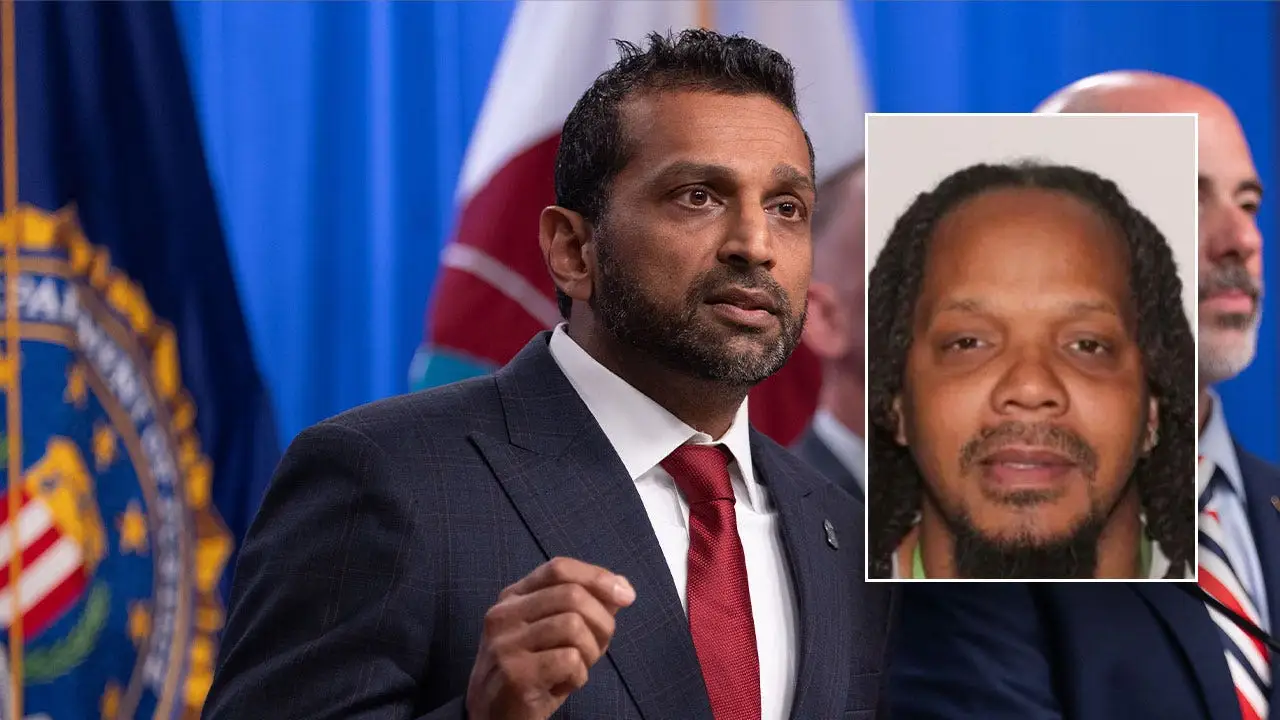
For nearly a year, Gregory Henderson Jr. slipped through the grasp of federal authorities, living as a ghost while the lives he helped poison continued to crumble in the neighborhoods of Indianapolis. But the running came to an end just three days after the FBI placed him on its vaunted Ten Most Wanted list, a move that brought renewed focus, a $1 million reward, and an army of agents determined to close the case. Henderson, 46, was arrested as part of a sweeping federal operation that had already dismantled much of his alleged criminal organization, yet he alone remained free, a frustrating loose thread for investigators. His capture was announced with a quiet sense of triumph—not loud celebration, but the deep satisfaction of a long pursuit finally concluded. The FBI described him as armed and dangerous, a man with deep roots in street violence, intimidation, and brutality, and his removal from the streets is being hailed as a major victory in the ongoing fight against drug trafficking and organized crime. He now faces serious federal charges that stretch far beyond trafficking, including conspiracy to possess and distribute controlled substances, conspiracy to launder money, and conspiracy to engage in an animal fighting venture—a trio of allegations that paints a chilling portrait of a man who allegedly built an empire on human suffering and animal cruelty alike.
The story of how Henderson arrived at this moment is a dark chronicle of violence, addiction, and exploitation. According to federal prosecutors, Henderson was the alleged leader of a violent, neighborhood-based gang in Indianapolis, a group whose reach was not confined to Indiana but radiated outward across the Midwest. The FBI says his drug trafficking network was supplied by one of the most notorious criminal organizations in the world—the Sinaloa Cartel—giving his operation a steady pipeline of methamphetamine, cocaine, and fentanyl. Those drugs did not stay in duffel bags or hidden compartments; they flowed into communities, into homes, into the hands of people struggling with addiction, and into the veins of mothers, fathers, and children who had no idea their lives were about to spiral into tragedy. Every pill, every bag, every hit carried with it a story of loss, and behind all of it stood Henderson, directing the chaos from the shadows. Law enforcement officers who worked the case describe it as more than just a narcotics investigation; it was an attack on the very fabric of the community. By cutting off the gang’s supply and dismantling its leadership, they sought to bring relief to a city that had been living under the weight of fear and violence for too long. The capture of Henderson represents a critical final chapter in that effort, though the scars left behind—addictions formed, families shattered, lives lost—will not heal overnight.
The takedown that should have captured Henderson began in August 2023, when a federal grand jury in the Southern District of Indiana returned a massive indictment against Henderson and twenty others, charging them in a sprawling conspiracy that fused drug trafficking and dogfighting into a single criminal enterprise. More than 300 federal, state, and local law enforcement officers fanned out across the region in a coordinated operation, executing warrants, knocking down doors, and rounding up suspects in a dramatic display of interagency cooperation. Eighteen people were arrested in that initial sweep, but Henderson was not among them. He evaded capture, slipping away while the rest of his alleged network was hauled into custody. Even so, the operation yielded a cache of evidence that spoke to the scale of the criminal undertaking: 61 guns, quantities of fentanyl, methamphetamine, and cocaine, $98,000 in cash, and the heartbreaking discovery of 166 dogs living in conditions that suggested they were not pets but tools of a vicious blood sport. Those dogs were later described by officials as victims every bit as much as the people affected by the gang’s drug trade. They had been bred, trained, and forced to fight, chained and abused in service of a cruel and illegal gambling operation. The FBI’s revelation of the dogfighting ring added another layer of horror to an already disturbing case, prompting animal welfare advocates and ordinary citizens alike to feel a visceral outrage that helped sustain public interest even as Henderson remained at large.
What makes Henderson’s criminal history so alarming is the breadth of his violence. He was not simply a businessman moving product; he was, according to authorities, a man who terrorized his own community. The FBI described him as having a long history of criminal activity, including street violence, intimidation, assault, and weapons offenses, in addition to drug trafficking and animal cruelty. This is the portrait of a predator who used fear as a management tool, someone who likely kept his subordinates in line not with promises of wealth but with the threat of bodily harm. The animal fighting operation, in particular, reveals a casual cruelty that is difficult to stomach. Dogfighting is not a victimless crime; it is a brutal spectacle in which animals are mauled, maimed, and sometimes killed for the entertainment and profit of those who bet on their suffering. According to the FBI, Henderson allegedly led a significant dogfighting and illegal gambling operation, meaning that the 166 dogs seized in the August 2023 raids were not incidental to his criminal lifestyle but likely central to it. For Special Agent in Charge Tim O’Malley of the FBI’s Indianapolis field office, Henderson represented the worst kind of offender—someone whose criminality touched both human beings and defenseless animals, leaving a trail of devastation that extended far beyond the drug trade. His capture offers a measure of justice not just to the families who lost loved ones to addiction, but to the dogs that were forced to fight and die for his profit.
Henderson’s placement on the FBI’s Ten Most Wanted list on August 11, 2025, was both a symbolic and practical milestone. For decades, that list has represented the absolute worst of America’s fugitives—the individuals whose crimes are so severe and whose freedom is such a threat to public safety that the full weight of the federal government is brought to bear on their capture. Henderson earned his place there through years of alleged criminal behavior, and his arrest just three days after being added to the list sent a powerful message: the FBI does not forget, and it does not give up. In fact, Henderson’s capture marked the ninth time a Ten Most Wanted fugitive had been apprehended since President Donald Trump returned to office, a statistic that FBI Director Kash Patel was eager to highlight. In an exclusive statement to Fox News Digital, Patel noted that the nine captures are more than twice the number of Ten Most Wanted fugitives arrested during the entire Biden administration, and he credited the change to what he called “President Trump’s brilliant leadership.” Patel’s language was characteristically direct, praising the FBI and its partners for letting “good cops be cops” and delivering historic results. Whether such statistics are viewed through a political lens or simply as a measure of law enforcement effectiveness, there is no denying that the families affected by Henderson’s alleged crimes have a reason to feel safer tonight.
The official responses to Henderson’s arrest have been filled with gratitude and resolve, reflecting the collaborative effort that made it possible. U.S. Secretary of Agriculture Brooke L. Rollins thanked the FBI, the Department of Justice, and the USDA’s Office of Inspector General, among other federal partners, for their relentless pursuit of justice. Her statement was notable for its acknowledgment of animal victims, describing the pain and anguish Henderson had left behind for both people and animals. That recognition is important, because it underscores the growing understanding that animal cruelty and violent crime are often intertwined—that someone who can chain a dog to a fighting pit and watch it suffer is capable of inflicting tremendous harm on people as well. With Henderson now in custody, the immediate focus will shift to the legal proceedings ahead, where he will face the charges against him in a court of law. Details about exactly where and how he was captured were not immediately available, no doubt because investigators are still assembling the full account of his time on the run. But what is clear is that the long year of evasion is over. The alleged gang leader who once commanded a network of violence, drugs, and blood sport has finally run out of road. His arrest is a reminder that no amount of hiding can erase the weight of one’s actions, and that for those who commit crimes against humanity and animals alike, there is nowhere to go that justice will not eventually find them. For Indianapolis, for the Midwest, and for everyone who prayed for an end to his reign of harm, the capture of Gregory Henderson Jr. is not just news—it is a long-awaited exhale.