


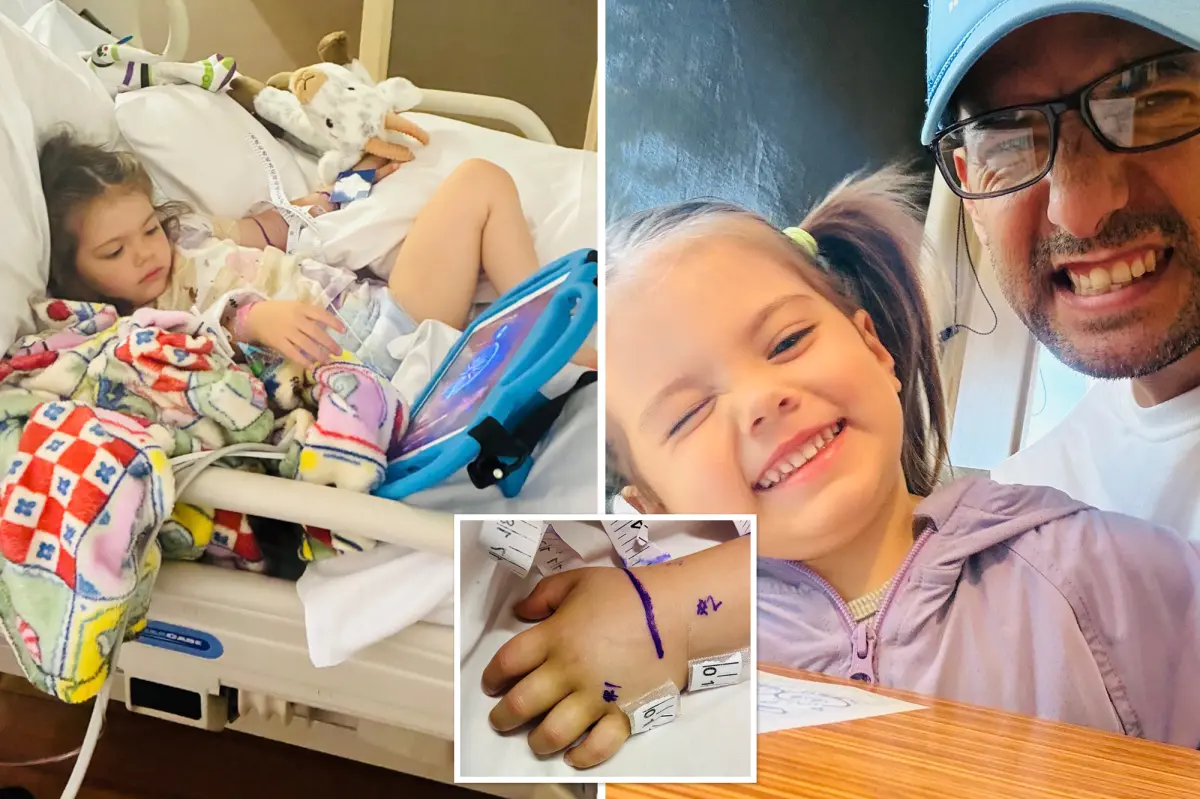
In the sun-drenched, tranquil suburbs of Santa Clarita, California, a routine and peaceful weekend afternoon abruptly transformed into every single parent’s most terrifying and unthinkable nightmare in a matter of mere seconds. For three-year-old Addy, a bright and energetic little girl, the sudden arrival of an Amazon package on the front porch of her home was a source of pure, unadulterated toddler excitement—a brown, ordinary padded envelope that promised the thrill of a new toy, a gift, or some other special treat. With the completely innocent, joyful enthusiasm that only a child of her tender age can truly possess, Addy ran eagerly toward the doorstep, her eyes wide with happy anticipation, completely unaware of the deadly hazard waiting silently in the cool shadows beneath the freshly delivered mail. Coiled tightly and invisibly under the cardboard packaging was a wild Southern Pacific rattlesnake, a highly venomous predator that had blended hazardously into the warm concrete of the entryway. Before any adult could possibly react, shout a warning, or pull her away, the startled reptile struck with lightning speed, sinking its venomous fangs deep into the little girl’s delicate left hand. The sudden, agonizing scream of pain instantly shattered the quiet of the neighborhood, transforming a mundane, modern moment of home-delivery convenience into a chaotic, terrifying struggle for survival. This heart-stopping event vividly highlights the fragile and unpredictable boundary that exists between our sheltered, comfortable modern lives and the untamed, hazardous wilderness that often edges right up to our suburban doorsteps. For Addy’s parents, Manual and Lynn Barajas, this terrifying moment marked the beginning of an agonizing journey that would test their emotional, physical, and financial limits to the absolute brink, proving that the most profound and life-threatening dangers are often those that lie hidden beneath the most ordinary objects of our daily suburban lives.
The moments immediately following the snakebite were a chaotic and terrifying blur of raw adrenaline, sheer panic, and desperate maternal instinct. Recognizing the extreme, life-threatening urgency of a rattlesnake bite on a body as small and fragile as a three-year-old’s, Addy’s mother, Lynn, immediately scooped up her crying, wounded daughter and rushed out of the house. Understanding that there was absolutely no time to spare waiting for emergency vehicles to navigate the suburban streets to their home, Lynn made a critical, split-second decision to drive toward the local emergency responders herself, frantically coordinating with the dispatch operators to meet the fire department and ambulance crews in the busy parking lot of a nearby grocery store. This frantic, high-stakes rendezvous in a public parking space became a makeshift, roadside triage center where paramedics and firefighters administered the crucial initial medical first aid to the suffering toddler before rushing her to the nearest local hospital with sirens blaring. At the community hospital, Addy received her vital first dose of emergency antivenom, but because her tiny body was reacting severely to the potent venom, doctors realized she required highly specialized pediatric intensive care that the local facility was simply not equipped to provide. Meanwhile, miles away from this unfolding disaster, her father, Manual, received the phone call that every parent in the world dreads, hearing his wife’s panicked voice through the receiver. Away on an urgent business trip, he found himself paralyzed by a gut-wrenching sense of utter helplessness, trapped in a distant city while his baby girl fought for her life. Boarding the very first flight home he could find, Manual spent the grueling journey consumed by terrifying thoughts, desperately praying that he would arrive in time to comfort his family. He desperately willed the airplane to fly faster, feeling the crushing weight of physical distance while his daughter faced the fight of her life in an emergency transport unit.
Upon arriving at the specialized pediatric intensive care unit (PICU) where Addy had been urgently transferred, the true gravity and danger of her condition became painfully apparent to her gathered family. The venom of a Southern Pacific rattlesnake is a complex, highly destructive cocktail of hemotoxins and neurotoxins that rapidly destroys physical tissue, attacks blood vessels, and severely disrupts normal blood clotting—a biological assault that is exceptionally hazardous to a three-year-old toddler weighing only a small fraction of an adult. To combat the rapidly spreading toxins and stabilize her fragile, fluctuating vital signs, ICU physicians had to aggressively administer two more massive doses of the specialized antivenom, while carefully monitoring her tiny system for dangerous allergic reactions or systemic organ failure. For two long, excruciating nights, Addy lay confined to a hospital bed, hooked up to a complex network of intravenous tubes, medication drips, and heart monitors in the sterile, constantly beeping environment of the intensive care unit, her small left hand severely swollen, discolored, and incredibly painful from the deep puncture wounds. Her weary parents kept a tireless, heartbreaking vigil beside her, enduring endless sleepless hours filled with the distressing sights and sounds of medical intervention, trying their best to comfort a young child who was too small to understand why she was in such immense physical pain. The emotional toll of watching your own baby fight through such severe medical trauma is a slow, agonizing experience that leaves parents in a state of suspended shock, where every beep of a monitor brings panic and every moment of rest is elusive. They gently held her uninjured hand, speaking softly to override the harsh clinical sounds of the pediatric ICU, desperately trying to project a sense of safety and calm that they themselves did not feel, as they watched the hours tick slowly away in that brightly lit, sterile room where their daughter’s future hung in a delicate balance.
While the immediate threat to little Addy’s life eventually began to stabilize and the medical team grew more optimistic about her physical recovery, a secondary crisis of overwhelming proportions was already mounting for the Barajas family in the form of devastating financial fallout. In order to be present during his daughter’s critical hospital stay and support his deeply traumatized wife, Manual had to miss approximately a week of work, a financially damaging sacrifice that immediately halted their regular household income at the absolute worst possible moment. The American healthcare system, while technically advanced enough to miraculously save Addy’s life, carries with it an notoriously high and paralyzing cost structure, particularly when it comes to specialized treatments like snake envenomation. Antivenom is widely documented as one of the most expensive emergency pharmaceuticals in existence, with single doses frequently costing tens of thousands of dollars before insurance adjustment. Facing an imminent wave of astronomical bills for her emergency ambulance transport, rapid hospital transfer, multiple pediatric ICU nights, and three life-saving doses of antivenom, the young family quickly found themselves buried under a financial mountain they had no realistic way of paying. Out of options and swallowed by anxiety, they took the deeply humbling and difficult step of creating a GoFundMe campaign, setting a modest fundraising goal of $4,500 to help bridge the gap created by lost wages and first-wave medical bills. Asking for financial charity from strangers is an incredibly difficult hurdle for proud, hardworking parents, yet the overwhelming reality of their situation forced them to reach out to the broader community, pleading for any help to navigate this dark chapter. They found themselves caught in a painful paradox common to many families, where the immense emotional relief of their child’s survival was immediately tarnished by the looming, real-world panic of financial ruin and long-term debt that threatened to destabilize their entire household.
Addy’s terrifying ordeal is a stark representation of a growing trend of close-encounter emergencies in California, a state where rapid suburban expansion continually pushes human developments deeper into the natural habitats of native wildlife. This geographic overlap has led to an increasing number of sudden, hazardous encounters between unsuspecting humans and venomous reptiles, sometimes with tragic and fatal outcomes for residents and visitors alike. Just a few months prior to Addy’s bite, a heartbreaking incident in Irvine made headlines when a twenty-five-year-old mountain biker lost his life after being bitten by a rattlesnake while enjoying a popular, scenic outdoor trail. In another shocking regional case, an out-of-state visitor traveling from Idaho to see his family in California was bitten twice on the leg, ultimately requiring an incredible fifty-four vials of specialized antivenom to save his life, a massive medical intervention that resulted in a mind-boggling medical bill of over $1.3 million. Additionally, a woman hiking through the picturesque wilderness of Ventura County tragically lost her life in March after a rattlesnake bit her on a remote path. These grim accounts highlight the volatile, unpredictable nature of venomous encounters in the region, illustrating that while some bites might result in manageable symptoms, others can quickly escalate into full-scale medical catastrophes that carry both physical devastation and crushing financial consequences. As climate patterns shift and suburban neighborhoods continue to expand into dry chaparral regions, the line between wild habitats and domestic safety becomes increasingly blurred, making vigilance in one’s own yard a matter of life and death. The simple act of walking out to retrieve the mail, gardening in the backyard, or letting children play on the patio now requires an unprecedented level of situational awareness, as these highly camouflaged predators adapt to the suburban landscape, seeking shade and moisture under daily household items where they are easily disturbed by unsuspecting residents.
According to official data provided by the Centers for Disease Control and Prevention (CDC), between 7,000 and 8,000 people are struck by venomous snakes across the United States each year, yet due to the rapid availability of modern emergency medicine and advanced antivenom treatments, only about five of these incidents ultimately prove fatal. While these statistical figures offer a measure of clinical comfort on a national scale, they do nothing to diminish the intense, personal trauma experienced by individual families, nor do they lessen the sudden terror of watching a young toddler become one of those statistics on what should have been a safe, ordinary front porch. For the Barajas family, the long road ahead is now focused on gradual physical rehabilitation and deep emotional healing, as Addy slowly recovers her childhood strength and her parents work to reconstruct their shattered sense of domestic security. It will undoubtedly take a long time for the psychological scars to fully fade, for a simple walk to the front door to stop triggering an involuntary rush of panic, and for the memory of that terrifying afternoon to lose its sharpest edges. Yet, through the support of caring neighbors, the exceptional skill of their pediatric medical team, and the resilient bond of their family, they are taking brave steps toward reclaiming their lives. Addy’s remarkable survival remains a powerful testament to her mother’s rapid actions, the swift response of emergency workers, and the incredible, quiet strength of a three-year-old girl who faced down a deadly predator and won her life back, reminding us all of the fragile beauty of the lives we cherish. In a world where dangers can lurk in the most unexpected and ordinary places, their story serves as both a cautionary tale and an inspiring reminder of human resilience, showing that even the darkest, most terrifying nightmares can eventually be overcome through love, community support, and the gift of expert medical care.