






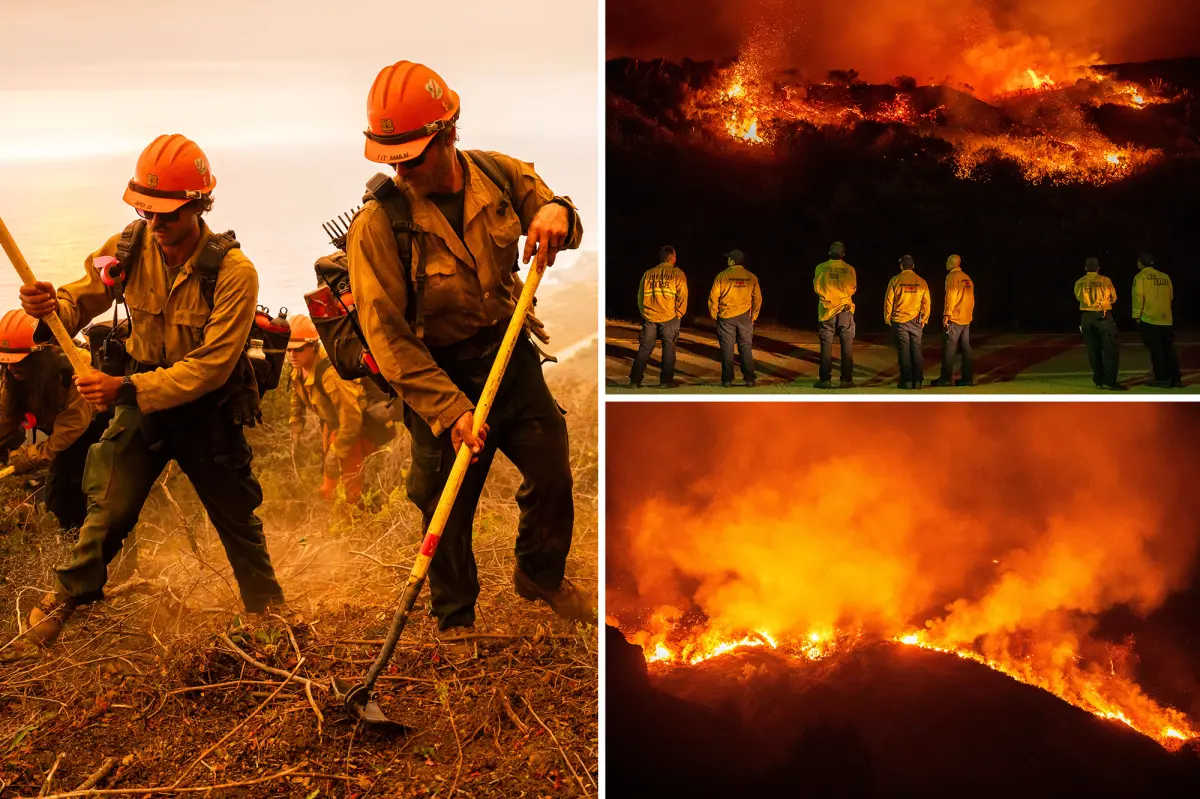
The morning sun, a pale disc struggling to pierce the acrid haze, cast an eerie, jaundiced light over the rugged Santa Lucia Mountains. The air, thick with the scent of charred manzanita and pine, was a stark warning of the fury that had been unleashed overnight. What began as a whisper of smoke near the remote outpost of Plaskett, a mere 140 acres on Thursday, had erupted into a raging beast. By Saturday morning, the Plaskett Fire had devoured nearly 6,000 acres of wilderness, a terrifying testament to the volatile mix of drought-stricken vegetation, fierce winds, and rugged, inaccessible terrain. The sense of normalcy was shattered, replaced by a primal fear that echoed in the distant roar of air tankers and the urgent crackle of emergency radios. The paradise of the Big Sur coast was under siege, its beauty obscured by a billowing plume of smoke that could be seen for miles, a dark stain on the blue canvas of the California sky.
The fire’s explosive growth was a complex and terrifying phenomenon, a perfect storm of conditions that firefighters dread. The terrain, a brutal landscape of steep canyons and sheer cliffs, is notoriously difficult to navigate, turning the simplest of firefighting maneuvers into a logistical nightmare. Ground crews were forced to hike miles with heavy equipment, their progress agonizingly slow against the fire’s rapid advance. The region’s flora, a mix of thick chaparral and dense oak woodlands, had been desiccated by years of relentless drought, turning them into veritable tinder. Fed by strong, shifting winds that howled through the canyons, the fire didn’t just burn; it spotted, launching fiery embers miles ahead of the main front, creating new, terrifying hot spots that threatened to encircle communities. The fire exhibited a mind of its own, dancing along ridgelines and plunging into valleys, driven by an inexorable force that was both mesmerizing and deeply terrifying, a raw display of nature’s power that humbled all who witnessed it.
In the face of this advancing wall of flame, the most critical imperative was the safety of human life. The Monterey County Sheriff’s Office, working in tandem with California Highway Patrol, issued urgent evacuation orders for a sprawling, vulnerable area. The once-quiet communities that hug the winding coastline—from the rustic charm of Gorda to the more remote ranches and homesteads scattered along the ridge—were transformed into ghost towns. For many residents, the evacuation was a heartbreakingly familiar ritual, a frantic scramble to load pets, precious photographs, and essential documents into vehicles, casting a final, lingering glance at the homes that held their memories. The order resonated with a heavy finality, forcing a choice between the tangible property of a lifetime and the unseen, invaluable essence of life itself. The roadways became a stream of headlights, a slow-moving caravan of escape, each vehicle carrying a cargo of anxiety and uncertainty, heading toward the relative safety of shelters set up in Monterey and beyond.
Amidst the chaos, a stoic army of firefighters, both from Cal Fire and numerous other state and local agencies, waged a tireless war against the inferno. They were supported by a squadron of air tankers and helicopters, which conducted relentless bombing runs, dropping thousands of gallons of fire retardant and water in a desperate attempt to slow the beast’s advance and protect the critical lifeline of Highway 1. This iconic roadway, a marvel of engineering that clings to the sheer cliffs, became the primary line of defense. But its very nature made it a narrow, dangerous theatre of operation. The primary goal was to keep the flames from jumping the highway and cascading down the western slopes towards the Pacific Ocean, which would cut off the only escape route and threaten the entire coastal enclave. Fire crews worked in shifts, their faces smeared with soot and sweat, using hand tools and bulldozers to scratch out containment lines, fighting not just for the landscape, but for the future of the community itself, a battle waged inch by grueling inch.
The threat extended far beyond the immediate flames. The fire hung over the entire region, threatening to sever the vital economic and social artery of Big Sur. Highway 1 is not merely a road; it is the lifeblood of the community, connecting the small, independent businesses, the world-renowned restaurants, and the rustic lodges that rely on tourism. The indefinite closure of a stretch of the highway for safety reasons meant a devastating economic blow, isolating residents and cutting off the flow of visitors that sustain their livelihoods. Beyond the immediate fire perimeter, the danger of mudslides and debris flows loomed ominously for the upcoming rainy season. With the vegetation gone, the hillsides that anchor the soil were stripped bare, creating an environment where even a modest rainfall could trigger a catastrophic slide, turning the scars of the fire into a new and insidious threat. The disaster was not a singular event but a cascade of consequences, a chain reaction whose ripple effects would be felt for years to come.
As Sunday dawned, the fight was far from over. While the winds had somewhat subsided, providing a slight reprieve for weary crews, the fire’s containment remained precariously low. The Plaskett Fire, and its sister blaze, the Timber Fire, which had scorched over 24,000 acres just to the north, had become a stark and sobering symbol of the new reality of California wildfires. The smoke that blanketed the coast was a physical manifestation of a collective anxiety, a reminder of the ever-present threat that comes with living in this beautiful, yet volatile, landscape. For the thousands of evacuees waiting in shelters, the silence was filled with the unanswered question of what they would find when they returned. They clung to hope, the most resilient of human emotions, hoping their homes had been spared and that the rugged landscape they call home would slowly begin to heal. The story of the Big Sur fire was not just one of destruction and loss, but also one of human fragility and resilience, a community bound together by a shared ordeal, facing the future with a heavy heart and an unyielding spirit.