


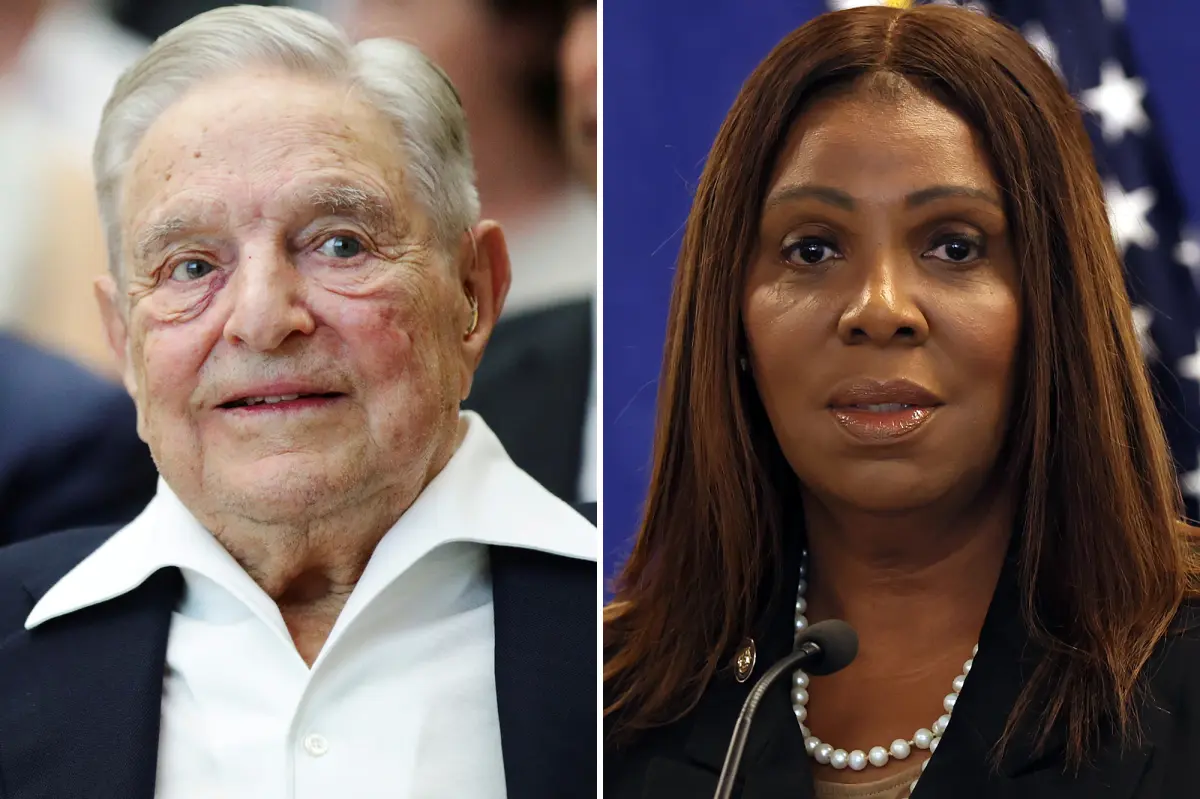
The Soros Family’s Financial Support of New York Attorney General Letitia James
Billionaire philanthropist George Soros and his family have emerged as significant financial supporters of New York Attorney General Letitia James, contributing more than $71,000 to her campaign since 2019. This support includes a recent $18,000 contribution from Soros himself in July 2024, alongside $13,000 from his daughter-in-law Jennifer Soros in May, as James prepares for her re-election campaign next year. These direct donations represent just one aspect of the financial backing James receives from Soros-affiliated sources, which also extends to progressive organizations that support her political endeavors. The relationship highlights the intersection of wealthy donors, political financing, and law enforcement leadership in one of America’s most prominent state legal offices.
Beyond direct campaign contributions, James benefits from Soros’s financial support of progressive organizations like the Working Families Party (WFP), which has received $23.7 million from Soros’s Open Society Foundation since 2016, plus another $865,000 in direct donations from the Soros family to its New York branch since 2018. This connection carries special significance given James’s historic relationship with the WFP—in 2003, she became the first Working Families Party candidate ever elected in New York when she won a City Council seat representing Brooklyn neighborhoods including Fort Greene. While James strategically declined the WFP ballot line during her successful 2018 Attorney General campaign to run as a Democrat alongside then-Governor Andrew Cuomo, she has maintained strong ties to the party’s progressive agenda and received their endorsement in her 2022 re-election bid, demonstrating the enduring nature of this political alliance.
James’s office has gained national visibility through her numerous legal actions against former President Donald Trump and his administration, including fulfilling her 2018 campaign promise to investigate Trump’s business practices. Her ongoing case alleging that Trump committed fraud by exaggerating his net worth represents perhaps her most high-profile legal battle, though it hit a significant setback in August when a state appellate panel overturned more than $500 million in fines initially imposed on Trump. The Attorney General has faced her own legal challenges, including being indicted in October on mortgage fraud charges related to a Virginia property she owns—a case that was dismissed in November without going to trial, with subsequent attempts by the Department of Justice to re-indict her proving unsuccessful. These parallel legal battles highlight the intensely political nature of high-profile prosecutions in the current American landscape.
Critics of James, including Republican attorney Michael Henry who plans to challenge her in 2026, have pointed to Soros’s financial support as evidence of what they characterize as politically motivated prosecutions. “George Soros has spent years financing the radical left’s most extreme projects, and the outcome is almost always the same: instability and disorder that is destroying our state,” Henry stated, drawing parallels between James and Manhattan District Attorney Alvin Bragg, another prosecutor who has received Soros-linked financial support. Bragg, known for progressive criminal justice policies sometimes characterized by opponents as “soft-on-crime,” benefited from Soros’s $1 million donation to Color of Change’s political action committee, which spent over $500,000 supporting his 2021 campaign. Additionally, Soros family members have directly contributed $43,150 to Bragg since 2021, including $22,500 since June of this year, establishing a pattern of support for progressive prosecutors in New York.
Former President Trump has repeatedly alleged that Soros is orchestrating the various legal challenges brought against him, portraying the legal actions as politically motivated rather than based on legitimate law enforcement concerns. While the White House did not respond to requests for comment on these allegations, the financial connections between Soros and prosecutors like James and Bragg have fueled ongoing debates about the influence of wealthy donors on the justice system. When approached about these donations, Soros spokesman Michael Vachon declined to comment, and both the Attorney General’s office and James’s campaign representatives were unavailable for response, leaving the public record of financial contributions as the primary evidence of this financial relationship.
The financial support from Soros to James illustrates broader questions about campaign financing in crucial law enforcement positions and the complex relationship between progressive politics and prosecutorial power. As James prepares for her re-election campaign and continues her high-profile legal work, the backing she receives from Soros and affiliated organizations represents just one facet of the increasingly polarized landscape of American politics and justice. Whether these financial connections influence policy decisions or case selections remains a matter of intense debate, with supporters viewing such donations as legitimate backing for officials who share Soros’s progressive vision, while critics portray them as evidence of undue influence on what should be impartial legal proceedings. As with many aspects of contemporary American politics, the truth likely contains elements of both perspectives, reflecting the complicated reality of a justice system that inevitably operates within a political context.