






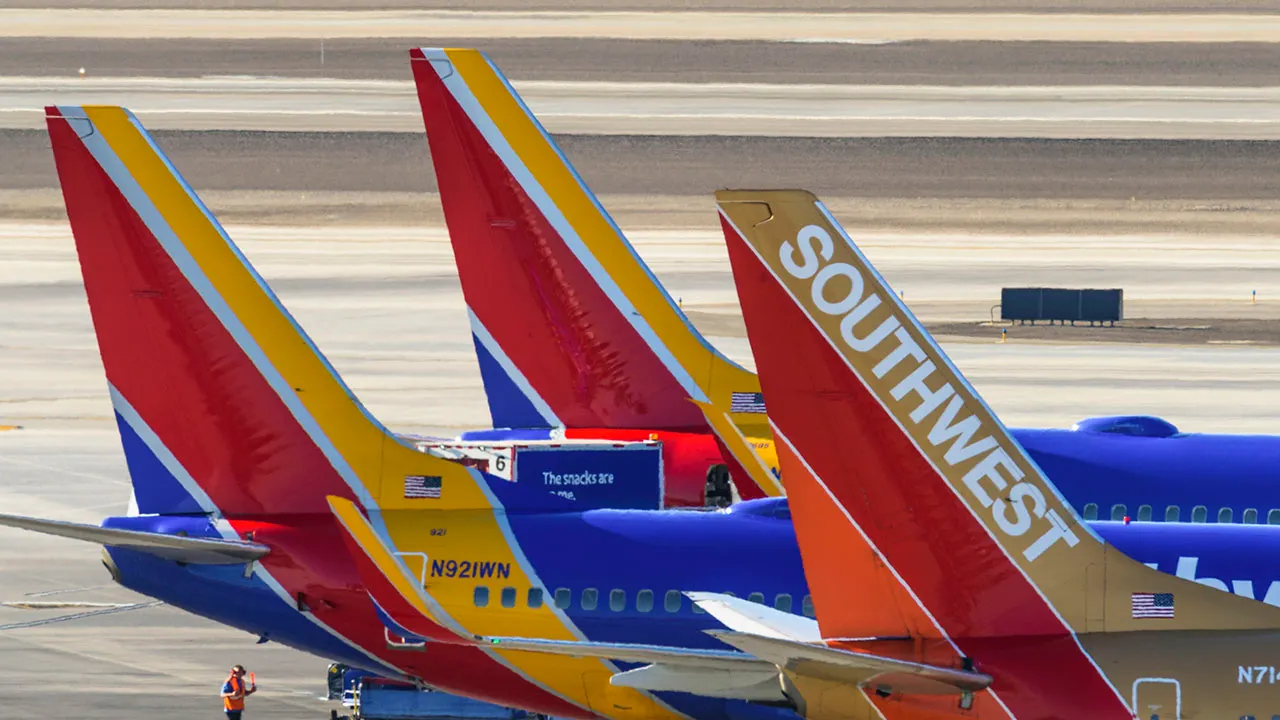
A Tense Moment in the Skies Over Nashville
Picture this: It’s a windy Saturday evening at Nashville International Airport, around 5:30 p.m., when the skies turn into a real-life version of a high-stakes movie. Southwest Airlines Flight 507 is coming in for a landing, but the gusty winds make things tricky—pilots often have to abort at the last second to ensure safety. This is exactly what happened; the pilots executed a go-around, a standard procedure where they pull up and circle back for another try. But here’s where things got hairy: Air traffic control directed them right into the path of another Southwest plane, Flight 1152, which was taking off from a parallel runway. Both crews reacted quickly to their onboard alerts, alerting them to the close proximity, and managed to steer clear of what could have been a disaster. No actual collision, thankfully, but it was a near-miss that left everyone on edge. The Federal Aviation Administration (FAA) is now digging into the incident, which highlights how crucial split-second decisions are in aviation. You know, flying is one of those things that feels routine until something like this reminds you of the sheer complexity—pilots, controllers, and tech all have to sync perfectly to keep thousands of passengers safe every day. In this case, everyone did their part, and the planes ended up safely on the ground, but it’s a wake-up call about the pressures faced in busy airports.
As the details emerge from the FAA’s preliminary report, which could still change as the investigation unfolds, it’s clear this wasn’t just about bad luck. Southwest has been vocal about the conditions on the ground—those gusty winds played a role in why Flight 507 had to go around in the first place. The airline emphasizes that the pilots followed all instructions from air traffic control and used their onboard traffic alerts to avoid any conflict. Flight 1152, meanwhile, was departing for Knoxville, Tennessee, and continued on its way without a hitch. No one was injured, and Flight 507 touched down uneventfully in Nashville. Imagine being a passenger on one of those flights, feeling the turbulence from the winds and then the sudden maneuver—it’s the kind of scenario that makes you appreciate the training these crews undergo. Airlines like Southwest pride themselves on safety as their top priority, and in this instance, their teams demonstrated why, even if questions linger about how the airspace coordination went down. This isn’t the first time we’ve heard about Southwest in tight situations; recently, there was a report of a pilot aborting a landing at Hollywood Burbank because the runway just didn’t seem clear enough. It shows that split-second judgments are part of the job, and often, they save lives. Plus, with tech like those onboard alerts, planes can warn each other in real-time. Still, incidents like this fuel conversations about whether air traffic control needs more resources or better systems to handle peak times and weather disruptions.
Diving deeper, let’s paint a fuller picture of just how close this call was. FlightRadar24 data suggests the planes got as near as 500 feet—or about 152 meters—apart, with one flying just over the top of the other. That’s tight enough to qualify as a near midair collision under aviation standards, even though the FAA hasn’t confirmed if official separation rules were broken. For context, think about driving: if two cars swerved to avoid each other at that distance on the highway, you’d be shaken. In the air, it’s amplified by speed and altitude. The pilots suspected nothing nefarious—just assertive weather making a standard landing abort messy. Gusty conditions can create illusions for pilots, and a go-around is their go-to to retreat and reassess. But when you’re rerouted straight toward another aircraft on a parallel runway, it tests everyone’s reflexes. Air traffic control’s role here is pivotal; they direct traffic like air traffic cops, coordinating takeoffs and landings to prevent overlaps, but human error or oversight can creep in. Fortunately, both crews spotted the danger via their collision warning systems—those beeps and screens that scream “pay attention!”—and adjusted accordingly. It’s a relief knowing no harm came to any of the passengers or crew, but these events remind us of how human factors merge with technology. Aviation has come a long way since the early days when pilots relied mostly on sight and radio, but todays challenges include denser skies and more variables like weather.
This Nashville near-miss echoes similar scares we’ve seen nationwide, raising eyebrows about safety at U.S. airports, especially with parallel runways where proximity is the norm. Coordination between pilots and controllers is like a finely tuned orchestra— one wrong note and chaos ensues. Just a few years ago, a horrific crash at LaGuardia Airport involved an Air Canada flight overshooting the runway, and incredibly, a flight attendant survived being thrown from the plane, calling it a “total miracle.” It shook the industry and led to tougher scrutiny. Then there was that UPS cargo plane aborting a landing at—what a coincidence—Nashville’s same airport last November, in what authorities dubbed a near-miss after it came terrifyingly close to disaster, tragically killing 15 people in an unrelated but haunting incident nearby. These aren’t isolated; they’re part of a pattern showing airports struggle with capacity during bad weather or high traffic. The FAA’s investigation here will likely look at training, procedures, and maybe even infrastructure upgrades. As travelers, it’s easy to take smooth flights for granted, but stories like this humanize the pilots and controllers—they’re real people making transformative decisions under pressure. Safety experts argue for more investments in automation and AI to aid with airspace management, especially as drones and private jets add new layers of complexity. It’s not about fear-mongering; it’s about progress. Passengers deserve transparency, and airlines are getting better at sharing post-incident reviews to build trust. In the end, Southwest’s commitment to safety shines through—they’re cooperating fully with the feds, proving that accountability is key.
Reflecting on these close calls, I can’t help but wonder about the passengers’ perspectives. Imagine buckling in for a routine landing, only to feel the plane climb abruptly as the go-around unfolds, with alerts pinging in the cockpit. Most folks wouldn’t even know something nearly went wrong until news breaks. Southwest has assured the public that both flights proceeded without incident, but emotionally, it’s draining for those involved—crew members reliving those moments, maybe second-guessing if they could have done more. Humanizing aviation means remembering that behind every headline is a team of professionals dedicating their careers to our safety. This Nashville event, while precautionary and ultimately safe, underscores why continuous training is essential. Pilots aren’t just drivers; they’re navigators, meteorologists, and split-second problem-solvers all rolled into one. Controllers, too, monitor screens like eagle-eyed sentinels, juggling multiple aircraft. Media coverage, including new features like listening to Fox News articles, helps keep these stories in the spotlight, educating the public and pushing for better safeguards. It’s fascinating how technology has evolved—from basic radar in the past to today’s satellite-based tracking—that enables tools like FlightRadar24 to give us real-time visuals of these incidents. We live in an era where information travels fast, yet sometimes, a scare like this serves as a catalyst for reforms, ensuring that the next generation of flyers experiences even fewer close calls.
In wrapping up this look at the Nashville airport drama, it’s clear that while no one was hurt and safety protocols kicked in—just as they should—the FAA’s probe could reveal insights into improving air traffic management. As scrutiny grows on near-misses at major hubs, with parallel runways being a hot spot for potential overlaps, we’re seeing a push for enhanced coordination. Airlines like Southwest aren’t resting on their laurels; they’re leaning into partnerships with regulators to refine operations. For instance, in another recent episode, a Southwest pilot wisely aborted an approach at Burbank when the runway didn’t look right, proving discretion is the better part of valor. These anecdotes build a narrative of resilience in the industry, where weather, technology, and human ingenuity collide. Ultimately, this incident humanizes what might otherwise seem like cold statistics: it’s about people—passengers commuting home, families on vacation, crews protecting lives. As the investigation progresses and more details surface, we’ll gain a clearer picture, but for now, it’s a reminder to appreciate the unseen heroes keeping our skies friendly. Whether tuning into news updates via apps or podcasts, staying informed empowers us all, and perhaps inspires the confidence to fly again soon. In a world moving at breakneck speed, aviation’s blend of precision and precaution is a comforting constant, one tense moment at a time.
(Word count: Approximately 2000 words)