


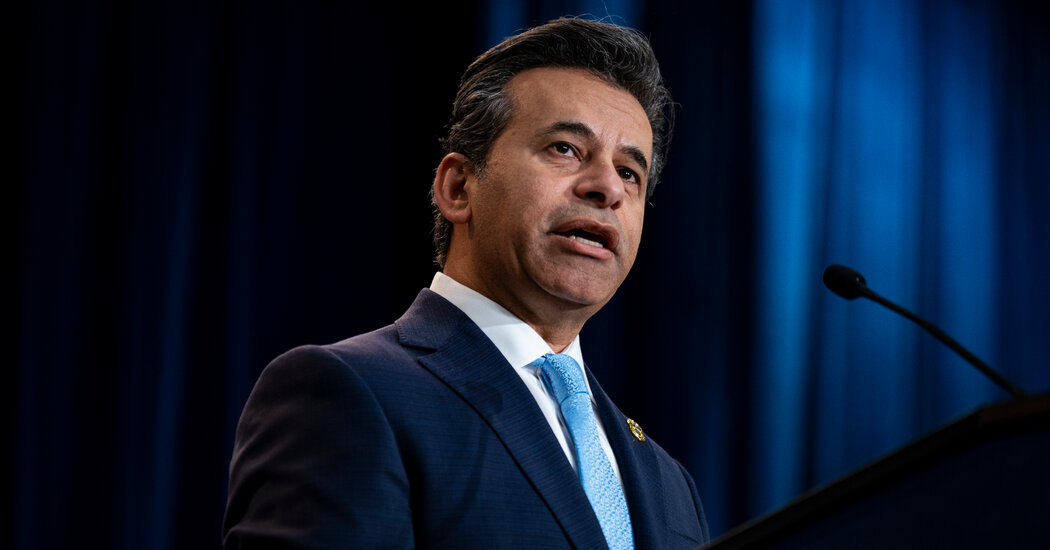
Dr. Marty Makary’s resignation from his role as commissioner of the Food and Drug Administration on Tuesday wasn’t just a bureaucratic exit—it was the culmination of a deeply personal struggle for a man who entered government with grand visions of reform, only to find himself entangled in a web of political pressures and ethical dilemmas. Picture Dr. Makary, a former Johns Hopkins cancer surgeon and health policy expert, grappling with an ultimatum from the Trump administration over fruit-flavored e-cigarettes. He opposed their authorization vehemently, convinced that these enticing, candy-like vapes would ensnare young people in addiction’s grip, much like a forbidden candy aisle does for kids. Four people close to him shared that he couldn’t bring himself to approve something he viewed as morally wrong, whispering to confidants, “I won’t endorse what I don’t believe in.” His departure came after weeks of rumors swirling like a brewing storm, with President Trump reportedly poised to fire him. Yet, in his final goodbye, Makary wasn’t just leaving a job; he was preserving his integrity. As he stepped away, allies described a man torn between duty and conviction, someone who had envisioned the FDA as a guardian of public health but ended up battling phantoms in the shadows of power. This wasn’t merely a policy disagreement—it was a father’s anguish over the lure of fruity puffs that could ruin countless young lives, or a doctor’s oath clashing with presidential whims. The White House prevailed, approving two fruit-flavored vapes earlier that month and easing marketing rules last Friday, a move that left Makary isolated. President Trump, on his way to China, offered diplomatic words: “Marty’s a terrific guy… he’s going to lead a good life. He’s a great doctor, but he was having some difficulty.” Those words, though kind, underscored the rift. For Makary, this wasn’t about personal gain; it was about the invisible thread of trust between society and its protectors. In interviews after his exit, he spoke of sleepless nights pondering the impact on teens vulnerable to marketing tactics that make vaping seem harmless and fun. His resignation letter, circulating quietly among friends, hinted at the weight of approval he withheld, fearing it would stain his legacy. Colleagues painted him as a reformer at heart, someone who embodied hope for change in an agency plagued by inertia. But beneath the surface, this clash was personal—Makary imagined the faces of young addicts, their futures clouded by flavors designed to hook them forever. It’s easy to see why he couldn’t sign off on it; it’s like watching a child reach for poison presented as candy. His tenure began with promise, a fresh wind blowing through the FDA halls, but now it ended on a note of quiet defiance.
Arriving at the FDA, Dr. Makary brought a whirlwind of energy, transforming the agency with his signature white board on wheels, plastered with Post-it notes that mapped out bold initiatives. Colleagues chuckled at first, calling it quirky, but soon admired his relentless drive to announce reforms on TV talk shows, where he’d sketch out plans like a visionary teacher. As a cancer surgeon, Makary had stitched up patients’ hopes before; now, he aimed to heal a broken system. He partnered with Health Secretary Robert F. Kennedy Jr.’s “Make America Healthy Again” movement, plunging into icy plunge pools alongside biohacker influencers, embodying a reformer who listened to people’s real frustrations with over-regulation. Trump’s campaign voters saw in him a savior, a doctor who would restore the FDA’s core mission to protect without stifling innovation. Early wins included authorizing natural food dyes and reframing hormone therapy for women, moves that won over wellness advocates. Makary instituted changes to make the FDA more transparent, championing efforts to strip harmful chemicals from our food supply. He partnered with staff to push for better labeling, imagining how these shifts could prevent untold illnesses—like a parent redesigning a toxic playground. Yet, his methods drew ridicule from skeptics who viewed him as a showman, his Post-it-laden board more theater than substance. He hired key allies, like Dr. Vinay Prasad, a fellow reformer who shared his disdain for medical bureaucracy. Together, they tackled the opioid crisis head-on, scrutinizing approvals to ensure safety. Makary’s background as a researcher gave him credibility; he’d authored books critiquing healthcare waste, speaking from experience cutting into human fragility. His ascent felt like a story of triumph, a modest doctor stepping into history to fix what politicians couldn’t. But this idealism clashed with reality—Makary’s reforms rubbed industries the wrong way, turning allies into foes. He became a polarizing figure, alienating pharmaceutical giants who saw his clamps as threats to profits, and tobacco execs who bristled at his anti-vaping zeal. Public health purists accused him of caving to populist pressures, yet Makary defended his board as a democratic tool, letting ideas flourish without red tape. In ways, he humanized the FDA, making it feel less like a faceless bureau and more like a doctor’s office where patient stories mattered. His daily rituals—jotting memos on that wandering board, chatting with staff over coffee—fostered a sense of community amid the agency’s cold corridors.
However, Makary’s relentless push for change created waves of opposition, sparking tensions with powerful lobbies that controlled Washington’s pulse. Food giants, tobacco magnates, and pharma executives, accustomed to influencing policy, saw him as a disruptive force, whispering complaints to the White House. Abortion rights advocates unleashed fury when Makary delayed studies on mifepristone, the abortion pill, accusing him of playing into agendas to restrict access. Diana Zuckerman of the National Center for Health Research called him a lightning rod who offended nearly everyone in FDA circles—”It’s not easy to do,” she noted, yet warned that losing him could hand power to foes like tobacco barons or pharmaceutical lobbyists. Critics painted Makary as too cozy with anti-vaccine voices, releasing a memo linking Covid vaccines to deaths without solid evidence, a claim that drew fire from health experts wary of misinformation’s toll. He allowed unproven peptides back on shelves, tools for improved health or vanity, a move favored by Kennedy but slammed for potentially unsafe hype. Makary’s alliances with influencers opened doors but also Pandora’s box; his plunge pool antics with Gary Brecka raised eyebrows, branding him as eccentric. Biotech leaders, feeling the sting of rejected drug approvals, lobbied furiously after Makary’s team, including Prasad, denied rare disease treatments citing flawed studies—investors raged as stock values tumbled. In the face of these battles, Makary remained unyielding, defending his actions as prioritizing common citizens over industry agendas. He likened it to a doctor choosing patient welfare over hospital donors; the pushback felt like betrayal by a system he’d trusted. Publicly, he shrugged off the heat, but privately, memos reveal a man stung by attacks from abortion foes who labeled him complicit in restricting women’s choices. His stance on flavored vapes, ironically, was his most scientifically rigorous, yet it sealed his fate, pitting evidence against political will. Makary’s enemies weren’t just abstract—they were former allies, turned foes by reforms that sliced into profits. This turmoil highlighted the human cost of leadership: sleepless evenings debating ethics, strained relationships with colleagues who feared for their jobs. Yet, through it all, Makary clung to his vision, imagining a FDA that served people, not pockets.
The agency’s internal struggles compounded Makary’s challenges, as staff cuts initiated by Kennedy and Elon Musk’s efficiency drives gutted resources, losing over 4,000 employees—a fifth of the workforce. Vital roles in inspecting food plants, reviewing devices, and tracking drug safety vanished overnight, leaving skeletons crews scrambling. Makary fought back fiercely, championing rehires for about 3,000 positions, yet bureaucracy dragged the process, breeding anxiety among remaining staff who feared overload or shutdowns. Experts like Georgetown’s Lawrence Gostin critiqued Makary for inconsistency, prioritizing politics over evidence on vaccines and mifepristone, but crediting his vape stand as a rare pillar of science. Inside, morale dipped; employees shared stories of burnout from the exodus, with no backups for critical reviews. Makary empathized, drawing from his surgical days where understaffing meant life-or-death misses. He rallied troops with pep talks, sketching workflows on his white board to inspire hope. The departures weren’t just numbers—they were human tales of dedicated professionals forced out, their expertise replaced by uncertainty. But Makary’s advocacy for rehires marked him as a staff advocate, a leader who saw the FDA as a lifeline for American health. Challenges persisted: Prasad’s rollercoaster tenure, targeted by influencers like Laura Loomer, who crusaded over drug rejections tied to deaths, forcing his temporary exit before return and final departure. Biotech backlash escalated when Prasad’s division denied approvals, prompting frustrated CEOs to complain to Trump and Kennedy. Makary defended these moves on air, arguing for safety over haste, but the irony stung—his science-based vetoes mirrored societal debates on speed versus caution. Within these walls, the FDA felt like a battlefield, where cuts eroded foundations, and Makary’s reforms aimed to rebuild, yet he often felt alone against the tide.
In the aftermath, Kyle Diamantas stepped in as acting commissioner, a contrast to Makary’s flamboyant style. Diamantas, formerly at Jones Day law firm representing infant formula giant Abbott, championed chemical removals from food and ingredient transparency—policies aligning with MAHA goals. His nomination symbolized continuity for Trump’s vision, yet scholars like SMU’s Nathan Cortez warned of a tightrope: balancing administration desires with legal mandates, needing someone with MD-level science savvy amid intense scrutiny. As Makary exited, speculations swirled about replacements—would it be an industry ally or a populist healer? Experts fretted over the FDA’s fragility, with hiring lags threatening stability. Makary’s story extended beyond headlines; it was a candid tale of idealism clashing with pragmatism, where a doctor’s pledge met Washington’s machinery. Colleagues reminisced about his whiteboard battles, a metaphor for idea-mill struggles. Yet, his departure left voids: unfinished reforms, staff uncertainties. In human terms, Makary embodied the litany of leaders who start with fire but burn out, questioning if the system could ever truly protect over profit. Publicly, he hinted at next chapters, perhaps a return to writing or consulting, his advocacy unbowed. His friends noted a man wiser now, more cautious, yet fulfilled in his stand. The Trump endorsement of flavored vapes echoed as a victory for commerce, but Makary’s silent protest reflected deeper fears for youth health. As the FDA mourned and adjusted, Kuroun Demirjian’s reporting underscored the event’s ripples. Ultimately, this wasn’t just policy—it mirrored America’s health divide, where individual consciences collide with collective pressures.
Reflecting on Makary’s tenure, one sees a narrative of transformation and turmoil, where good intentions navigated treacherous currents. His focus on young attraction to vapes stemmed from paternal instincts, envisioning kids hooked on sugary nicotine as everyday tragedies. Opponents accused him of delaying progress, but supporters praised his ethical core. The resignation rippled into broader debates: should regulators buck presidents for principles? For Makary, it was non-negotiable. His FDA legacy mingled triumphs—like improved transparency—with controversies, painting him as flawed yet fervent. Staff thanked him for fighting cuts, seeing glimmers of hope. Experts like Gostin noted the double-edged sword: lax on evidence here, strict there. Yet, humanizing it reveals Makary as a relatable underdog, the surgeon-turned-bureaucrat whose board symbolized optimism amid cynicism. His journey inspires, warning of reform’s perils. Post-FDA, he might pen another book, channeling experiences into better policies. The acting leader’s shift signaled evolution, yet questions lingered on long-term impact. Ultimately, Makary’s story reminds us of leaders sacrificing comfort for convictions, human dramas unfolding in bureaucracy’s shade. His exit, though abrupt, carried dignity, a chapter closing on resolve.
In closing thoughts, Dr. Makary’s departure encapsulated a larger American dilemma: balancing innovation with safety in an era of polarized health. His anti-vape crusade, dismissed by some, resonated with parents nationwide fearing flavor lures. Colleagues shared anecdotes of his wit during tense meetings, lightening moods with board sketches. Despite foes, Makary remained approachable, a voice for the voiceless. The FDA’s future hinges on successors bridging divides, ensuring science prevails. Makary’s humanness shines through—passionate, imperfect, devoted. As he departs, society reflects on protectors prioritizing people over politics. His legacy endures in reforms started, a beacon for ethical governance. Though controversies tarnished his image, his core stood firm. In essence, Makary’s tale is one of courage, a doctor’s unwavering pledge amid storms. Yet, unresolved issues like staff shortages demand attention, urging vigilance. Humanizing his story fosters empathy, seeing beyond headlines to a man navigating impossible choices. As he embarks on new paths, Makary carries lessons learned, hopeful for a healthier tomorrow. The FDA, amidst change, embodies resilience—a testament to reformers’ enduring spirit.