


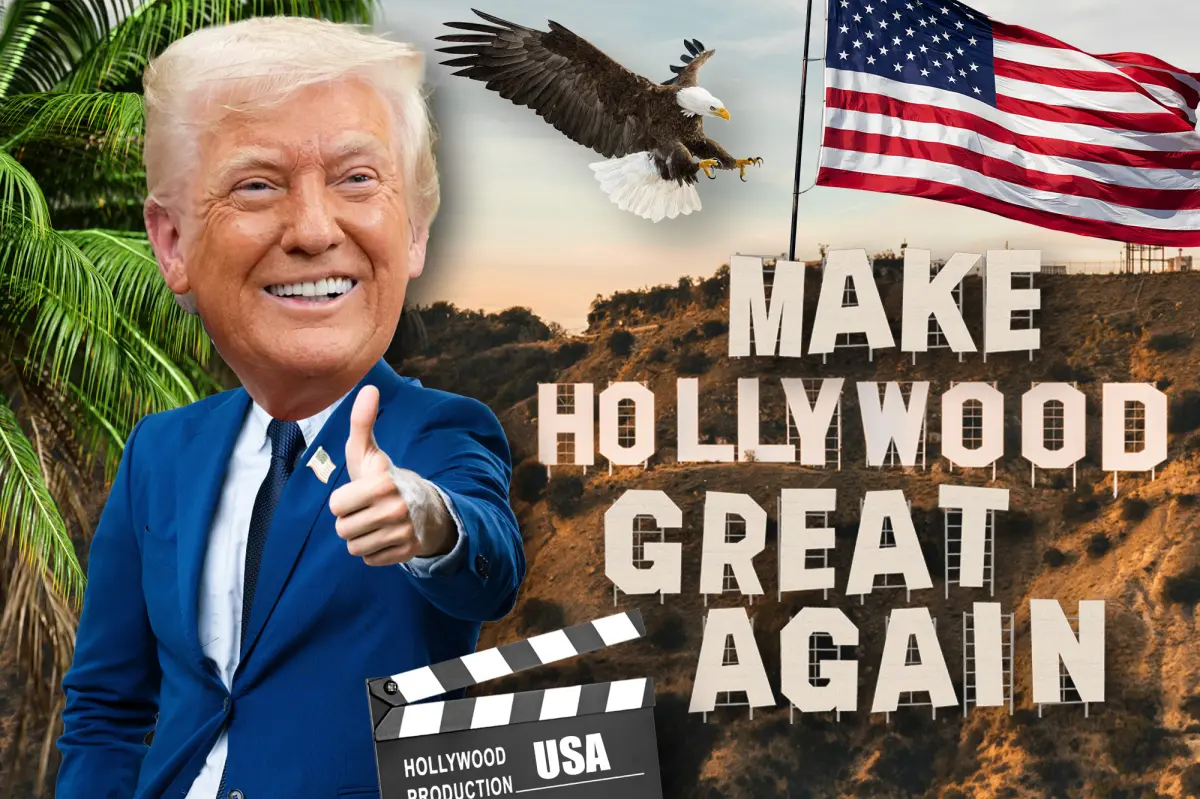
Trump’s Vision for Reviving Hollywood: Tariffs and Bond Programs for American Cinema
In a recent interview with The California Post, President Donald Trump outlined his ambitious plan to reinvigorate Los Angeles’s film industry through a combination of protectionist policies and financial incentives. Speaking from the Oval Office, Trump expressed concern about the migration of film production to foreign locations and proposed concrete measures to bring Hollywood back to its roots. His strategy centers on imposing tariffs on foreign-made films while creating new low-interest bond programs to incentivize domestic production, a two-pronged approach he believes will restore Los Angeles to its former glory as the world’s filmmaking capital.
The President’s plan builds on his September threat to impose a 100% tariff on films produced outside the United States, though specific details about the implementation remain forthcoming. “I’m going to be putting tariffs on movies from outside of the country — if they’re made in Canada, if they’re made in all these places, because Los Angeles has lost the movie industry,” Trump explained during the interview. The tariff proposal targets productions that have increasingly moved to countries like Canada and Australia, where studios often benefit from tax incentives and lower production costs. This exodus of filmmaking has gradually eroded Los Angeles’s standing as the epicenter of global cinema, a trend Trump aims to reverse through economic pressure on foreign-made content.
Complementing the tariff strategy, Trump also proposed a bond program designed to provide financial support to studios committed to producing films domestically. While light on specifics regarding the mechanics of this program, the President suggested it would create favorable conditions for production companies to choose American locations over international alternatives. “We’re going to be doing bonds, some bonds, some low-interest bonds, for the movie industry. We’ll bring it back,” he stated. According to Trump, his conversations with industry insiders have revealed a strong preference for working in Los Angeles rather than traveling to distant filming locations: “I know a lot of people in that industry, and they said, ‘We are dying not to go to Canada, not to go to Australia, not to go to places that take 20 hours on an airplane… We would love to do it in Los Angeles.'”
The President’s interest in Hollywood extends beyond economic policy to cultural concerns about the entertainment industry’s evolution. Drawing on his own experience as the host of “The Apprentice” for 14 seasons, Trump expressed nostalgia for Hollywood’s golden era, lamenting what he perceives as a decline in glamour and prestige. When discussing the upcoming Academy Awards ceremony, set to be hosted by Conan O’Brien in March, Trump remarked, “It would be nice to have it the way it used to be, so glamorous.” This sentiment reflects a broader conservative critique of modern Hollywood as having lost touch with traditional American values and aesthetics, a perspective that resonates with Trump’s base and aligns with his “Make America Great Again” messaging.
Trump’s comments also revealed personal grievances with the entertainment industry, particularly regarding criticism he has faced from Hollywood figures. “I used to love the Oscars,” he confided, “You know, after they started hitting me — they had that moron Robert De Niro and others — and their ratings went down the tubes.” This statement highlights the increasingly contentious relationship between Trump and many prominent entertainment industry voices, who have frequently criticized his policies and rhetoric. The President’s framing suggests he believes Hollywood’s commercial struggles are connected to its political positioning, implying that the industry’s embrace of liberal politics has alienated significant portions of the American audience.
The proposals for tariffs and bond programs represent a significant intervention in an industry that has historically benefited from globalization. While proponents might view these measures as necessary steps to preserve American jobs and cultural production, critics could argue they risk igniting trade disputes and potentially violating international agreements. What remains clear is that Trump sees the revitalization of Hollywood as both an economic and cultural imperative, consistent with his broader “America First” approach to governance. As these policies develop, they will likely become another flashpoint in ongoing debates about trade, culture, and America’s position in a rapidly changing global landscape.