



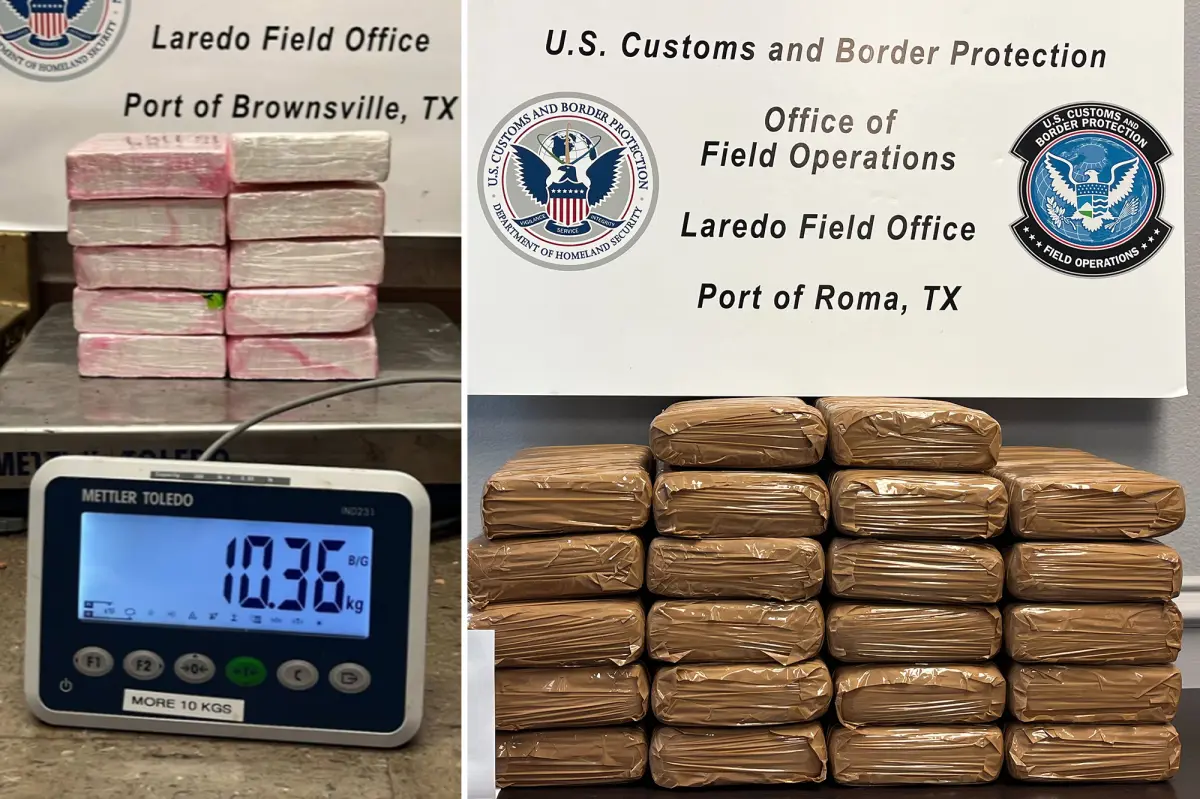
In a stark reminder of the relentless challenges facing law enforcement along the southern border, U.S. Customs and Border Protection (CBP) officers recently intercepted more than $1.1 million worth of cocaine in a single 24-hour period. The dual busts took place on Friday, June 26th, at two major federal checkpoints in Texas: the Roma International Bridge and the Gateway International Bridge in Brownsville. Highly favored by smuggling cartels due to their strategic locations right across the winding Rio Grande River from Mexico, these busy ports of entry see daily, highly creative attempts to sneak contraband into the country. Smugglers frequently try to blend their illicit cargo into legitimate, everyday commerce, hiding narcotics inside everything from cinder blocks and fresh cucumbers to pallets of soft drinks.
The first major bust of the day unfolded at the Roma crossing, where officers flagged a brand-new 2025 Chevrolet Tahoe for a closer look. What began as a routine border stop quickly escalated when a highly trained CBP canine unit detected something suspicious, prompting a detailed physical search of the SUV. Officers eventually uncovered a massive hidden cache containing 60.49 pounds of cocaine, meticulously packed and valued at an estimated street price of $807,723. Simultaneously, further down the river at the Gateway International Bridge, a second operation was underway. Officers there selected a 2026 Toyota Sequoia for a secondary inspection, ultimately discovering another 22.84 pounds of cocaine, worth approximately $304,956 on the street, tucked away inside the vehicle.
In the immediate aftermath of the double busts, federal authorities acted swiftly to secure the contraband and take those responsible off the streets. Officers seized both high-end SUVs along with the massive bundles of narcotics, while Homeland Security Investigations (HSI) special agents stepped in to arrest the drivers and launch formal criminal investigations into both smuggling operations. Reflecting on the intense, concurrent operations, Paul Del Rincon, the acting Director of Field Operations for the Laredo Field Office, praised his team’s vigilance. He noted that these back-to-back seizures, happening at two entirely different ports of entry on the exact same day, serve as a vivid illustration of the persistent, evolving drug threats that CBP officers stand ready to confront every single shift.
Due to its sprawling geography and thousands of miles of shared border with Mexico, Texas remains a primary target for international drug trafficking syndicates trying to access American markets. Each year, federal agencies intercept millions of dollars worth of lethal narcotics along the state’s southern boundary. To combat this flow, the Trump administration has prioritized an aggressive, zero-tolerance enforcement strategy specifically aimed at dismantling the cartels’ supply chains and keeping deadly substances from reaching American communities. The federal government has increasingly focused on resource allocation, intelligence sharing, and physical barriers to disrupt these sophisticated criminal networks before they can move their products inland.
Explaining the deep-rooted nature of this threat, Department of Homeland Security Secretary Markwayne Mullin recently briefed lawmakers on Capitol Hill, testifying that Mexican cartels pose a formidable, ongoing danger to U.S. national security. He highlighted the deeply organized nature of trans-border crime, specifically pointing to the existence of “plazas”—cartel-controlled geographic territories along the boundary lines where criminal organizations run highly profitable smuggling enterprises. According to Mullin, there is not a single inch of Mexico’s northern border that is not claimed or controlled by one of these powerful plazas. However, he emphasized that the expansion of the border wall has served as a critical tool for law enforcement, creating crucial “choke points” that funnel traffic and allow CBP officers to detect and intercept contraband much more effectively.
These latest Texas seizures fit into a broader, nationwide trend of escalating enforcement success and surging illicit drug activity. In May 2026, the Department of Homeland Security reported that drug seizures had reached historic highs at the mid-year mark, driven by enhanced detection technology and increased officer presence. Nationwide statistics for May revealed a staggering 32% increase in the combined weight of seized cocaine, methamphetamine, heroin, fentanyl, and marijuana compared to the same month in 2024. Furthermore, overall federal drug seizures for the current fiscal year through May have skyrocketed by 56% compared to the same period in fiscal year 2024, highlighting both the immense scale of the ongoing smuggling crisis and the tireless efforts of the agents working on the front lines to stop it.