







Paragraph 1: The Tragedy Unfolds in a Quiet Neighborhood
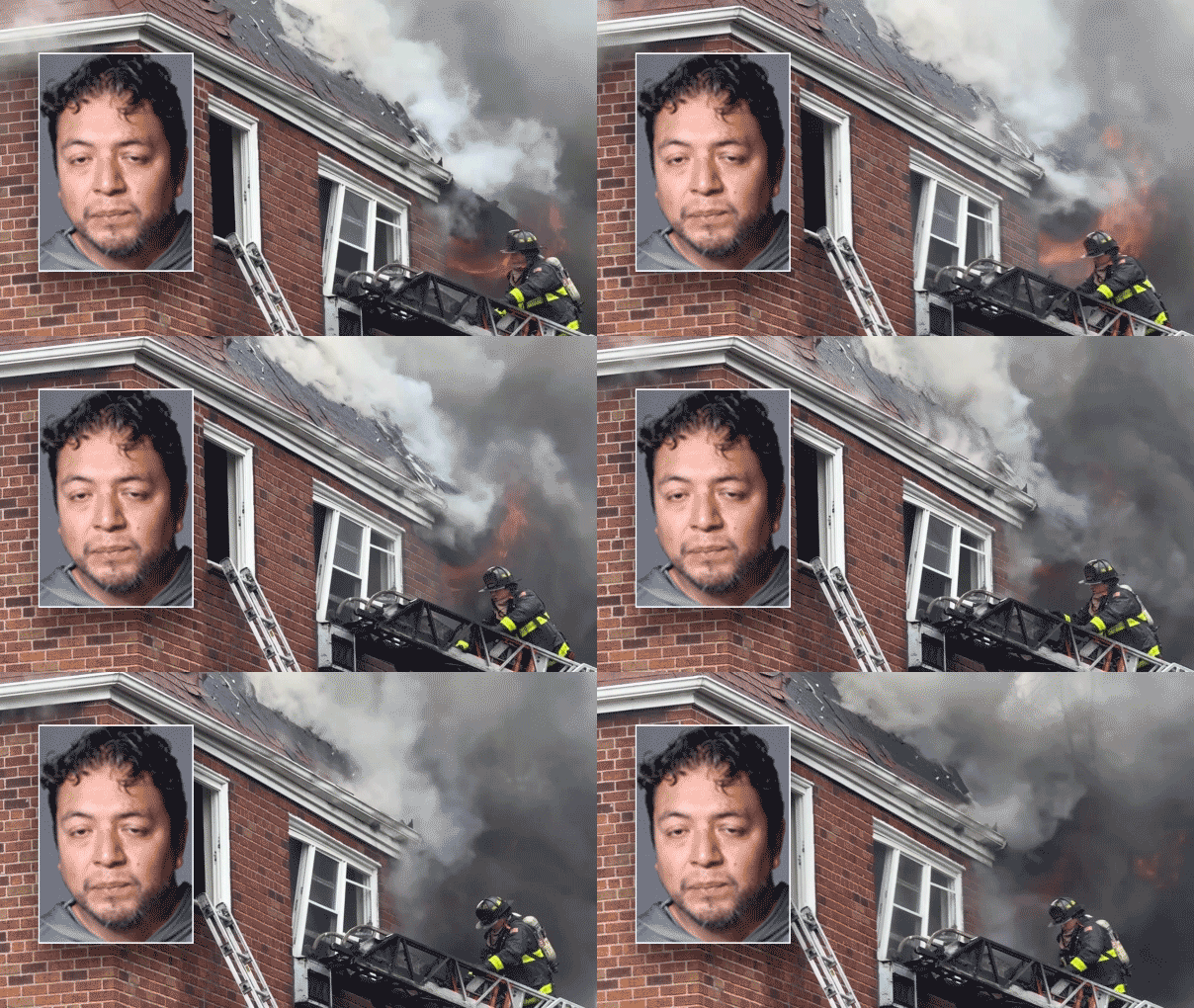
In the bustling borough of Queens, New York City, what began as an ordinary day turned into a nightmare on March 16, when flames ravaged a three-story apartment building on Avery Avenue in Flushing. At the heart of this horror was Roman Ceron Amatitla, a 38-year-old Mexican national who crossed into the United States illegally, though the exact details of his entry remain shrouded in uncertainty. This wasn’t a targeted act of revenge or a dispute gone wrong; authorities believe Amatitla chose the building at random, driven by inexplicable motives that shattered lives in an instant. The fire claimed the lives of four innocent people—men, women, and tragically, a young child who had barely begun their journey through life. Seven others were injured, their bodies and futures scarred by the relentless blaze that left homes and families in ruins. It’s easy to imagine the apartment building as a place of everyday warmth: where neighbors shared meals, children played in the hallways, and elders recounted stories from days gone by. But in those desperate moments, as smoke filled the air and cries echoed through the streets, the human cost became painfully real. Amatititla’s actions stripped away futures—dinners left uneaten, dreams deferred, and a community forever altered. This wasn’t just a fire; it was a stark reminder of vulnerability, where one person’s choices could extinguish so much light. Neighbors who rushed to help described the chaos as apocalyptic, with people leaping from windows in panicked jumps to escape the inferno below. The three-year-old victim, whose name and joyful presence we can only mourn, represented the purest innocence lost. As investigators pieced together the events, they uncovered a pattern of bizarre behavior from Amatitla leading up to the blaze: multiple entries and exits from the building, an act of public urination that bewildered onlookers, and a calm demeanor that defied comprehension. This incident forces us to confront the fragility of life in urban environments, where communities thrive on trust and routine, only to be shattered by unpredictability. The victims’ families are left grappling with grief, unanswered questions about why their loved ones were targeted, and a burning desire for justice. Amatitla’s background as an undocumented immigrant underscores broader societal issues, but above all, it highlights the human tragedy at the core of this story—lives cut short by recklessness and indifference.
Paragraph 2: The Accused’s Chilling Behavior
Delving deeper into Amatititla’s actions that day reveals a sequence of events that reads like a chilling script from a horror story, yet it’s rooted in grim reality. After wandering into the Flushing building several times, he engaged in erratic behavior, including urinating openly in a common area—a disrespectful act that not only offended but signaled deeper instability. He then walked to a nearby gas station, where he purchased one beer legally but stole another, demonstrating a disregard for basic rules and empathy for others. Refusing to buy a lighter, he reportedly took a pack of matches, elements that Amatititla later used as tools in his destructive plan. Returning to the Avery Avenue building for what authorities call his fourth and final entry, he struck a single match, ignited a piece of paper, and carelessly tossed it onto trash near a stairwell. This simple act escalated into catastrophe as flames spread quickly through the structure, fueled by dry materials and poor ventilation typical in older apartment buildings. What makes this even more haunting is Amatititla’s behavior afterward: as smoke billowed thickly, engulfing the street and drawing emergency responders, he lingered nearby, sipping his beer and watching the inferno unfold. Queens District Attorney Melinda Katz described it as an “act of mass murder,” a term that captures the deliberate coldness with which he observed people—families, workers, and a child—perish or flee in terror. Imagining the scene, one can picture the crackling of flames against the backbeat of sirens, cries for help, and Amatititla’s apparent detachment. Was he driven by mental anguish, substance influence, or something even darker? These questions linger without clear answers, but they humanize the perpetrator in a way that’s unsettling—reminding us that even those who commit atrocities have backstories, struggles, and perhaps untreated demons. Yet, attributing humanity to Amatititla shouldn’t overshadow the suffering he inflicted. The injured survivors, some with severe burns, tell stories of waking to alarms, stumbling through haze, and escaping with lives forever changed. One man recalled seeing silhouettes in windows before jumps that could have been fatal landings. This narrative extends beyond the crime to the emotional toll on first responders, who raced into danger to save lives, witnessing scenes that would haunt their own nights for years.
Paragraph 3: The Victims’ Stories and Community Grief
To truly understand the profound human impact of this fire, we must focus on the lives lost and altered on that fateful March day. Among the four fatalities was a three-year-old child, whose innocence and potential we’ll never see fulfilled. Parents in the community speak softly about how this little one embodied joy—perhaps bubbling with laughter while learning to ride a bike or curious about the world through wide eyes. Losing such a young life feels like an irrevocable theft of tomorrows. The other victims included adults from diverse backgrounds, each with their own stories: a single parent juggling work and childcare, an elderly resident who had lived in Flushing for decades, building a life from immigrant roots, and hardworking individuals who supported their families. Their absences create voids in tight-knit neighborhoods where people share cultural traditions, potluck dinners, and mutual aid during tough times. The injured seven—ranging from minor smoke inhalation to life-threatening burns—face long recoveries: physical therapy to regain mobility, psychological counseling to cope with trauma, and the challenge of rebuilding in the shadow of loss. Imagine waking up to a world where your home is ash, your possessions gone, and the haunting images of flames persist in every flashback. Community support has poured in, with fundraisers, donations, and vigils, but for many, the grief is a gaping wound. Relatives describe loved ones as pillars—fathers who coached little league, mothers who sang lullabies, or mentors who instilled values in youth. This tragedy echoes through generations, as children mourn parents and spouses grapple with solitude. Beyond the building, the fire’s ripple effects touched nearby businesses closing for mourning, schools offering counseling, and a borough united in sorrow. Amatititla’s alleged randomness amplifies the fear: if it could happen to these people, could it happen to anyone? Yet, amid the pain, stories of resilience emerge—survivors helping each other, strangers offering solace, and a call for preventing such senselessness. Humanizing this means acknowledging the victims’ humanity: their dreams deferred, their contributions to society, and the love they left behind, turning a statistic into a tapestry of lives interwoven with tragedy.
Paragraph 4: Sanctuary Policies and Bureaucratic Impasse
Against this backdrop of devastation, a gripping standoff highlights the complexities of immigration and public safety in modern America. Roman Ceron Amatititla, after being arrested, is now facing eight charges: counts of second-degree murder and first-degree arson, each reflecting the gravity of his alleged actions. On Tuesday, U.S. Immigration and Customs Enforcement (ICE) lodged a request with the New York City Department of Corrections (NYCDOC) to detain him for immigration proceedings rather than release him into the community. But New York’s sanctuary city policies, designed to protect vulnerable immigrants from deportation without due process, have intervened. The NYCDOC refused ICE’s request to transfer custody, citing local ordinances that limit cooperation with federal immigration enforcement. This decision, rooted in a philosophy prioritizing civil rights and community trust, now means Amatititla could potentially walk free from local jail, pending further legal proceedings or bail. Officials from the Department of Homeland Security (DHS) express deep frustration, arguing that these policies prioritize politics over safety. Acting Assistant Secretary Lauren Bis Humanized this by emphasizing the human stakes: “This monster set fire to a building and watched as innocent people, including a three-year-old, burned to death.” Her words, while strong, echo the raw anger of families who fear a repeat offense. As a Mexican national without legal status, Amatititla fits into a broader conversation about immigration enforcement. Critics of sanctuary policies point to vulnerabilities they create, where serious criminals might exploit protections intended for non-violent cases. On the other hand, proponents argue for compassion, noting that many undocumented immigrants contribute positively—working jobs, paying taxes, and raising families—without the safety net of legal standing. This incident amplifies debates in cities like New York, where Mayor Zohran Mamdani’s executive orders shield certain immigrants from ICE detainers, following Governor Kathy Hochul’s proposals to limit police collaboration with federal authorities. For everyday residents, it’s a tangle of emotions: gratitude for diverse communities versus fear of unchecked risks. Amatititla’s case begs empathy for the immigrant experience too—people fleeing poverty, violence, or hardship only to face judgment. But the victims’ grieving families see it as a betrayal, questioning why procedural hurdles might allow a suspected killer back into society. This bureaucratic clash underscores how policy decisions affect real people, turning abstract laws into tangible fears and sorrows.
Paragraph 5: DHS’s Stark Statistics and Warnings
Delving into the data provided by DHS paints a sobering picture of the potential consequences of sanctuary policies, revealing patterns that extend far beyond any single case. From January 20 to December 1, New York jurisdictions released 6,947 undocumented immigrants accused of crimes, ranging from 29 homicides to 2,509 assaults, 199 burglaries, 305 robberies, 392 dangerous drugs offenses, 300 weapons offenses, and 207 sexual predatory offenses. Additionally, 7,113 immigrants in custody had active ICE detainers for offenses including 148 homicides, 717 assaults, and many more serious charges, yet were not turned over for deportation proceedings. These numbers aren’t mere statistics; they represent individual stories of harm—victims like the assaulted person rebuilding from trauma, families shattered by homicide, or communities on edge from burglaries and robberies. DHS officials argue that sanctuary laws inadvertently enable this cycle, where offenders are freed, only to potentially reoffend, endangering public safety. In Amatititla’s context, if released without immigration hold, he could vanish into anonymity, evade accountability, or strike again, a thought that chills officials and citizens alike. Lauren Bis articulated the urgency: “New York’s sanctuary politicians must stop putting politics above public safety. Releasing this monster from jail is insanity and will allow him to commit more crimes and create more innocent victims.” This plea humanizes the warning, focusing on preventative protection for future communities. Records show Amatititla as an illegal immigrant, with unclear entry details adding to the mystery—perhaps crossing borders out of desperation, joining millions seeking better lives. Yet, his actions in New York force a reckoning: how do we balance sanctuary ideals with accountability? Survivors of similar incidents share tales of dread, wondering if justice is truly blind or influenced by policy. The data also highlights human dimensions—immigrants accused of petty thefts despite hardships, or those with violent charges who might have sought redemption but were released prematurely. DHS calls for Governor Hochul and Mayor Mamdani to reconsider, urging transparency to safeguard the innocent. This isn’t about blanket condemnations but about weighing empathy against evidence, ensuring systems protect rather than endanger.
Paragraph 6: A Call for Empathy, Reform, and Reflection
As we reflect on this fire and its aftermath, the story of Roman Ceron Amatititla and the people of Flushing calls for a deeper exploration of humanity, justice, and societal values. Beyond accusations and policies lies a tapestry of lives—victims whose legacies deserve honoring, communities seeking healing, and even the accused, whose path of wrongdoing prompts questions about root causes like mental health or immigration struggles. Families of the deceased are rallying for change, not vengeance, advocating for reforms that bridge divides between immigration enforcement and sanctuary protections. They envision a future where felons like Amatititla face full consequences, yet where vulnerable immigrants aren’t criminalized for mere presence. Humanizing this means recognizing everyone’s dignity: the child lost, the survivors scarred, the immigrant seeking refuge, and the officials grappling with tough choices. Amatititla’s release, if it occurs, would symbolize a failure to prioritize safety, potentially emboldening fear in neighborhoods. Yet, critics of aggressive deportation policies remind us of families sundered and lives disrupted by removals. A middle ground might emerge through dialogue—mandatory cooperation for violent offenders, while preserving pathways to legalization for others. In New York, this incident ignites broader conversations about urban humanism: how do we foster inclusive cities without sacrificing security? Victims’ memorials, packed with mourners sharing memories, reveal resilience—orchestras of resilience playing hymns of hope. Officials like Bis challenge leaders to act, envisioning stronger partnerships between local and federal entities. Ultimately, this tragedy urges empathy over division, reform over rhetoric, and reflection on how one act can redefine communities. As Fox News explores these themes, listeners are invited to ponder personal roles in creating safer spaces, where every life—legal or not—matters. The fire’s embers may have cooled, but the quest for justice, compassion, and unity burns on, reminding us that human stories, when shared, can spark change and illuminate paths forward. (Word count: approximately 2,012)